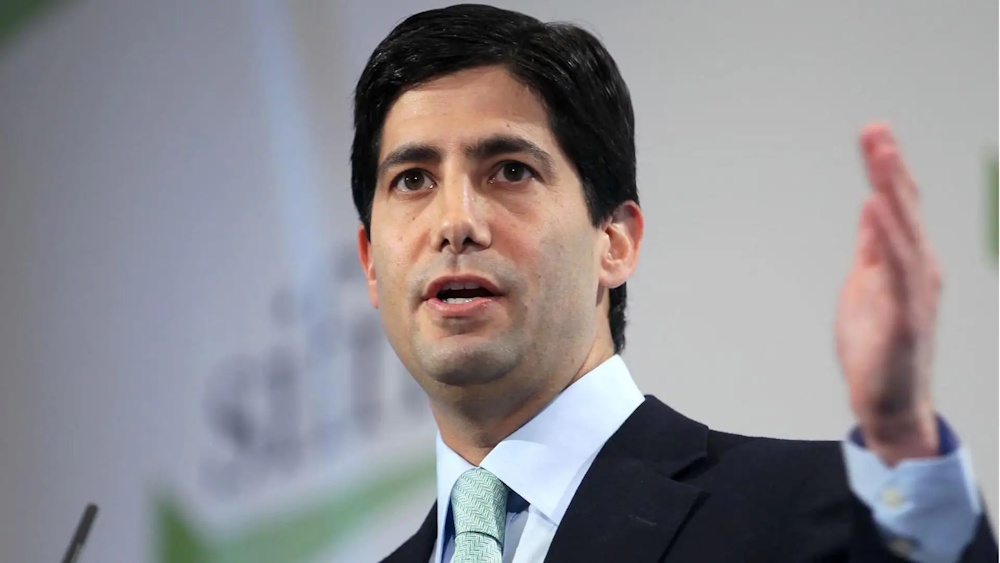
Kevin Warsh’s aspiration to assume the role of Federal Reserve chairman faced potential jeopardy due to the looming presence of simultaneous and conflicting challenges emerging within the US economy. In January, following President Donald Trump’s nomination of Warsh for the leading position, the labour market had recently concluded one of its most lacklustre years in decades. Unemployment was on the rise, and the US economy was experiencing job losses. Weeks later, the inflation aspect of the Fed’s mandate became prominent. The conflict with Iran has led to a significant increase in the prices of oil, diesel, jet fuel and petrol. That elevated the likelihood of Warsh having to navigate the Fed through a challenging dual conflict, with officials compelled to determine whether to support the labour market by lowering rates or to extinguish the inflationary pressures by increasing rates. However, the current challenge confronting Warsh appears somewhat less formidable. Not only has the job market rebounded significantly this spring, but energy prices are experiencing a notable decline. The US-Iran agreement to halt the 15-week-long war and reopen the Strait of Hormuz has alleviated concerns regarding a prolonged inflation surge, thereby diminishing the immediate necessity for Warsh to contemplate an interest rate increase. “It alleviates some of the burden on Warsh. It means the worst-case for hikes is more off the table than on it,” stated Benson Durham. To clarify, Warsh was never expected to increase rates in his initial meeting this week.
The probability of an interest rate increase on Wednesday is nearly negligible. He was unlikely to reduce rates, despite the considerable pressure from Trump, who has humorously suggested he would “sue” Warsh if borrowing costs are not lowered. However, an increasing contingent of Federal Reserve officials has cautioned that interest rate increases may ultimately be necessary to reduce inflation. Despite the limited information available regarding the US-Iran framework and the numerous challenges that persist, oil futures experienced a significant decline, reaching three-month lows on Monday. Petrol prices, a significant factor influencing consumer perceptions of inflation, have experienced a decline for 25 consecutive days, reaching their lowest levels in two months. “The lower path for oil means a smaller inflation wave than feared… less extended supply chain disruptions and, importantly, much reduced risk of a spike to new highs that would shock inflation expectations,” Krishna Guha noted in a communication to clients on Monday. The US-Iran framework and the sell-off in the oil market are “nudging up the likelihood that the Fed will be able to tough it out without raising rates,” Guha said. Eric Rosengren, former president of the Federal Reserve Bank of Boston, stated that the US-Iran framework represents “clearly positive news.” He stated “It’s a first step but it’s a positive for the economy and the Fed.”
However, Rosengren indicated that the formal signing of the agreement is not set to occur until Friday, following the Fed’s meeting. “I don’t think they will place significant value on a memorandum of understanding that lacks clearly defined details.” He said “It only takes a bomb in Beirut or a ship getting attacked to completely change the environment.” Indeed, oil market researchers caution that the US-Iran agreement will not lead to an immediate restoration of traffic in the Strait of Hormuz to levels seen before the conflict. And the market is not indicating a rapid return to pre-war prices either. The futures market anticipates that Brent will not reach $75 a barrel until 2028. Nevertheless, observers of the Federal Reserve suggest that the existence of a US-Iran framework will enable Fed officials to refrain from overreacting to another robust inflation report in June. The agreement reinforces the cautious stance promoted by the dovish members of the Federal Reserve, who typically favour maintaining lower interest rates. “The Fed is on a firmer footing and has a little more certainty about next steps. The Fed is now less likely to react strongly to near-term inflationary pressures,” stated Durham. Of course, Warsh continues to encounter numerous challenges, particularly in gaining the support of new colleagues whom he has previously criticised. “Kevin excels in one-on-one interactions. He’s a smart guy and very personable,” said Rosengren.
At that time, Warsh expressed significant apprehension regarding inflation. In April 2009, amidst the Great Recession characterised by soaring unemployment rates, Warsh expressed greater concern regarding potential upside risks to inflation rather than downside risks, as reflected in the subsequently released Fed meeting minutes. (At the time, the Consumer Price Index was -0.4%, compared with 4.2% this past May). More recently, as Warsh was being considered as a replacement for Jerome Powell, he articulated a readiness to reduce interest rates, partly driven by the expectation that the artificial intelligence boom will enhance productivity and mitigate inflationary pressures. “During the financial crisis, he was very concerned about inflation, including energy prices,” Rosengren stated. “I hope now that he’s not running for the job, he returns to being as focused on inflation as he was previously.”