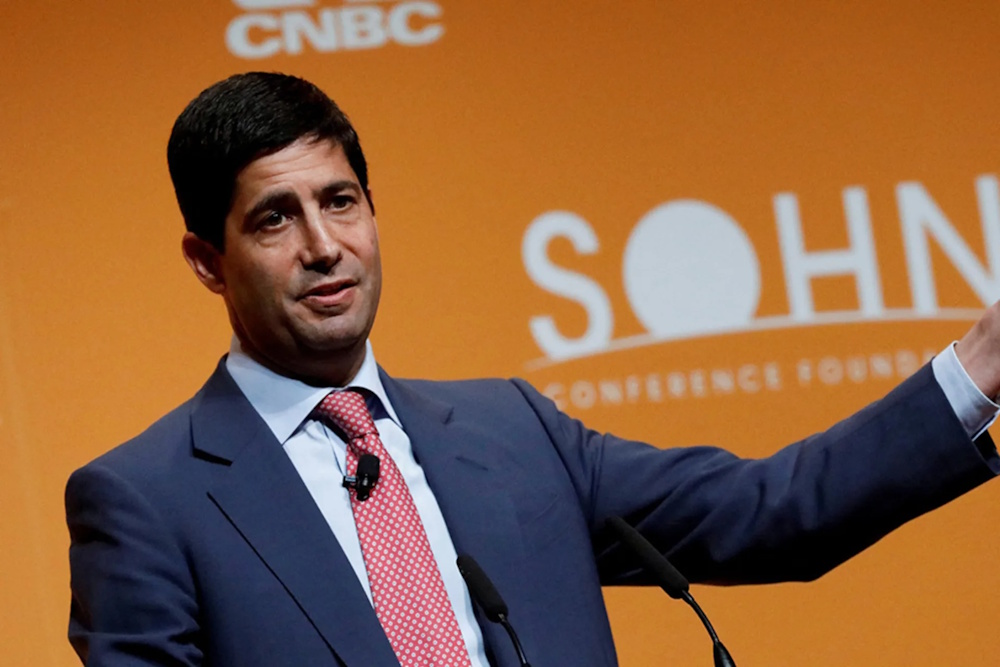
Federal Reserve Chairman Kevin Warsh has expressed strong views regarding AI and its prospective economic advantages. His perspective on the trajectory of interest rates, however, is more elusive to ascertain. In the nine weeks since assuming leadership at the central bank of the United States, Warsh has refrained from publicly addressing the implications of recent economic trends for interest rates, moving away from the traditional approach of offering “forward guidance.” He reinforced that approach last week following the Fed’s latest decision to maintain its benchmark lending rate steady for the fifth consecutive time, stating it’s been “a change for the better.” Warsh has exhibited a greater willingness to engage in discussions regarding AI. He stated that strong business investment, largely propelled by the demand for AI infrastructure, “is preparing the ground for future growth.” He has also argued that AI could enhance productivity and potentially reduce inflation, thereby providing the Fed with the opportunity to lower rates.
By consistently emphasising the potential economic boom from AI, he is underscoring a development that would bolster the argument for reducing rates. “He is intently obfuscative,” said Thierry Wizman. “The only semi-clear opinion that Warsh has offered is that the supply side of the economy is likely to follow a path that improves productivity, presumably on AI-oriented investment, and that this will be disinflationary.” Warsh has consistently supported the advancement of AI and its potential to drive a significant increase in productivity. He has not only promoted the idea, but he has also tasked one of his five task forces with exploring that same topic. “The productivity task force is focused very much on AI and how that could be disinflationary,” said Derek Tang. “It does seem that Warsh wants to keep that hope alive that productivity will be a convincing story to lower rates,” he added. Productivity growth enhances the economy’s ability to generate goods and services. If companies can enhance their output without a substantial rise in costs, the economy can satisfy demand without elevating prices, thereby alleviating inflationary pressures. AI’s impact on business investment is “the most striking feature of the economy right now,” Warsh stated during congressional testimony last month.
The result has been a supply shock — a rapid increase in supply for goods or services — “happening faster than I would have projected 18 months or two years ago.” When asked during last month’s congressional hearing if AI gives the Fed an opportunity to cut rates, Warsh said: “I think this could be that opportunity. But I can’t say it for certain as of yet.” Luke Tilley said “artificial intelligence can increase productivity in the same way that the internet revolution did, but it will probably do so over a multi-decade basis, like the internet.” Warsh seems satisfied to allow financial markets to undertake part of the Federal Reserve’s tightening, thereby alleviating some of the burden on central bankers to increase borrowing costs independently. In last week’s post-meeting press conference, Warsh highlighted the significant increase in long-term interest rates, characterising it as the most substantial shift recorded between Federal Reserve meetings — a clear indication that financial conditions had tightened despite the absence of a change in the Fed’s benchmark rate.
“Market participants are learning to play the ball, not the referee — and market prices will continue to respond in the direction and magnitude they see fit,” Warsh said. Yields on 30-year US Treasurys reached 19-year highs in the morning after Warsh’s latest remarks, before easing slightly later in the day. “The markets have done quite a bit,” he added. Some analysts have raised concerns regarding Warsh’s dedication to combating inflation, particularly given that price increases have exceeded the central bank’s 2% target for over four years. Warsh contends that markets, rather than solely central bankers, ought to assume a more significant role in evaluating the US economy and influencing financial conditions. “Markets have made decisions because we stepped back from trying to influence,” Warsh said, adding that it’s crucial for the Fed to not get the market’s perspective “all fogged up by giving it our own forecast.”