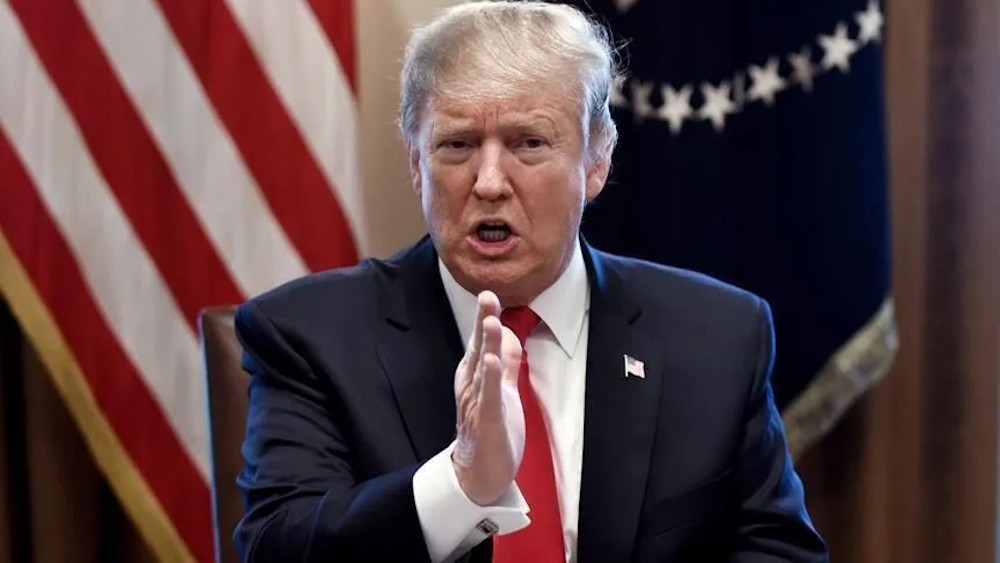
President Donald Trump finds himself in conflict with the foremost executives in the AI sector regarding the largely unregulated advancement of AI technology. It is possible that our economy is unable to sustain a slowdown. It may appear politically unwise, with less than two months remaining before the midterm elections, to so emphatically assert a stance that diverges from the prevailing sentiment among Americans, who largely disapprove of the construction of data centers in their vicinity and continue to harbour scepticism regarding the applications of AI. However, Trump’s aggressive approach indicates he might be more focused on a broader issue: What are the implications for the US economy if the enthusiasm for AI diminishes during his tenure? There are numerous methods to analyse the metrics regarding the extent of the US economy’s reliance on AI and related expenditures. ING estimates that investments in technology, particularly in artificial intelligence and data centers, will constitute one-third of the year-over-year economic growth in 2026. Goldman Sachs’ chief equity strategist recently stated on CNBC that AI investment is responsible for half of the profit growth in the S&P 500.
Economists meticulously emphasise the inherent nuances present in these calculations. However, one aspect is difficult to contest: Without the surge in AI activity, the economy would likely be in a considerably more fragile state – potentially even facing a recession. Proponents of AI assert that it represents the pivotal technology of our era, contending that the soaring share prices it generates are merely one of its numerous advantages. With widespread adoption in the future, the prevailing view suggests that AI will significantly enhance productivity, akin to the transformative impact of the internet at the turn of the century. However, in the near term, any deceleration in consumer spending poses a threat to those stock valuations, which would subsequently impact household wealth and reduce corporate investment. “If the music stops, and if it stops in a big, big way, it’s likely that we’re going to end up in stagnation or outright contraction over a period of at least a year,” Olu Sonola told. The icing on the cake, said Sonola, is the wealth effect. Individuals holding stock portfolios that are influenced by AI are experiencing a sense of financial well-being, leading to increased discretionary spending – thereby providing additional support to the consumer-driven economy of the United States.
Regardless of individual perspectives on the technology, the financial investments being made are sustaining the momentum of the world’s largest economy. If that money train stalls, the repercussions will extend beyond tech investors on Wall Street. Last week, ratings agency Fitch conducted a scenario analysis envisioning the economic repercussions of an AI-related downturn, projecting a decline in US stock prices by approximately 35% over a six-month period – aligning with the median decrease observed during previous financial crises. The outcome indicated that the economy is poised to enter a recession, with GDP expected to contract by 1.5% in the coming year. To be clear, there is no assurance – nor any particular sign – that the music will cease in the near future, and Fitch remarked that “a sharp decline in US equity prices is not our base case.” Nonetheless, a significant number of investors and scholars perceive a highly interconnected system that is susceptible to minor disturbances. “We have this ecosystem that’s spun up around AI,” said John Sedunov. “There are a bunch of companies that are very reliant on each other. And when you break a link in a chain like that, then there’s bound to be fallout.”
That economic risk may emerge during a period when cautionary signals are already evident. Bond markets are indicating increasing apprehension regarding government debt levels, deficit spending, and persistent inflation, which may result in a cycle of rising interest rates. This scenario is further exacerbated by the conflict in Iran and the influx of investors into corporate debt to finance the AI expansion. “The equity price bubble risk is definitely a big one” to the global economy, Sonola said. “We’ve seen tariffs, we’ve seen the war. Another shoe is going to drop. We may just not know yet.” But there are still optimists who point out the potential upside is still vast. “What we’re seeing is very unusual, and so it does make sense that people are concerned about it,” said Jessica Wachter. But she doesn’t see the AI fervor turning into a spiral on the scale of 2008. “I actually think that (AI) is going to be a bit of a stabilizing force… generally promoting net job creation and growth. I am, you can tell, an optimist, though. I know others have other views.”