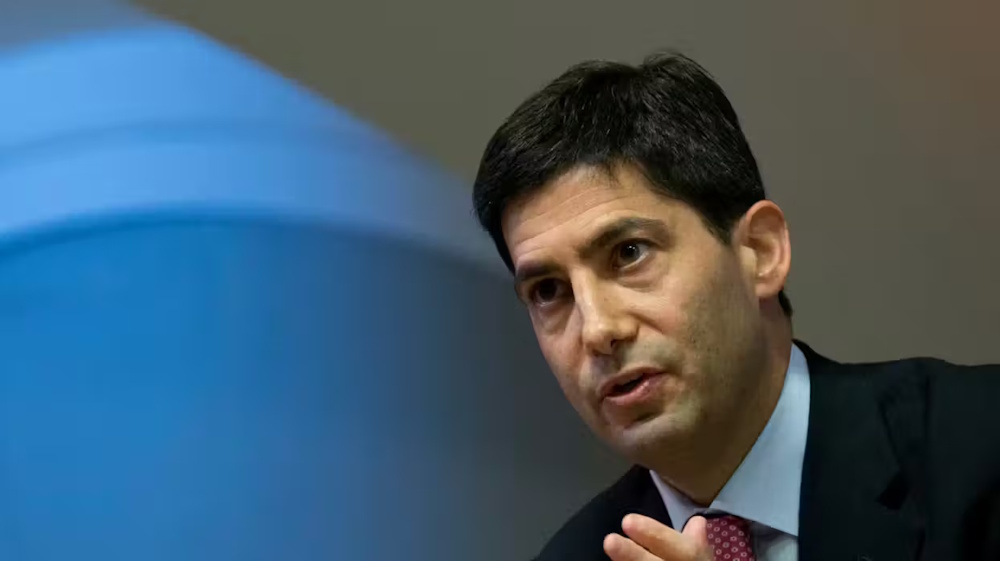
Federal Reserve Chairman Kevin Warsh is already experiencing the “family fight” he has advocated for, and he is entrusting Wall Street to decide between competing narratives. The Fed on Wednesday maintained its benchmark lending rate at a range of 3.5%-3.75% for the fifth consecutive meeting, as the ongoing conflict in the Middle East continues to obscure the inflation outlook. Unsurprisingly, the Fed’s latest decision was not unanimous, as Fed presidents Beth Hammack of Cleveland, Neel Kashkari of Minneapolis, and Lorie Logan of Dallas expressed dissent in favour of a quarter-point rate hike. These policymakers have already indicated that the Fed must adopt a stringent approach to inflation. The most recent dissents regarding the direction of rates were the highest since September 2016; however, Warsh expressed that he does not perceive this as a negative development. “I asked for a good family fight and I got one,” Warsh told. “It was an active, robust discussion about what’s in the full range of what we can do and might want to do in the period ahead.” Wall Street, however, is already convinced that the Fed’s key interest rate is on an upward trajectory, with investors increasingly anticipating more than one rate hike by the end of the year, potentially assisting the Fed in moderating economic activity. Long-term interest rates have risen, including the benchmark yield on the 10-year US Treasury note, which remains outside the direct control of the Fed. Warsh has contended that markets ought to assume a more significant role in evaluating the US economy and influencing financial conditions. “Markets have made decisions because we stepped back from trying to influence,” Warsh said, adding that it’s crucial for the Fed to not get the market’s perspective “all fogged up by giving it our own forecast.”
Here are two key takeaways from the Fed’s latest decision that turned out to be “all bark, no hike.” Ahead of this week’s meeting, there was an atypical absence of clarity regarding the Fed’s forthcoming actions, attributed to a convoluted inflation landscape and Warsh’s silence on the implications of the situation. That surprised investors, leading to a division in the markets regarding the likelihood of a rate hike or a continuation of the current pause. Since 2000, Fed officials, including the head of the Fed, have provided indications through public comments regarding their forthcoming decisions, a practice referred to as “forward guidance.” Markets have adjusted to that guidance; however, they are now being gradually detached from it as circumstances have changed, as noted by Warsh. “In a lot of countries, coming out of the 2008 crisis, we were in crisis mode, we were purposely providing a lot of information, trying to provide a lot of assurance, trying to tell people exactly what we’re going to do,” Warsh said. “In crisis mode that strikes me as a very prudent policy, but in more benign conditions, it strikes me as worth revisiting.” Warsh, however, said markets won’t be dictating what the Fed ought to do. “We’re not going to be constrained by market prices,” he said. “We’re not going to be constrained or take verbatim from what the market’s doing but I think it’s useful to understand that markets can be a very good source of information.”
The issue lies in the fact that markets do not consistently operate with precision, as evidenced by the collapse of the dotcom-era financial bubble. Throughout his news conference, Warsh emphasised his openness to diverse viewpoints on the economy, encompassing both internal and external perspectives relative to the Fed. “Surprises are not the objective, but at the same time, I would say we didn’t come into this meeting feeling constrained by the full range of alternatives we had in front of us,” he said. There have indeed been mixed signals on the economy, complicating the assessment of the appropriate direction for interest rates. Recent data indicated that inflation experienced a significant decline in June; however, the persistent conflict with Iran has resulted in an upward pressure on global energy prices. In the absence of a lasting resolution that could potentially reinstate shipping activity in the area, the global energy market continues to experience instability. Such a scenario would elevate the risk of inflationary pressures expanding, particularly through increases in airfares and freight costs — a point highlighted by Warsh. Federal Reserve officials are evaluating the implications of the swift integration of artificial intelligence on inflationary trends. Prior to Warsh assuming his new position at the Fed, the consensus among officials suggested that any increase in inflation resulting from the Iran war would probably be transient, thus making rate hikes unwarranted. The argument posited that fluctuations in energy prices are inherently volatile and tend to revert to previous levels without necessitating intervention from the Federal Reserve. Central bankers have also highlighted that interest rates exert their influence on the economy with a delayed impact.
It remains uncertain whether the prevailing opinion among officials aligns with that perspective; however, the policy statement indicated that inflation has increased “in part reflecting supply shocks” associated with the Iran war. The Fed’s rate decisions are focused solely on the demand-side of the economy. Warsh refrained from expressing his perspective on that dynamic, nor did he offer his forecast for inflation or interest rates. He said what’s important is that officials agree that inflation must be tamed: “There was a lot of agreement that I heard that we have the powers, the tools, and the authority to deliver stable prices. No walking back from our responsibilities.” Currently, markets are striving to comprehend the Fed’s response mechanism under the new chairman. Critics of forward guidance, including Warsh, argue that the practice loses its efficacy during periods of heightened uncertainty, such as those created by an unpredictable war that destabilises the global economy. Some contend that the absence of forward guidance from the chairman may prove to be counterproductive. “Chair Warsh has been studiously uncommunicative about how the Fed is going to react to these changes in economic conditions,” said Narayana Kocherlakota. “It’s going to lead to market volatility.” He added “It makes businesses more reluctant to invest, meaning they’ll be less likely to demand workers to build the kinds of goods and services … because they’re uncertain about what the Fed is going to be doing.”