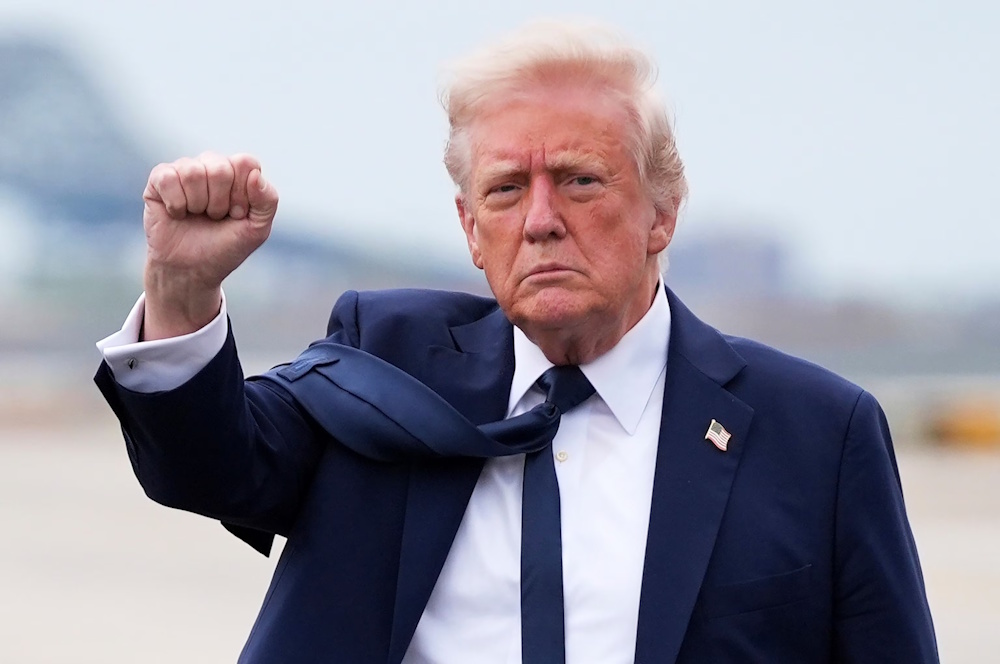
President Donald Trump dismissed concerns raised by artificial intelligence researchers regarding the technology’s increasing difficulty in control and its potential existential threats, asserting that his primary focus is on preserving a competitive advantage over China. Upon departing Dallas, Trump responded to reporters’ enquiries regarding concerns about AI potentially leading to human extinction by stating, “No, I don’t have any.” And “I have concerns that if we don’t win AI, we’re going to be put in a very bad position,” the president said. “We are leading China right now by a pretty good period. I would say a year, which is, you know, considered a lot.” AI safety concerns emerged prominently in the national discourse this week following a researcher’s resignation from Anthropic PBC.
The individual urged colleagues to reconsider their contributions, asserting that both the company and its primary competitor, OpenAI, are engaging in irresponsible practices with technology that presents an existential threat to humanity. Jacob Coxon, who stated he had been employed at both Anthropic and OpenAI over the past three years, shared on social media that the companies were advancing “self-improving” AI models that could potentially operate uncontrollably. “They are racing straight to self-improving superintelligence and gambling with our lives,” Coxon wrote on X. “Do not underestimate the power of this technology. These will soon be superhuman systems that can hack anything, revolutionize any field overnight, and acquire real power and resources.”
Coxon said that the teams “building AI earnestly believe that it could kill us all by the end of the decade.” In response, Evan Hubinger, a current Anthropic employee, said he concurred. “I personally think it is >10% within the next decade,” he posted on X. Several executives in the AI sector have recognised the apprehension. OpenAI Chief Executive Officer Sam Altman informed employees this week that the company is contemplating a deceleration in the development of advanced AI models and expressed a desire for other companies to follow suit, as reported by sources familiar with the situation who requested anonymity to discuss private comments.