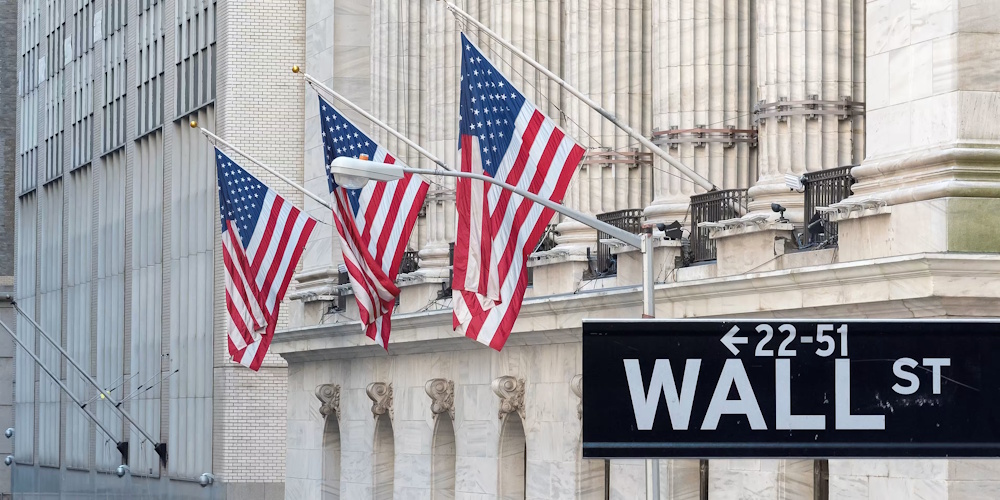
The major U.S. index futures are currently indicating a lower opening on Wednesday, suggesting that stocks are poised to continue the downward trend observed in the preceding two sessions. A continued surge in crude oil prices is expected to exert pressure on Wall Street, as the international benchmark brent crude futures exceed $100 a barrel for the first time since July. U.S. crude oil futures are experiencing a notable increase of 3 percent following the destruction of five Iranian crude oil carriers by U.S. forces. This action was prompted by a ballistic missile attack on a U.S. Navy warship by the Islamic Revolutionary Guard Corps. U.S. Central Command indicated that Iran has utilised the tankers as components of a multibillion-dollar shadow network that finances the IRGC and its regional proxies. Iran responded by launching a series of missiles aimed at U.S. military installations in Jordan, heightening concerns about a potential escalation of regional hostilities. The sharp increase in crude oil prices has led to renewed concerns about the outlook for inflation ahead of the Federal Reserve’s monetary policy meeting next week.
“Brent crude pushing above $100 a barrel has had a psychological effect on the market, pushing a hypothetical inflation worry gauge to ‘serious’ status and dragging down financial assets,” said Dan Coatsworth. “The oil price has now jumped by 28% since early August,” he added. “This type of ascent could leave businesses and consumers feeling sick at the thought of sharp cost increases and potentially higher borrowing costs if central banks choose to fight inflation with interest rate hikes.” As trading resumed after the extended Labour Day weekend, equities experienced a predominantly downward trajectory during Tuesday’s session. The major averages all experienced a downward movement, with the Dow exhibiting a notably pronounced decline. The Dow slumped 628.18 points or 1.2 percent to 52,786.07, the S&P 500 fell 45.08 points or 0.6 percent to 7,673.52, and the Nasdaq dipped 85.58 points or 0.3 percent to 26,421.41. The decline observed on Wall Street coincided with a significant rise in crude oil prices, driven by the ongoing intensification of the conflict in the Middle East.
U.S. crude oil futures experienced a significant increase of nearly 2 percent following the U.S. military’s engagement with three Iranian crude oil carriers over the weekend, which was prompted by Iran’s launch of ballistic missiles targeting two U.S. Navy warships operating in the region. Iran has issued a warning of retaliation against any further U.S. assaults on its assets, while the Saudi-led coalition has pledged a firm response to a series of attacks from Houthi rebels. Amid escalating tensions with the U.S., Tehran announced that a deal with Oman to manage shipping through the Strait of Hormuz is imminent. A steep drop in shares of Amgen weighed on the Dow, with the biopharmaceutical company plunging by more than 10 percent. The nosedive by Amgen followed the announcement from Novartis regarding disappointing results from a late-stage clinical trial of a competing cholesterol drug.
However, overall trading activity remained relatively muted in anticipation of the forthcoming key U.S. inflation data later in the week. The reports on consumer and producer price inflation may substantially influence the interest rate outlook prior to the Federal Reserve’s forthcoming monetary policy meeting later this month. Pharmaceutical stocks experienced a significant decline today, resulting in a 3.2 percent drop in the NYSE Arca Pharmaceutical Index. An increase in treasury yields also impacted interest rate-sensitive housing stocks, as evidenced by the 2.8 percent decline in the Philadelphia Housing Sector Index. Healthcare, airline, and biotechnology stocks experienced notable declines, whereas networking, oil, and semiconductor stocks demonstrated robust upward movements.