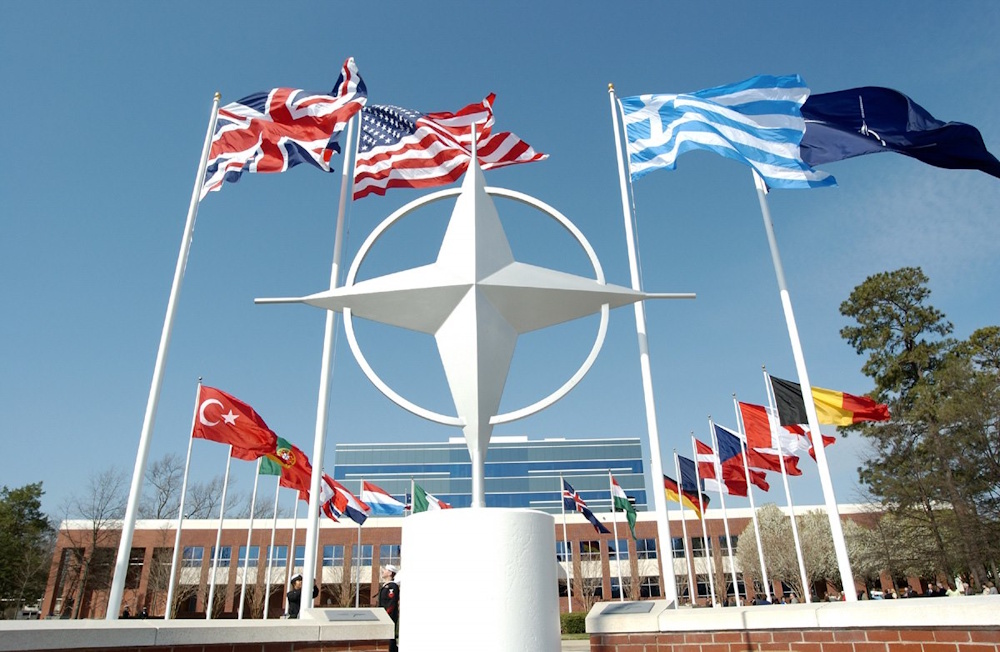
Nato’s European leaders seek to persuade Donald Trump on Wednesday to reaffirm his commitment to the military alliance during a summit in Ankara, following the US President’s resurgence of disputes regarding the Iran war and Greenland, alongside a new series of military actions against Iran. Upon his arrival in the Turkish capital on Tuesday, Trump criticised allies for their lack of support for the US regarding the Iran war, suggesting that he might have considered boycotting the meeting if not for his friendship with the host, President Tayyip Erdogan. The US subsequently initiated new military strikes on Iran and rescinded a licence permitting Iran to sell oil, in reaction to assaults on three tankers. It represented yet another setback for a tenuous ceasefire arrangement in a conflict that has garnered significant disapproval across Europe. Nato Secretary General Mark Rutte characterised the recent US strikes as “absolutely necessary” and minimised Trump’s dissatisfaction with allies, referring to it as “isolated cases”.
“When you have a ceasefire and Iran is basically violating the ceasefire, I think it is totally crucial that the US forcefully react,” Rutte told before the summit. Nato on Tuesday aimed to illustrate that its European members were responding to Trump’s appeals for increased defence spending and reduced reliance on the US by announcing a series of arms deals valued at a minimum of $50 billion. Trump, who has been critical of NATO throughout his first and second terms in office, expressed that he was “very disappointed” with the alliance and stated that the US was not “treated well” during the US-Israeli conflict regarding Iran. “Why are we spending hundreds of billions of dollars, and they’re not there for us? We’ve always been there for them,” Trump said in an appearance on Tuesday alongside Erdogan. Trump has levelled accusations against European nations for not permitting US forces to utilise their airspace and bases on their territories amid the conflict. European officials have indicated that they have largely fulfilled their obligations to US forces, even though they were not consulted regarding a conflict that disrupted their economies. In recent weeks, Trump has directed criticism towards Italian Prime Minister Giorgia Meloni, who was previously regarded as a close ally.
On Tuesday, Trump remarked that his relationship with Meloni “became a little bad because she refused to help us” with Iran, while also characterising her as a “nice person”. Italian officials have recently endeavoured to put an end to the dispute. Trump also stated that Greenland, a semi-autonomous territory of NATO member Denmark, ought to be under the control of the United States. Such assertions have historically tested the dynamics between Washington and Copenhagen, both of which are founding members of NATO, and have implications for broader US relations with Europe. “We are ready to defend every inch of Nato, including our own territory … Of course we will defend the kingdom of Denmark,” Danish Prime Minister Mette Frederiksen said in Ankara, reiterating that Greenland was not for sale. “One of the reasons why we have built Nato many, many years ago, is if anything happens to one of us, then everybody should stand up for each other,” she said. The 32 NATO leaders convened for a dinner on Tuesday evening; however, the principal session of their summit is scheduled for Wednesday. Ambassadors from all NATO members have sanctioned a summit declaration that underscores a “ironclad commitment” to collective defence.
However, the declaration will be issued solely after receiving endorsement from the leaders. The Trump administration has urged Europeans to increase their defence spending and assume primary responsibility for the conventional defence of Europe, as it aims to redirect its military focus towards the Indo-Pacific. The US has also announced troop withdrawals from Europe, reduced the forces it allocates to NATO’s defence plans – including an aircraft carrier, refuelling aircraft, fighter jets, and drones – and initiated a six-month review of its military presence on the continent. European leaders assert their commitment to enhancing their responsibility for the continent’s security, emphasising the necessity of a predictable and orderly transition to prevent any vulnerabilities in their defences that might be leveraged by Russia. European officials have expressed optimism that Trump’s appreciation for Erdogan, along with his positive rapport with Rutte, could facilitate the resolution of tensions at the summit.