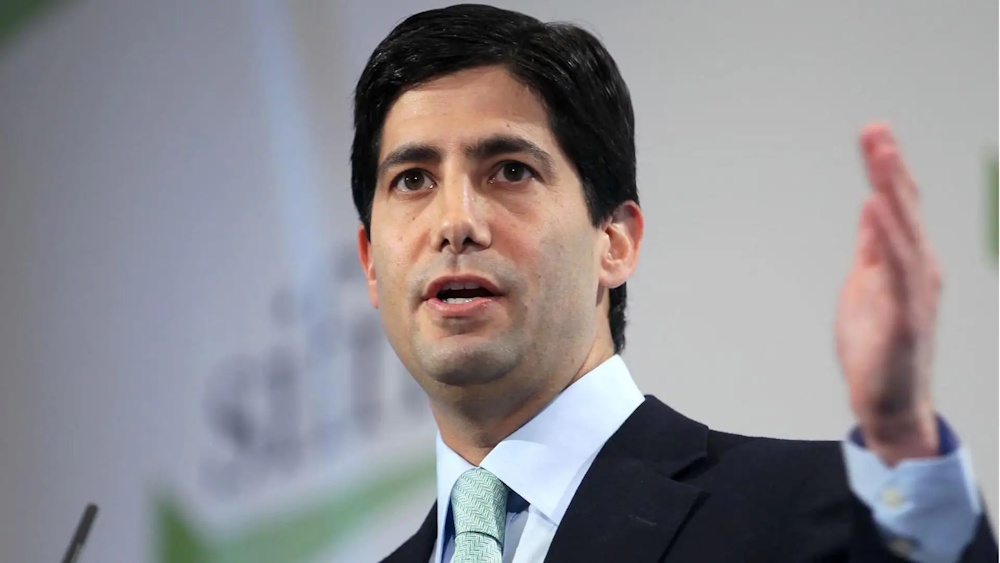
Federal Reserve Chairman Kevin Warsh is not the only one contending that central banks ought to cease their attempts at forecasting the economy: A slew of top central bankers stated on Wednesday that they too have reservations regarding the practice of speculating about the future trajectory of the economy. “We have found common cause,” Warsh stated Wednesday during a panel organised by the European Central Bank in Sintra, Portugal. That statement was made in response to ECB President Christine Lagarde, who remarked: “I have one regret, it’s to have felt bound and compelled by forward guidance.” Bank of England Governor Andrew Bailey and Bank of Canada Governor Tiff Macklem have expressed their opposition to the practice. In central banking, “forward guidance” refers to the practice whereby policymakers indicate the anticipated trajectory of interest rates, reflecting a commitment to transparency. However, as Warsh has pointed out, this approach is less effective during periods of significant uncertainty, when the future remains largely unpredictable. Throughout the conversation, all four central bankers on the panel refrained from providing forward guidance, despite the moderator’s efforts to encourage them to explore the economic outlook. “You’re back to forward guidance. I’m going to disabuse you of trying to extract that,” Warsh said to the moderator. “No forward guidance, no forward guidance.”
Warsh’s latest comments arrive at a time when the US economy and Wall Street are attempting to navigate the economic disruptions caused by the conflict in the Middle East, despite ongoing peace negotiations among officials. The Iran war has driven US inflation to a three-year high, as indicated by the Personal Consumption Expenditures price index, increasing the likelihood that the Fed may need to temper the economy by raising interest rates for the first time since 2023. “There is a willingness by my colleagues in the central banking community around the world to go back to first principles. “We all want to make the best decisions we can,” Warsh stated. In their most recent economic forecasts from the previous month, almost all Federal Reserve officials indicated either a potential rate increase this year or a decision to maintain current borrowing costs.
Only one Federal Reserve official projected a reduction in interest rates this year. That indicates Warsh lacks sufficient votes to implement a rate cut this year, given that the Fed’s rate-setting committee operates on consensus-based decisions regarding rate adjustments. Warsh, during his initial news conference following last month’s policy meeting, underscored the critical necessity of returning inflation to the Federal Reserve’s 2% target. Some investors characterised those remarks as more “hawkish,” or stringent on inflation, than anticipated. He reaffirmed that dedication to controlling inflation on Wednesday: “We’re going to deliver price stability in the US.” The new chairman of the Fed announced last month the establishment of five task forces aimed at reviewing the various factors that influence the Fed’s monetary policymaking, with a particular focus on productivity. That indicates Warsh may not be as hawkish as he appears and still seeks a path to reduce rates this year. Last year, he stated that AI could facilitate rate cuts if the technology is able to significantly enhance productivity.
He observed the increase in productivity over the past year and suggested that this trend may continue: “Nothing is in the bank at this time of consequence, but if the last four quarters are an indication, which is really largely before the advent of the new surge in what artificial intelligence can do, think there’s reason to be optimistic now.” Wednesday’s event marked the inaugural participation of the new Fed chairman in an external public engagement. At one point, Warsh was queried regarding his perspective on the recent Supreme Court ruling that allows Fed Governor Lisa Cook to maintain her position for the time being. He stated, “I believe in the rule of law” and that “we’ll follow the Supreme Court decision.”