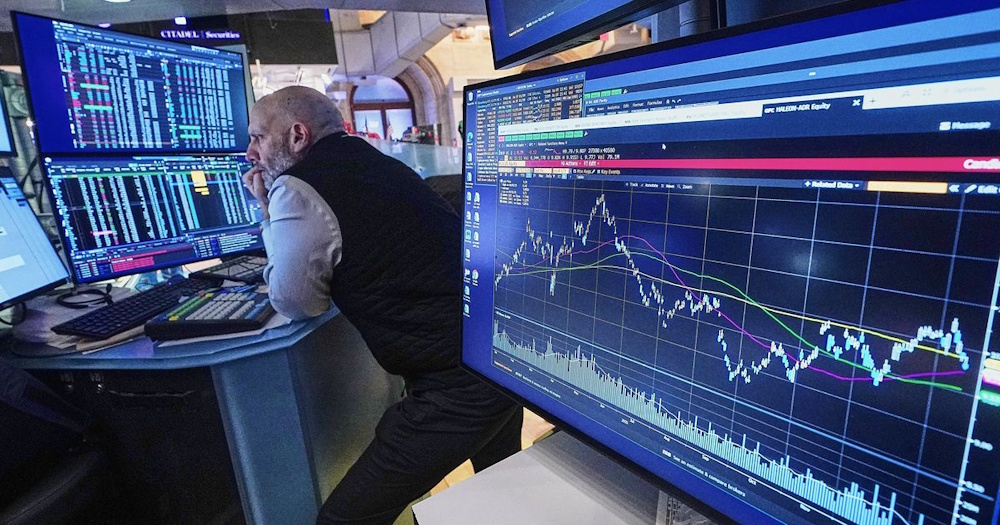
Stocks experienced significant fluctuations in trading on Tuesday as investors divested from AI-related equities, shifted their focus to alternative sectors, and realised gains following a robust rally in the preceding months. The tech-heavy Nasdaq Composite commenced trading on a positive note but subsequently experienced a swift decline, plummeting over 3.6% in a rapid reversal. However, investors took the opportunity to purchase at lower prices, resulting in the Nasdaq closing down just 0.97% by the end of the trading session. Similarly, the S&P 500 experienced a decline exceeding 2.2% prior to the intervention of dip-buyers. The S&P concluded the trading session with a decline of merely 0.26%. The Dow, characterised by its limited exposure to technology stocks, experienced an increase of 86 points, equivalent to 0.17%, recovering from a prior decline of approximately 575 points. Following an exceptional surge this year, semiconductor chip manufacturers faced significant selling pressure. Declines in technology and artificial intelligence stocks, particularly among chipmakers, exerted downward pressure on the major indexes. “It’s not unusual to see a period of consolidation after exceptional performance,” stated Bill Northey.
The fundamentals underpinning the chipmaker rally this year are indeed substantial, according to Northey. However, when a single sector exhibits such robust performance, it is reasonable to anticipate “bouts of consolidation … as enthusiasm ebbs and flows.” The Nasdaq and S&P experienced their most significant decline of the year on Friday. Markets experienced a rebound on Monday. However, the volatility increased once more on Tuesday, interrupting the recovery. A widely followed index that monitors semiconductor firms experienced a decline of nearly 2%, recovering somewhat after a significant drop exceeding 8.5% during the trading session. Nvidia, the largest company in the S&P 500 by market value, fell about 0.2%, recouping most losses after dropping more than 4%. Marvell Technology, a chipmaker, sank 7.6%. Broadcom dropped 1.1%, paring losses after falling more than 6.5%. Broadcom has experienced its most challenging week in the past eighteen months, following a guidance for chip revenue that marginally fell short of market expectations. Following a 20% increase in April and an additional 20% rise in May, an exchange-traded fund that monitors the tech sector has experienced a decline of approximately 5% this month, indicative of the retreat in AI-related equities.
The S&P 500 and Nasdaq are weighted by market capitalisation, indicating that companies with a higher market value exert greater influence on the performance of these indexes. That indicates that technology and artificial intelligence stocks frequently influence the overall market dynamics. Technology experienced a challenging Tuesday, contributing to declines in both the S&P and Nasdaq indices. However, beneath the surface, the performance exhibited a more favourable trend: On Tuesday, over 350 stocks within the S&P experienced gains, even as the index itself concluded the day with a decline of 0.26%. The market volatility also precedes SpaceX’s highly anticipated initial public offering. Some investors may be liquidating their stock holdings to generate cash in anticipation of acquiring shares in SpaceX, or they might be opting to refrain from purchasing stocks altogether as they await the SpaceX IPO. “Investors are actively seeking strategies to position themselves for SpaceX,” stated Michael Monaghan. “Because all eyes are on the deal, people aren’t looking at what other stocks they’re going to be initiating new positions on or buying in their portfolio,” Monaghan stated.
Meanwhile, oil prices reduced some of their losses following President Donald Trump’s social media announcement regarding Iran’s downing of a US Army Apache helicopter. The two pilots involved are safe and uninjured, according to Trump. “The United States must, of necessity, respond to this attack,” he stated. Brent crude experienced a decline of approximately 3%, settling at $91.45 per barrel. US crude oil declined by 3.4%, settling at $88.20 per barrel. US oil had fallen to a low of $86 per barrel prior to Trump’s post. The decline in oil prices contributed to alleviating concerns regarding inflation, resulting in a decrease in US Treasury yields. However, the crucial 10-year yield persists above 4.5%, which may divert investors from equities. Since reaching record highs on June 2, the S&P 500 and Nasdaq have declined approximately 3% and 5%, respectively. All told, the S&P is still up about 8% this year, and the Nasdaq is up more than 10%. “A lot of the sell-off from our perspective is an opportunity to buy some really essential, critical AI infrastructure stocks at cheaper prices,” stated Rob Thummel.