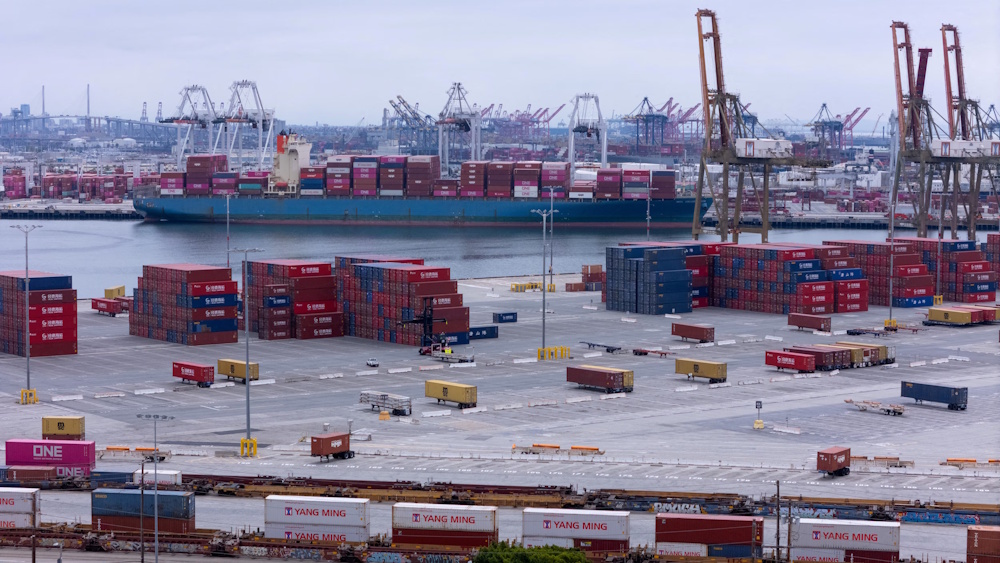
President Donald Trump pledged to explore alternative methods for taxing foreign goods following the Supreme Court’s dismissal of his most stringent tariffs earlier this year. On Thursday, the administration revealed its most recent alternative solution. Beginning at 12:01 a.m. on Friday, numerous trading partners of the United States, spanning Europe, China, and India, will encounter newly imposed tariffs ranging from 10% to 12.5% on goods exported to the United States, as stated by the office of the US Trade Representative on Thursday. According to the US Trade Representative, goods from the 60 affected trading partners account for 99.4% of US imports. The timing aligns with the expiration of a 10% near-blanket duty that Trump instituted earlier this year following the Supreme Court ruling against him. “The president is not going to allow his trade policy and overall objectives to be undermined simply because one tool may be limited by a court or something else,” senior White House officials told.
In a statement on Thursday, Brazil dismissed the 12.5% tariff on its goods and reaffirmed its demand for reciprocity. In a recent social media video, Mexico’s economy minister stated, “We do not see a change in the effective tariff Mexico is paying today.” The latest action comes after an extensive investigation by the US Trade Representative into the purported use of forced labour in the production of goods exported to the US, alongside the inadequate responses from various countries to address this issue. The new rates pertain to imports from nations that provide almost all the goods the United States acquires from overseas. A variety of imports, including oil and gas, along with products that cannot be sourced domestically, were granted exemptions, according to administration officials. The timing of the rollout was designed to “avoid complexity” that would arise from layering the new levies on top of the existing 10% duties, according to administration officials. Business leaders have expressed a desire for greater continuity and predictability concerning tariffs.
That signifies a notable change from a year prior when enterprises were entrenched in the midst of Trump’s erratic tariff policies. “We have heard loud and clear: people want to know what tariff rate they’re going to pay,” said the administration official. “The real message here that everyone needs to take away is the president is going to always use the tools at his disposal to achieve his trade policy objectives.” Certain countries qualified for a lower 10% rate instead of the 12.5% rate after implementing measures aimed at addressing alleged forced labour. However, administration officials expressed scepticism regarding the likelihood that the affected countries would cease the practice in the near future, and indicated their readiness to maintain the elevated levies. Australia, facing a 12.5% tariff, has expressed its opposition to the newly imposed tariffs. Trade Minister Don Farrell expressed to reporters on Friday that Washington’s action is “completely unjustified,” further stating that Canberra will persist in its efforts to persuade the US to eliminate all tariffs on Australian goods. Brazil has also dismissed the newly proposed 12.5% tariffs, characterising the US action as “arbitrary” and “unjustified” in a statement released on Thursday.
For the majority of Americans, this adjustment is improbable to result in an immediate increase in prices, as it primarily maintains the tariffs that importers have been accustomed to paying. That may evolve in the upcoming weeks and months, however. There are multiple ongoing investigations that depend on the same trade legislation, Section 301 of the Trade Act of 1974, which is being utilised to implement the new rates. One emphasises allegations that significant trading partners — including China, Mexico, and the European Union — are playing a role in the global manufacturing overcapacity issue. Trade experts regard Section 301 tariffs as a more legally robust alternative, having withstood prior judicial scrutiny, in contrast to the emergency powers invoked by Trump last April for his broader tariff regime dubbed “Liberation Day.” They can also persist indefinitely. The administration is examining further avenues to increase border taxes. Earlier this week, the White House announced a 50% tariff on certain Canadian goods, which is set to take effect next month under a never-before-used provision of the Smoot-Hawley Trade Act.