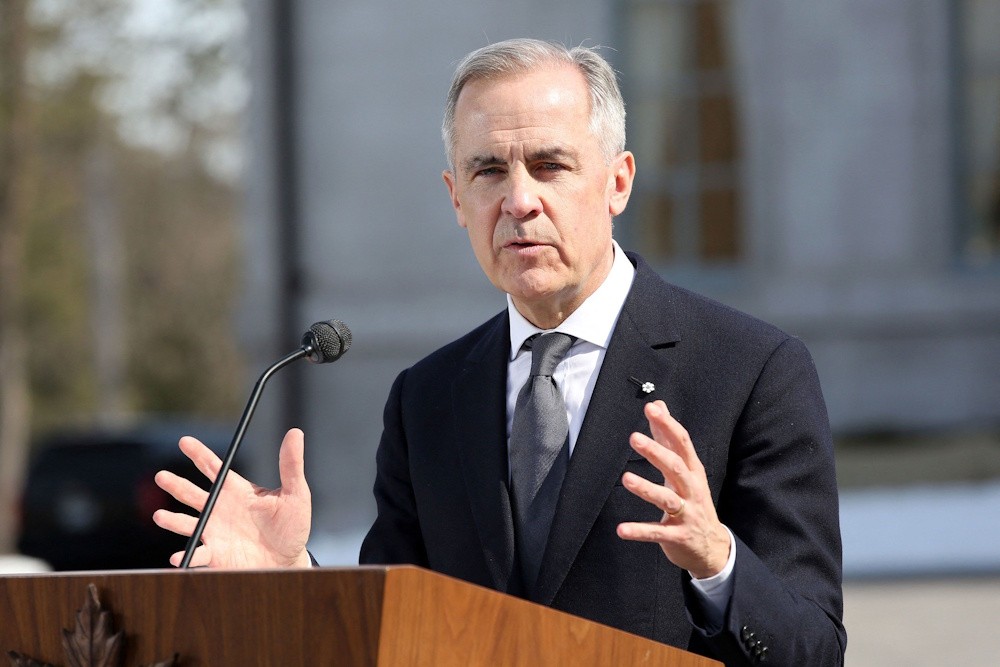
Just after midnight on Tuesday, Canada imposed retaliatory tariffs on US imports, intensifying a protracted trade dispute between the two nations that may harm Republican candidates in the approaching midterm elections. The new levies encompass $20 billion in American goods and increase taxes on aluminium and steel to 50%, aligning with the rates imposed by the US on these metals imported from Canada. Paper products, construction materials, home appliances, and agricultural products are encountering new tariffs. Negotiations regarding trade between the two leading trading nations collapsed last month at the final moment. Trump had initially delayed his self-imposed deadline for the tariffs, claiming that a deal was imminent. However, the two parties were unable to reconcile their outstanding discrepancies as negotiators engaged in prolonged discussions regarding the concluding particulars. Since then, US President Donald Trump and Canadian Prime Minister Mark Carney have exchanged increasingly pointed remarks. Trump went as far as renaming Lake Ontario as “Lake America,” threatened to double auto tariffs to 50% on January 1, and has now threatened to ban one of Canada’s top aircraft companies, Bombardier, from selling in the US unless it establishes production facilities domestically. “If they want our Market, they must build here, and stop treating America like a ‘piggybank,’” Trump said in a Truth Social post Monday.
In a response, the Montreal-based company said it maintains a significant manufacturing presence in the US, and has continued to expand in the country. “The American aerospace industry is a clear winner on trade and exports. Bombardier is a strong contributor to the sector, creating tens of thousands of jobs across the United States,” it said. Throughout the trade discussions, Carney has asserted that the Americans are not engaging in negotiations with the requisite seriousness. “When the Americans stop doing memes, stop throwing shade, stop trying to be tough and start being serious about having those discussions – we can have those discussions,” Carney said last week. The intensifying trade war between the two neighbours is unfolding just two months before the US midterm elections, placing Republicans in competitive races in the position of articulating their perspectives on the tariffs imposed by the president. That includes Senator Susan Collins of Maine, who is confronted with a challenging reelection campaign and has voiced her criticism of Trump’s tariffs. Canadian Minister of Industry Mélanie Joly stated that the government is specifically customising its countermeasures to “put political pressure” on the Trump administration to reassess its actions. Ottawa, however, exempted American seafood from the 25% duties – a move that spared industries in key states such as Alaska and Maine from a potentially significant hit.
Trump is highly likely to react to these countermeasures, which will in turn elicit another response from Carney. This forthcoming exchange of retaliatory actions may resonate more personally. Ontario Premier Doug Ford has indicated that his province may impose restrictions on electricity exports to neighbouring states, including New York and Michigan, which it currently supplies. Canadian officials indicated that their American counterparts urged Canada to modify regulations concerning the visibility of Canadian and French-language content on streaming platforms, in addition to product labelling requirements for English and French. Carney has asserted that these protections are essential to the fabric of Canadian culture. “For the Americans, questions about the French language, Quebec culture, francophone culture and Canadian culture are irritants. Here in Quebec, here in Canada, they are rights, fundamental rights,” Carney said last month. Trump stated, “I would never interfere with Canadians speaking French!” He stated in a Truth Social post that he perceived Carney’s position regarding the US as a strategy to bolster his political support. US Trade Representative Jamieson Greer has refuted claims that the discussions surrounding French-language requirements were the reason for the breakdown of the talks. Carney portrayed that as a reversal from the discussions that took place. “All of a sudden, they don’t care about Canadian language or culture and those elements. Well, if they didn’t care, they shouldn’t have kept them in the deal,” Carney said last week.
US Commerce Secretary Howard Lutnick stated that the agreement collapsed due to last-minute demands from Canadian trade officials, which included requests for tariff relief on trucks. The United States presently enforces a 25% tariff on these vehicles, allowing for exemptions on the segment of each vehicle that adheres to the trilateral trade agreement established between the US, Canada, and Mexico, which was negotiated during Trump’s initial term. The same 25% tariffs are imposed on automobiles and automotive components. As part of the preliminary deal, the US had agreed to lower auto tariffs to 15%, “with the possibility of going down to 7%,” Greer stated in an interview . He also stated that they reached an agreement to reduce levies on steel and aluminium to 25%. On the sidelines of the G20 meeting last week, US Treasury Secretary Scott Bessent suggested the US has the upper hand in the trade war. “I don’t think you can be in a tit-for-tat with someone who’s 13 times larger than you are,” he said in a interview on August 31. While it is accurate to state that the US economy is 13 times larger than that of Canada in terms of gross domestic product from the previous year, this does not imply that the US can emerge unscathed.
However, Trump on Friday said the US would save money by cutting off trade with Canada. “If we don’t do any trading with Canada, we just end all trade with Canada, we’d save ourselves $90 billion.” However, the trade relationship between the US and Canada is characterised by a mutual dependence on goods that are not easily replaceable by other trading partners, thereby amplifying the economic discomfort experienced by both nations, regardless of their respective economic scales. In general, when a trade war erupts, the smaller economy tends to bear a greater burden than its larger counterpart, according to Ari Van Assche. That is due to the fact that larger economies generally depend less on trade to obtain goods and services in comparison to their smaller counterparts. Consider Ford’s automotive factory located in Windsor, Canada, which is responsible for the production of specialised engines tailored for some of the American manufacturer’s largest trucks. “It’s difficult for (Ford) to say, ‘Ah, no problem. We’re going to import it now from Mexico,’ because the components made in Mexico are very different,” Van Assche told. Since businesses frequently negotiate pricing contracts well in advance of the arrival of goods at ports, consumers on both sides of the border are unlikely to experience immediate effects from the new duties, according to Gordon Hanson. However, by the next summer, they may observe significantly elevated prices.