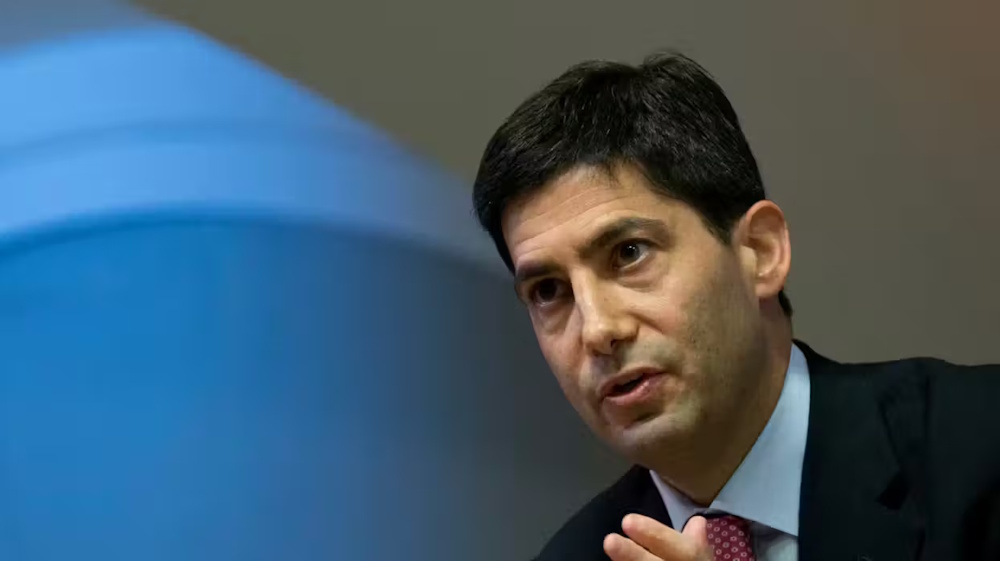
Investors are expressing growing concerns regarding government deficits and ongoing inflationary pressures, which are contributing to an increase in the cost of capital. The Federal Reserve has the capacity to alleviate some of those concerns. The conflict in the Middle East intensified last week, leading to a rise in energy prices and compelling heavily indebted nations to increase borrowing to bolster defence expenditures and finance the ongoing war. That exacerbated a global downturn in the bond market, propelling yields to levels not seen in multiple years and decades. Increased yields lead to elevated borrowing costs for consumers across various sectors, including mortgages and credit cards, as well as impacting the US government’s substantial $40 trillion debt. Fed Chairman Kevin Warsh has largely refrained from expressing his views on the potential trajectory of interest rates. However, in a significant address last month at an economic symposium in Jackson Hole, Wyoming, Warsh provided markets with a clue, stating there was more “work to do” in combating inflation – an indication that rate hikes could be imminent.
Investors responded positively to Warsh’s Jackson Hole speech, highlighting their eagerness for greater insight into his economic perspectives. Fiscal concerns and a significant increase in corporate borrowing to finance the AI build-out are the primary factors contributing to the rise in yields. However, increased transparency from Warsh could serve as a significant stabilising factor for the bond market – and a far more preferable option than the central bank utilising its extensive $6.7 trillion balance sheet to manage yields, as was the case during the Great Recession and World War II. “The Fed’s responsibility is confined to just controlling inflation and if Warsh can just explain policy better in the next few months, then that source of anxiety is likely to ease,” Derek Tang told. “But the Fed does have firepower with its unlimited balance sheet.” US Treasury yields increased marginally on Tuesday as traders kept an eye on oil prices and prepared for inflation data expected to be published later this week. Following a significant increase last week, yields exhibited greater stability this week. The 10-year yield traded at 4.79%, approaching its peak level since 2025 and on the verge of reaching its highest point since 2023.
Warsh has consistently asserted that the Federal Reserve remains dedicated to its 2% annual inflation target. However, this has not sufficiently assuaged the concerns of bond investors. Shortly after Warsh conducted a news conference subsequent to the Fed’s July monetary policy meeting, long-term bond yields experienced a significant increase. That was likely a reflection of uncertainties regarding the Fed chairman’s dedication to controlling inflation, an adaptation phase to a more subdued Fed, or merely anticipations for forthcoming rate increases. But Warsh has not provided what’s known as a “reaction function,” which is the central bank’s explanation of “what it is watching, how it interprets the economy, how it weighs competing risks, and what developments would change its judgment,” according to the Brookings Institution. While Warsh didn’t elaborate on a reaction function in his Jackson Hole speech, his indication that rate hikes may be forthcoming was a positive development. “Warsh needs to continue to refine how he communicates with markets,” said Jim Baird. “Part of that is providing assurance that policymakers will take policy action in a reasonable time frame.” Markets are pricing in approximately a 60% probability that the Federal Reserve will increase interest rates at its upcoming meeting, highlighting the ongoing uncertainty that characterises Wall Street. That would signify the inaugural rate hike in over three years. Investors anticipate at least one additional rate increase before the conclusion of the year, although the precise timing is still uncertain.
However, the Federal Reserve possesses an unconventional instrument to affect long-term yields: its balance sheet. Yet it is highly improbable that the central bank will employ it. “The Fed has the ammo to be much more impactful on the level of interest rates by introducing quantitative easing,” said Mike Goosay. “But I don’t think that’s going to happen.” In reaction to the Great Recession, the Federal Reserve significantly increased its balance sheet by purchasing bonds and mortgage-backed securities. This strategy aimed to inject liquidity into the financial system and stimulate economic activity during a period when interest rates were already approaching the zero lower bound. Warsh, who served as a Fed governor during that period, stated his support for the initial round of quantitative easing, or QE, characterising it as an extraordinary emergency measure. However, authorities subsequently implemented two additional rounds of quantitative easing, which effectively contributed to market stabilisation and supported an economic recovery. However, it led to Warsh’s resignation. At that moment, Warsh characterised the Fed’s extensive asset acquisitions as “reverse Robin Hood,” contending that it favoured affluent asset holders at the expense of ordinary households. Since taking on the role of Fed chairman, Warsh has emphasised the necessity for the central bank to return to fundamental principles, rendering it improbable that he would endorse quantitative easing in the current context.
That was not the sole occasion on which the Fed has employed its balance sheet to impact long-term borrowing costs. “In World War II, the Fed thought it had a duty to support the war effort, so it used its balance sheet to hold down bond yields to make sure that the government could spend more,” Tang said. “But we’re not in a world war right now.” The Fed accomplished this by establishing a fixed low price for Treasury bills and long-term bonds, subsequently purchasing all the bonds that private buyers were unwilling to acquire – all while maintaining low short-term interest rates. However, this policy incurred a significant cost: The Fed effectively relinquished its independence, complicating the efforts of policymakers to control inflation. That arrangement concluded with the 1951 Treasury-Fed Accord, which reinstated the central bank’s autonomy from the Treasury. Warsh has stated that the Fed’s independence is crucial – and this has implications for the bond market. If investors perceive that the Fed is prepared to implement unpopular monetary policy measures to combat inflation, their confidence in its dedication to maintaining price stability is likely to increase. Ultimately, persuading investors that it will take measures to maintain inflation stability is the most straightforward instrument the Fed possesses to soothe the bond market.