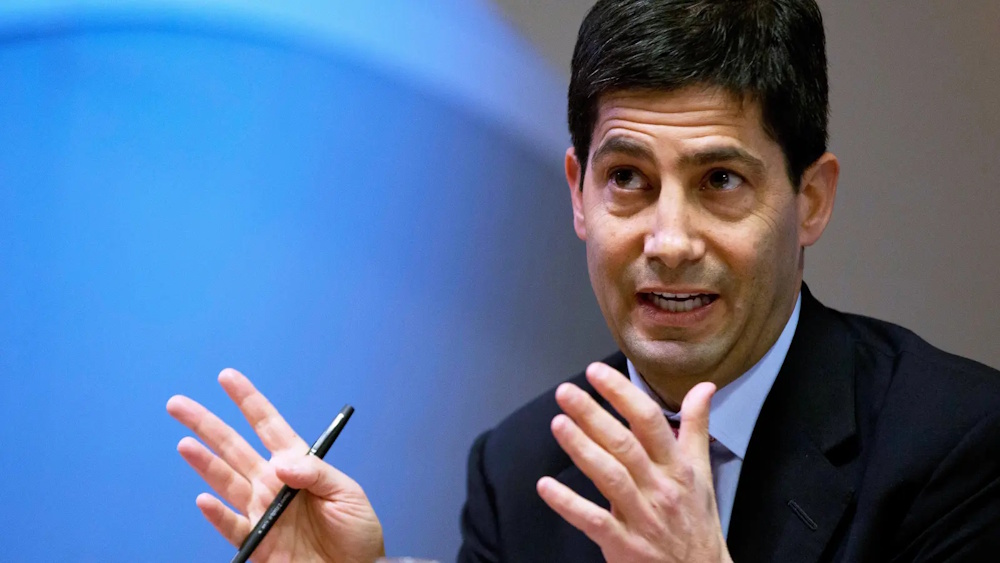
Inflation reached its peak in three years last month, as indicated by recent data published this week. However, new Federal Reserve Chair Kevin Warsh advocates for the central bank to prioritise alternative metrics. “The measures I prefer are looking at things that are called trimmed averages,” he stated during his confirmation hearing in April. “What I’m most interested in is the underlying inflation rate, rather than the one-time price fluctuations resulting from geopolitical shifts or changes in beef prices.” Those “trimmed-mean averages” serve as alternative inflation measures published by regional Federal Reserve banks, providing investors and policymakers with enhanced insights into the scope and trajectory of inflation. Warsh will lead his inaugural policy meeting as chair next week. Investors are currently anticipating a potential increase in interest rates by the Federal Reserve this year, driven by a surge in inflation attributed to the conflict in Iran. However, should Warsh convince his colleagues to consider alternative inflation metrics, the central bank might maintain current interest rates — or potentially reduce them — which could lead to a more significant surge in price escalations.
The Federal Reserve Bank of Dallas produces a trimmed-mean gauge indicating that annual inflation stood at 2.3% in April. A comparable assessment from the Cleveland Fed indicates that annual inflation in May stands at 2.9%. In contrast, the May CPI registered at 4.2%; meanwhile, the Producer Price Index, which gauges inflation at the factory gate and was published on Thursday, attained a more-than-three-year high of 6.5% in May. The PPI potentially foreshadows what may be in store for consumers. Historically, certain trimmed-mean measures have demonstrated periods of outperforming CPI and other indicators in forecasting the future trajectory of inflation. However, certain colleagues of Warsh caution that trimmed-mean averages may not be effectively reflecting the current economic realities. Some economists contend that Warsh’s arguments lack persuasiveness. “Fed Chair Kevin Warsh has declared himself a fan of trimmed mean estimates,” stated Richard de Chazal. “But the reality is that inflation is now indicating a clear upward trajectory.” The Fed already closely monitors core inflation, which excludes the more volatile prices of food and energy. The Fed relies on the Personal Consumption Expenditures price index, rather than CPI, as it provides a more dynamic and comprehensive view of prices. Similar to the Consumer Price Index, the Personal Consumption Expenditures inflation rate has exhibited an upward trajectory since February, attaining a level of 3.8% in April.
May PCE data is scheduled for release later this month. Warsh contends that officials ought to advance the process of filtering noisy data. The trimmed-mean rate eliminates the most extreme outliers from core inflation prior to averaging, thereby mitigating volatility in the results. The Cleveland and Dallas Fed banks employ distinct methodologies in calculating their trimmed-mean rates, resulting in the exclusion of varying outliers. “Trimmed mean is generally a better predictor of where inflation is headed,” which can help the Fed chart a path for interest rates, the Brookings Institution stated in an analysis from April. “Trimmed Mean PCE inflation has many advantages over core PCE, including a tighter relationship with labour market slack as well as smaller subsequent revisions,” Dallas Fed research shows. However, that measure may be even less effective in the current context due to technical considerations. “The trimmed-mean typically provides a dependable indication of the direction in which overall inflation is likely to move. “At the moment, however, my staff’s research cautions against putting too much stock in low readings of the trimmed-mean,” stated Dallas Fed President Lorie Logan, a Fed voter this year, earlier this month during an event in El Paso, Texas. “A change in the mix of price increases and decreases” is currently skewing the trimmed-mean lower than it should be based on economic fundamentals, she added.
The Dallas Fed’s trimmed-mean figure “is biased downward” these days because it’s not fully capturing the abrupt jump from price shocks, Brian Bethune stated. He expresses doubt that the Fed’s influential rate-setting committee will be persuaded by arguments to rely on the gauge. The Fed next week is widely anticipated to maintain its benchmark lending rate for the fourth consecutive meeting, yet it may indicate that rate hikes could be considered due to concerns regarding accelerating inflation. Should Warsh maintain that inflation is not an immediate concern by referencing an alternative metric indicating the lowest rate, it could present “a risk that markets or analysts would say ‘okay, this is ludicrous, this is not what we should be looking at,’” as noted by Eugenio Alemán. “Switching to a new metric when inflation has been above the Federal Reserve’s 2% PCE target for five in their analysis.