Several of the world’s biggest technology companies are facing a new financial challenge: competing to be the AI industry leader. The aggregate off-balance-sheet debt of Alphabet, Microsoft, Amazon, Meta, and Oracle has increased eightfold in around four years to almost $1.65 trillion, according to a research. This makes it more difficult for investors to gauge their actual financial risk, as it exceeds the approximately $1.35 trillion in debt that appears on their financial statements. Since Alphabet, Microsoft, Amazon, and Meta are all scheduled to announce their most recent quarterly earnings this week, the numbers might go up even more. A company’s notes to financial statements often disclose hidden debt, which is defined as financial obligations that are not shown on the balance sheet. According to accounting rules, these promises are valid and enforceable. But they can make it harder for investors, especially regular people, to gauge how much money companies will be spending in the future. A large chunk of this hidden debt among AI firms comes from contracts for the long-term lease of data centers or the purchase of expensive GPUs, servers, and other computer gear that has not yet been delivered or turned on. Because these assets are either still in the planning stages or not yet put into use, the commitments linked with them will remain off the balance sheet until certain accounting requirements are met.
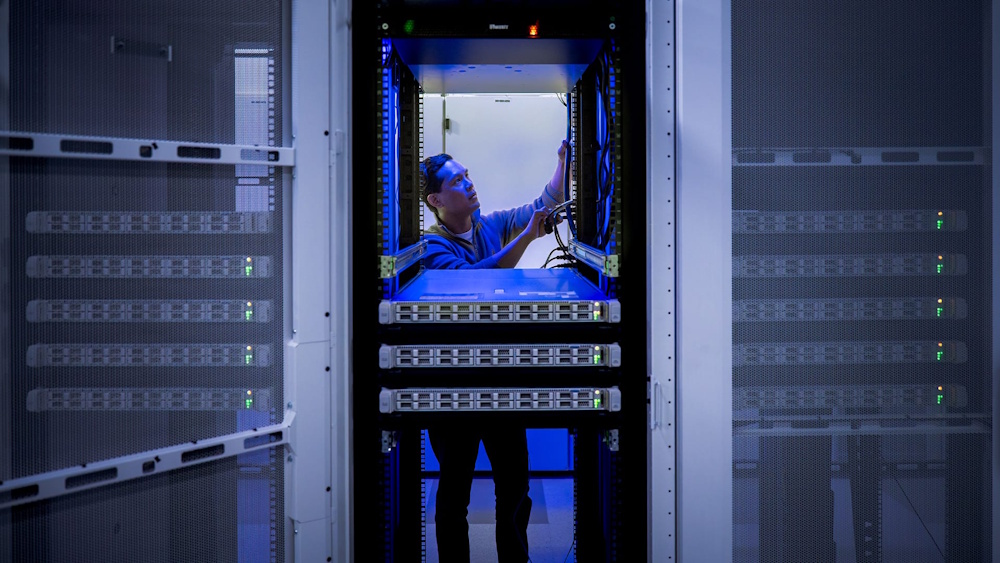
Building data centers and purchasing advanced graphics processing units, servers, and other computing gear are two ways that tech companies are investing heavily to improve AI capabilities. Data center operators often offer long-term lease contracts to corporations instead of outright purchasing several locations. The operators often provide the physical infrastructure (land, buildings, and power) and the technology companies guarantee the long-term use of these assets. Since these projects are still in the planning stages, the balance sheet will not reflect all of the lease commitments until the facilities are operational. With an estimated $420 billion in secret debt—nearly three times its disclosed debt—Meta has the highest amount among the five firms. One of the most rapid escalations has occurred at Oracle. Approximately $273.3 billion constituted its disguised liabilities as of May 30th, which is 30 times higher than the level recorded four years ago. By entering into long-term lease agreements with third-party data center operators, the business is expanding its massive Stargate AI data center project in tandem with OpenAI. Despite these pledges being in line with accounting norms, the research states that analysts and investors are becoming more wary. A report for investors has been prepared by Morgan Stanley to examine the growing off-balance-sheet obligations, and a warning has been issued by Moody’s regarding the rapid increase in lease agreements for projects that have not yet begun. Companies believe their investments will be justified by the expected profits from AI and cloud computing. A combined cloud services order backlog of about $1.45 trillion existed by the end of March among Microsoft, Alphabet, and Amazon, providing insight into potential revenue streams.
When it comes to funding AI infrastructure, institutional investors are becoming more and more important. Meta is building a massive data center in Louisiana through a partnership with investment funds managed by Blue Owl Capital. In 2025, the project was estimated at $27 billion; however, Meta has now said that it expects to invest more than $50 billion. By leasing the facility and maintaining its minority stake in the operating firm, Meta is able to access computing capability without instantly reporting the full financial obligation as debt. Investor protections in the case of project unnecessaryness and subsequent lease termination are also included in the agreement. Investments in artificial intelligence are outpacing profitability for many tech companies, so they are seeking funding through bond and stock issues. A source has stated that there are concerns about the potential overgrowth of spending on AI infrastructure due to the increased utilisation of institutional financing. The strategy is known as “shadow borrowing,” according to economists at the Bank for International Settlements. In this method, businesses increase their financial obligations without really taking on more debt.
The experts have warned that companies could lose a lot of money when these liabilities end up on their books if demand for AI slows down or data centers keep running below capacity. Despite these concerns, spending on AI continues to rise around the world. Investment in artificial intelligence hit $800 billion in 2025, according to the ‘State of AI Report 2026’ by SenseAI Ventures. Investment from venture capitalists nearly quadrupled to $226 billion, signalling a transition in the industry’s focus from pilot projects to widespread commercial implementation. According to the report, a whopping 79% of AI funding came from mega-rounds worth over $100 million. This means that investors are getting really bullish on companies that are showing clear signs of business demand. Additionally, it showed that building AI models and infrastructure is no longer the main focus, but rather incorporating AI into goods, company operations, and revenue-generating applications; the application layer is now the main driver of commercial value.