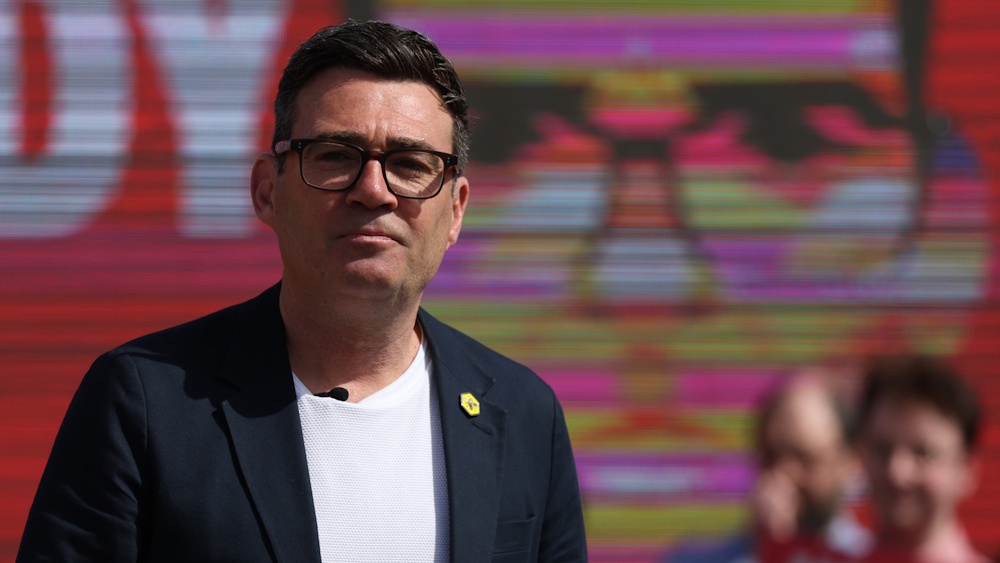
Democratic leaders are accountable to voters, lawmakers, and global counterparts. However, the individual poised to become Britain’s next prime minister must also gain the support of a significant stakeholder: the bond market. Andy Burnham, the charismatic former mayor of Greater Manchester, once dismissed the notion that government decisions ought to be influenced by investors amid its growing debt burden. In September, he expressed to the UK’s New Statesman magazine his desire for Britain to move “beyond this thing of being in hock to the bond markets.” His comments indicate an increasing belief that bond investors, rather than elected officials, have assumed the role of the primary influence on Downing Street’s decisions regarding taxation and expenditure. When investors perceive policies as overly costly, they respond by penalising the government through the sale of bonds, as retaining the debt is regarded as excessively risky. When a bond is sold off, its yield — or the interest that the government is obligated to pay to new investors in those identical bonds — increases. That raises borrowing costs throughout the broader economy, impacting individuals’ mortgage rates. Burnham, now faced with the practical challenges of leadership, has adjusted his position, stating last month that he endorses the fiscal rules set by the ruling Labour government and aims to lower public debt. “I have never stated that one can simply overlook the bond markets,” he communicated to the outlet.
The notion that governments ought to remain indifferent to bond investors may garner public backing; however, analysts suggest that this perspective is ultimately impractical. “If you owe £3 trillion, you are in hock to the lenders to some degree,” Jonas Goltermann. Burnham’s initial comments are “all very well when you’re the Mayor of Manchester gunning for a leadership position, but when you’re going to be prime minister then your words matter a bit more,” Goltermann stated. “I believe he has come to that understanding, and those in his circle have recognised it as well, which is why they have adjusted their perspective,” he added. “It’s simply a reality that the bond market, rather than the fiscal regulations, serves as the limitation on what (the government) is able to pursue regarding expenditure.” Britain recalls the turmoil of 2022, when former Prime Minister Liz Truss initiated a significant sell-off of bonds following her announcement of substantial unfunded tax cuts. The turmoil in financial markets compelled the government to make a significant reversal, culminating in Truss’ resignation after a mere 49 days in office. In 2024, the newly elected Labour government under Keir Starmer indicated its commitment to adhering to stringent, self-imposed constraints on both spending and borrowing.
Together with incremental tax increases, the framework provided limited capacity for substantial policy initiatives that necessitate significant expenditure. “Bond investors hold more influence than you might realize,” stated Dan Coatsworth. “When there are abrupt increases in bond yields, it indicates that governments, if they find themselves at the heart of this situation… must take a different approach (in terms of policy) – they need to either step back or pause their current actions and allow the market to stabilize,” he stated. The UK, similar to numerous other significant economies, is currently burdened by a substantial level of debt — £2.98 trillion ($4 trillion) to be precise — accumulated through a succession of crises, including the 2008 global financial crash, the Covid-19 pandemic, and the energy shock that followed Russia’s full-scale invasion of Ukraine. The UK’s debt load stands at 95% of its economy, which is a smaller proportion compared to France and the United States, at 116% and 100% respectively. However, the interest rate on its 10-year bond exceeds that of its French and American counterparts. Britain’s debt interest payments reached £110 billion ($145 billion) in the previous financial year — surpassing the government’s estimated expenditure on the UK’s defence during that timeframe. Borrowing costs have experienced a significant increase this year. In March, the yield on the 10-year bond increased above 4.9%, reaching its highest level since 2008. However, yields for bonds from other countries have also been affected as the global community contemplates the implications of the US-Israeli conflict with Iran on inflation. Higher inflation increases the likelihood that central banks will raise interest rates, which in turn leads to higher bond yields. Investors, expecting improved returns, frequently sell off their bonds and hold off on purchasing new ones until they can secure higher yields.
Rising UK debt costs are “mainly an Iran war story” rather than a reflection of its current political upheaval, according to Andrew Goodwin. Britain faces a greater vulnerability to global energy shocks compared to some of its counterparts, as he noted, due to its position as a major importer of natural gas and the crucial role this fuel plays in determining electricity prices. British politics may increasingly impact the bond market with Burnham in charge. He has expressed a desire to place essential services such as water, housing, and energy under increased public control. The cost of nationalising the water industry alone would amount to £100 billion ($132 billion), based on an estimate provided by the UK’s Department for Environment, Food and Rural Affairs. How such ambitious plans will align with Burnham’s commitment to fiscal discipline is yet to be determined. Investors will be monitoring closely to determine whom Burnham selects to succeed Rachel Reeves as the nation’s finance minister, a change that is broadly anticipated, experts indicated. Burnham would enter Downing Street at a time characterised by a more pronounced “feedback loop” between politics and the bond market, in contrast to the previous decade when UK bond yields were at lower levels, noted Goltermann. “It certainly feels like since the Truss debacle in 2022 the (UK bond) market has become much more susceptible to (these) kinds of politically induced sell-offs,” he stated.