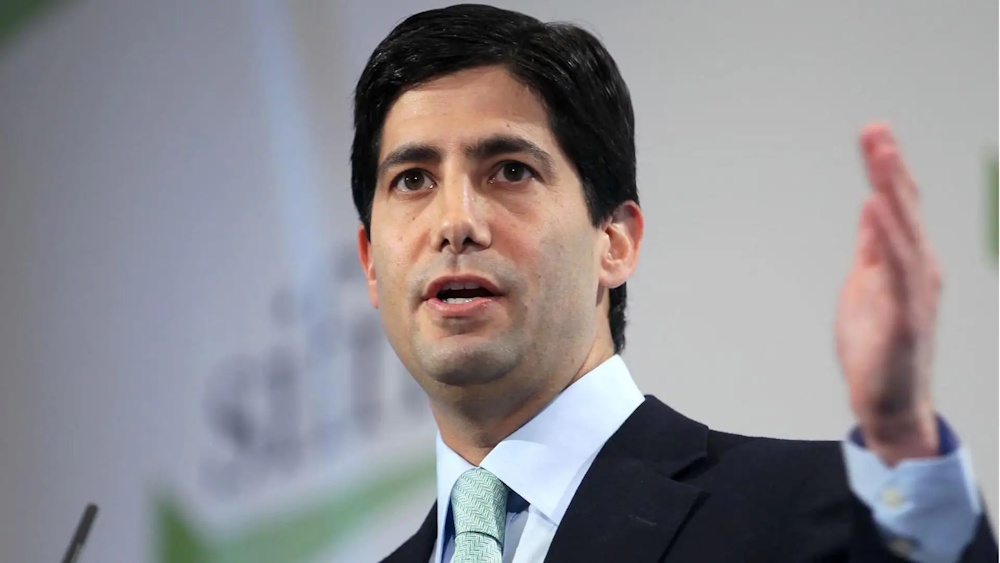
Kevin Warsh was confirmed by the Senate on Wednesday to take on the role of the 17th chair of the Federal Reserve. He steps into a central bank that has faced significant political pressure from President Donald Trump, amid an economy affected by geopolitical tensions that are contributing to rising inflation. Warsh will officially take over from Fed Chair Jerome Powell, whose eight-year term was characterized by multiple economic crises and a contentious battle with the White House to uphold the political independence of the US central bank. The confirmation of Warsh occurred with a 54-45 vote, predominantly divided along party lines, with the exception of Democratic Senator John Fetterman from Pennsylvania, who voted in support of Warsh’s nomination. The vote for the Fed chair nominee marked a historic level of partisanship, highlighting the discomfort among Democrats regarding Trump’s opposition to the Fed, while Republicans largely express support for Warsh’s leadership.
Warsh is generally perceived as being more in sync with President Donald Trump, who has consistently called for rate reductions, yet he is poised to assume his role as inflationary pressures mount in light of the US-Israeli conflict with Iran. In April, inflation surged to a three-year peak, as indicated by the most recent Consumer Price Index, and currently exceeds the rate of wage growth. The energy shock is complicating expectations for a rapid reduction in interest rates, leading investors to anticipate that the Federal Reserve will maintain its benchmark lending rate at current levels for the remainder of the year — or potentially increase rates should inflation escalate. The potential scenario is expected to exasperate Trump, who might channel his displeasure towards Warsh similarly to his approach with Powell. The president humorously suggested earlier this year that he would take legal action against Warsh should he fail to lower interest rates. Nonetheless, the chair of the Federal Reserve is merely one vote within the Federal Open Market Committee that deliberates on interest rate adjustments. Although Warsh would steer the agenda at each Federal Reserve meeting, he would lack unilateral power over the decisions made by the majority of the committee. Currently, a segment of policymakers possessing voting authority has indicated significant apprehensions regarding inflation.
The Warsh era at the Fed is anticipated to bring about a number of transformations within the institution. The incoming Fed chief has proposed or suggested a reduction in the size of the Fed’s $6.7 trillion balance sheet; a closer coordination with the Treasury Department regarding the balance sheet; a decrease in the number of policy meetings each year from eight to potentially as few as four; a reduction in the frequency of news conferences; a downsizing of the Fed’s Washington-based workforce; and a less frequent indication of the trajectory of interest rates. JPMorgan analysts assert that all those changes would fall within the scope of Warsh’s authority as chair. The most formidable policy adjustment for Warsh may pertain to the balance sheet. For years, Warsh has consistently asserted that the Fed should diminish its presence in financial markets by contracting the balance sheet, enabling central bankers to predominantly depend on their conventional instrument — the key interest rate — to combat elevated inflation and unemployment rates. In the aftermath of the Great Financial Crisis and subsequently during the pandemic, the Federal Reserve engaged in the purchase of substantial amounts of assets, including Treasury bonds, as a means to bolster the economy, a strategy referred to as quantitative easing.
Warsh contends that these policies erode the independence of the Federal Reserve, as they effectively serve to support the government financially. He contends that the central bank ought to expedite the process of reducing its substantial holdings, which encompass mortgage-backed securities and government bonds, at the earliest opportunity. The quest by Trump to appoint a new chair of the Federal Reserve extended over several months, culminating in a contentious confirmation process. This process faced delays, notably due to the actions of a prominent Republican, North Carolina Senator Thom Tillis, who insisted that the Justice Department terminate an investigation concerning Powell. This investigation was linked to testimony provided by the Fed chair to Congress the previous year regarding cost overruns associated with a renovation project at the Federal Reserve’s headquarters in Washington, DC. The DOJ investigation heightened concerns that the Trump administration was attempting to undermine the Federal Reserve’s autonomy, potentially opening the door to political meddling in the determination of interest rates for the world’s largest economy. Powell firmly criticized the investigation as being influenced by political motives, asserting in a video statement that it stemmed from wider “threats and ongoing pressure” from the administration.
The investigation, spearheaded by DC US Attorney Jeanine Pirro, was ultimately discontinued; however, Pirro indicated that she might reconsider it should the Federal Reserve’s inspector general uncover any evidence of misconduct or neglect of responsibility. The inaugural meeting of Warsh as chair of the Federal Reserve is scheduled for June 16-17, while former Chair Powell continues to hold a position as governor for the time being. During his final news conference as chair last month, Powell extended his congratulations to Warsh and expressed his willingness to support him in any capacity, while also stepping back to allow the incoming Fed chief to take the reins of governance. Typically, Fed chairs resign from the board entirely upon concluding their tenure at the helm of the central bank. However, Powell has indicated his intention to remain until he ascertains that Pirro’s investigation has reached its conclusion. The sole other former chair of the Federal Reserve to remain in position was Marriner Eccles in 1948, who continued to serve on the board for several additional years.