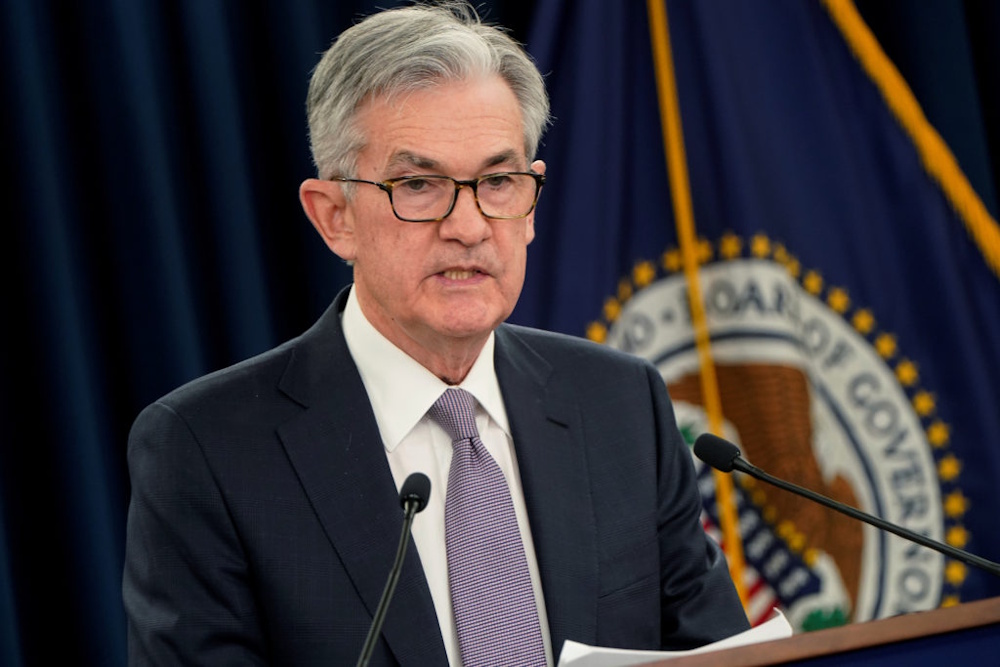
Federal Reserve Chair Jerome Powell is accustomed to making difficult decisions, yet he now confronts one of his most challenging and personal choices to date: Depart the scene or remain in a subordinate capacity once his successor assumes leadership of the US central bank. Powell’s tenure as chair of the Federal Reserve concludes on May 15, while his distinct term on the influential board of governors extends until January 2028. The ongoing succession drama at one of the most influential institutions globally has ignited a fresh round of speculation in both Washington and Wall Street: Will Powell remain in his position, given that the Justice Department has concluded its unprecedented investigation into him? The upcoming Fed meeting and press conference on Wednesday represent a crucial subplot, during which Powell may disclose his intentions or, at the very least, provide some indications. Typically, this situation does not provoke significant discussion: The head of the Federal Reserve generally departs upon the completion of their four-year term, despite the fact that they can remain as a governor and still participate in voting on interest rate decisions. However, these circumstances are far from typical. The independence of the Federal Reserve, which Powell considers essential and which carries significant consequences for inflation-sensitive constituents, has faced persistent challenges throughout President Donald Trump’s second term.
Staying at the Federal Reserve, even in a diminished capacity, may shield Powell from potential criminal charges pursued by the Trump administration. Trump would face challenges in promptly appointing a successor to Powell, particularly one who might be more inclined to undermine the Federal Reserve’s valued independence and advocate for lower interest rates. Consequently, certain individuals who previously worked alongside Powell and observers of the Federal Reserve express skepticism regarding his adherence to recent precedents, as reported. If Powell remains on the board, he would be the first Federal Reserve chair since 1948 to continue at the central bank. “I would expect him to be torn – wanting to leave on a personal basis (he looks worn out) but also wanting to protect the integrity of the institution,” Bill Dudley conveyed. “It is my estimation that he will remain in position for a period – though this duration will be counted in months rather than years.” In March, Powell indicated that he had not yet made a decision regarding his departure upon the confirmation of his successor. However, he emphasized that this decision would be grounded in “what I think is best for the people we serve.” He stated during a conference “I have no intention of leaving the board until the investigation is well and truly over, with transparency and finality.” However, it remains a topic of contention as to whether that criterion has been satisfied, particularly in light of the inconsistent signals from administration officials.
Last week, Jeanine Pirro, the US Attorney for the District of Columbia, announced the closure of the criminal investigation into Powell concerning the Federal Reserve’s expensive renovation project. Republican Senator Thom Tillis on Sunday decided to withdraw his opposition to Powell’s probable successor, Kevin Warsh, thereby paving the way for a vote on Wednesday to progress the nomination. Nonetheless, the legal issue seems not to be entirely resolved. The inquiry will henceforth be overseen by the inspector general of the Federal Reserve. Pirro indicated that her office will examine the IG’s report and acknowledged that a criminal investigation may be reinitiated, should the circumstances justify it. “Powell chooses his words carefully and I don’t see the DOJ announcement as meeting his standard (for leaving the Fed),” stated Narayana Kocherlakota. Earlier this month, Trump cautioned that he would “fire” Powell if he remained at the Fed – a decision that would probably encounter an extended legal dispute.
Nonetheless, White House press secretary Karoline Leavitt adopted a markedly different tone merely two weeks later. When inquired on Monday regarding Trump’s stance on Powell’s continuation on the Fed board, Leavitt remarked: “I think the president will be satisfied once Kevin Warsh is confirmed as the Fed chair.” Jon Hilsenrath indicated that it appears Powell will hold off until the legal issue is definitively settled. “As long as he holds the position of a Fed governor, he possesses leverage. “It’s the last card Powell has to play against a president who has had it in for him for many years,” Hilsenrath told. Hilsenrath posited that Powell would favor an exit strategy. At 73 years of age, Powell, a former private-equity executive, has held a position at the Federal Reserve since 2012. “He doesn’t require the financial resources…” Hilsenrath remarked, “I strongly believe he would like nothing more than to walk out to the sunset and start a new chapter in his life. However, Powell might believe that it serves the institution’s interests to show he cannot be easily influenced or intimidated.” If Powell opts to remain in his role as governor, it would not be without precedent.
The most recent instance of a Federal Reserve chair opting to remain in position occurred in 1948, when Marriner Eccles continued to serve on the board for three years following the conclusion of his term as chair. One of the Federal Reserve buildings central to the criminal investigation involving Powell is named after Eccles. While not entirely without precedent, Powell’s involvement may introduce complexities into the transition to the new Fed chair, potentially leading to confusion among investors and the public regarding the true decision-maker. Nonetheless, Benson Durham, a former senior Fed staffer, contended that it is not in Powell’s “DNA” to adopt the role of an outspoken Fed governor characterized by confrontational speeches and uncomfortable dissenting votes. “His motivation would be to protect Fed independence, not to be a pain in the a**,” stated Durham. Durham noted that Powell’s continued presence could potentially assist Warsh by facilitating a smoother transition. “The optimal scenario for all parties involved would be for Powell to remain for several meetings – and align his vote with Warsh,” he stated. “It would facilitate a seamless transition.”