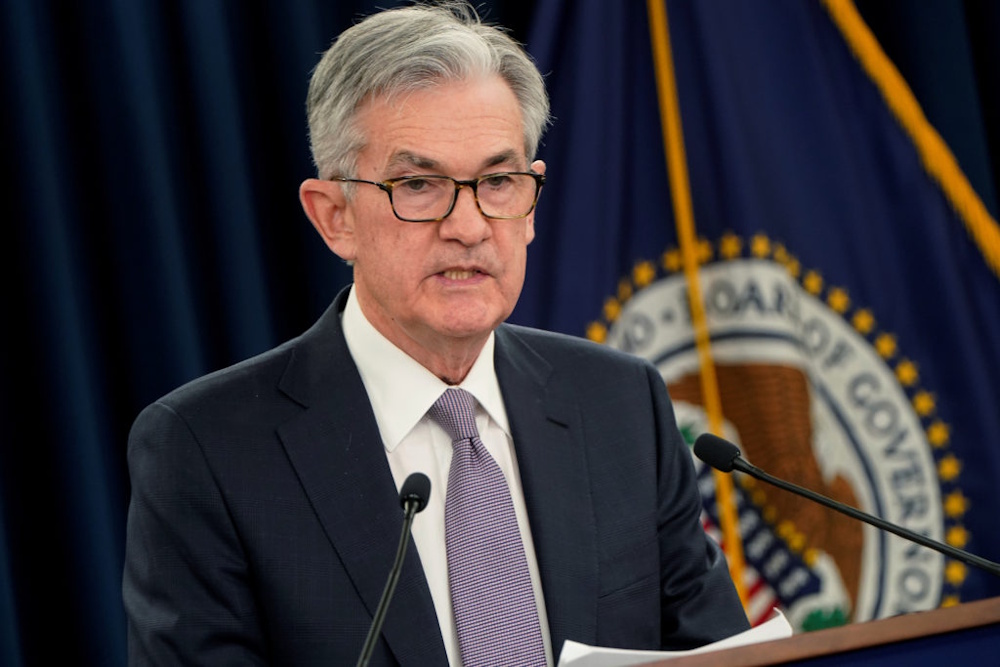
The conclusion of the Trump administration’s remarkable criminal investigation into Federal Reserve Chair Jerome Powell alleviates considerable uncertainty that had been overshadowing the future of the world’s most crucial central bank. Jeanine Pirro, the US Attorney for the District of Columbia, announced on X Friday the conclusion of the investigation. The Fed’s inspector general has consented to examine the substantial cost overruns associated with the central bank’s ongoing multibillion-dollar renovation project at its Washington, DC, headquarters. Following the completion of the inspector general’s report, Pirro indicated that her office will conduct a review and may reinstate its criminal investigation if deemed necessary. The conclusion of the investigation paves the way for Kevin Warsh, nominated by President Donald Trump to replace Powell, to secure confirmation for the position. Powell’s tenure at the helm of the central bank is scheduled to conclude on May 15, and Warsh recently presented himself before the Senate Banking Committee for a confirmation hearing. A prominent senator on the committee has pledged to obstruct the vote unless the DOJ ceases its investigation into Powell.
The Department of Justice initiated a criminal investigation into the Federal Reserve chair in January, following months of criticism from Trump regarding Powell’s reluctance to expedite interest rate reductions. Trump’s grievances encompassed allegations of misconduct and ineptitude regarding Powell’s management of the renovation project. A federal prosecutor in Washington, DC, informed a judge last month that there was a lack of evidence for any criminal activity; nevertheless, Pirro persisted with the investigation, and Trump expressed his support for the inquiry. The investigation, which Powell in January firmly criticized as politicized, has been troubled from the outset. Pirro’s subpoenas unexpectedly caught the White House off guard, casting a pall over Warsh’s prospects for nomination. A federal judge last month nullified the Justice Department’s subpoenas, a ruling that Pirro indicated she intends to contest. The DOJ investigation heightened concerns regarding the potential erosion of the Federal Reserve’s autonomy under the Trump administration, raising the specter of political influence over interest rate decisions in the world’s largest economy. Thom Tillis has been obstructing a vote for Warsh due to the investigation, which he characterized as “frivolous.” He indicated that he would support the confirmation of Warsh following the conclusion of the investigation. The decision to discontinue the criminal investigation follows several weeks of private appeals from Senate Republicans, which have progressively become more public in nature.
The investigation jeopardized Warsh’s nomination and cast uncertainty over Powell’s position at the Federal Reserve, thereby putting the future leadership of the United States central bank in question. Powell indicated that should a successor not be appointed by the conclusion of his term on May 15, he would continue to serve as Fed chair “pro tem” during the interim period. That outcome did not meet Trump’s expectations, as he has sought to remove Powell for an extended period. Trump posits that the appointment of a new Fed chair will lead to a reduction in interest rates, humorously suggesting that he would pursue legal action against Warsh should he fail to implement rate cuts upon confirmation to the position. Last week, Trump issued a threat to terminate Powell should he decline to resign at the conclusion of his term. However, that threat introduced additional disorder into the circumstances. Terminating Powell would have initiated a protracted legal battle that might have extended the duration of Trump’s unwelcomed Federal Reserve chairmanship. The decision to drop the probe represents a significant shift for an administration that seemed to be reinforcing its commitment to the investigation. On Tuesday, Trump implied that Powell was benefiting financially from the renovations. “I find it hard to believe that ‘Too Late’ is generating revenue from construction.” I am unable to do so. However, it remains a possibility,” he stated, employing his moniker for the leader of the central bank. “However, it is imperative that we ascertain the facts.” On Friday, White House press secretary Karoline Leavitt acknowledged that the criminal investigation might be paused; however, she indicated that the president is content with the Fed’s inspector general conducting a review of the renovation. “The investigation remains ongoing. “It’s just under a different authority,” Leavitt stated outside the White House. The clarity surrounding the Fed inspector general’s review remains ambiguous; it was in July 2025 that Powell directed the IG to enhance scrutiny on the project.
Elizabeth Warren characterized the investigation as “bogus,” asserting that the sole motive behind the Trump administration’s decision to discontinue the inquiry was to facilitate the appointment of Kevin Warsh, whom she referred to as President Trump’s “sock puppet,” as chair of the Federal Reserve. “Anyone who believes Donald Trump’s corrupt scheme to take over the Fed is over is fooling themselves,” Warren stated on Friday. “The Senate ought to refrain from advancing the nomination of Kevin Warsh.” Last year, Trump conducted a tour of the renovation alongside Powell. The completion of the project is anticipated by the fall of 2027, with an influx of approximately 3,000 employees based in DC expected to commence their roles by March 2028. The renovation project encompasses structures that “needed a lot of work,” Powell informed senators during his semiannual testimony last year. Powell noted that the Fed’s main Eccles building, specifically, has not undergone a significant renovation since its inauguration in the 1930s. “The safety measures were inadequate, and the waterproofing was insufficient.” The intricate original detail work along the ceiling is evident in the primary two-story board room as extensive renovations progress at the Marriner S. Eccles Federal Reserve Board Building and the 1951 Constitution Avenue Building on July 24, 2025, in Washington, DC. The front facade of the Marriner S. Eccles Federal Reserve Board Building is prominently displayed as significant renovations are underway on both the building and the 1951 Constitution Avenue Building on July 24, 2025, in Washington, DC.
The Federal Reserve has made available on its website a video documenting water entering the basement of its building in 2017. In an extensive FAQ, the Fed detailed various factors contributing to the cost overruns: asbestos abatement, an unexpectedly high water table, and the increasing prices of certain raw materials were cited as significant contributors to the escalating expenses. The construction incorporates blast-resistant windows and shear walls, which significantly contribute to the overall cost of the building, as noted by Federal staff during Trump’s tour. The purpose of these upgrades is to comply with the Department of Homeland Security’s stringent security standards for federal buildings. “No one in office wants to undertake a significant renovation of a historic building during their term,” Powell conveyed to the senators at that time. “You much prefer to leave that to your successors — and this is a great example why,” he remarked, alluding to the ongoing backlash. “However, we made the decision to proceed with it.”