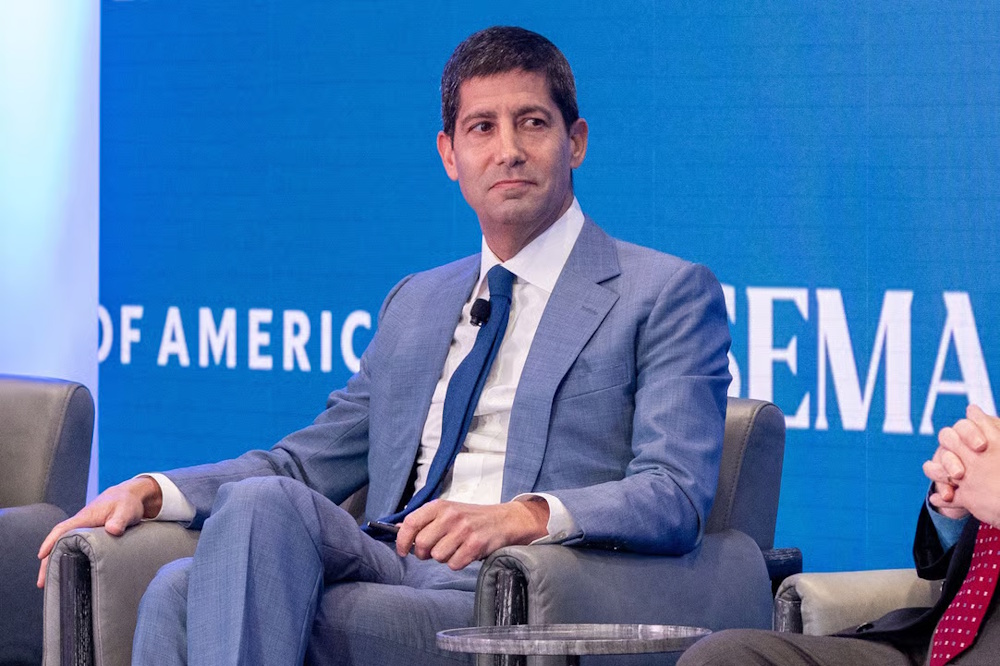
Federal Reserve officials typically maintain a distance from political matters and adhere to their designated roles, as said by Kevin Warsh, the nominee for Fed chair under President Donald Trump, during his confirmation hearing on Tuesday. The purpose of that lane is to regulate the economy through the adjustment of interest rates, aligning with the central bank’s congressional directive to achieve stable prices and maximum employment. However, when senators on the banking committee questioned Warsh on subjects clearly within his expertise, such as the factors influencing inflation, he maintained a vague stance on his opinions. That is not incidental. This illustrates Warsh’s overarching initiative to reconsider the manner in which Federal Reserve officials communicate their perspectives on economic conditions and the trajectory of interest rates. When questioned about his alignment with various Fed officials who have recently asserted that the elevated tariffs imposed by Trump are contributing to rising prices, Warsh responded succinctly, “I don’t.”
However, he subsequently introduced complexity to that certainty by contending that the government’s conventional inflation metrics fail to adequately reflect the economic realities — and that, if validated, he would advocate for a reevaluation of the methods used to measure inflation entirely. “I want to understand the true nature of inflation,” he stated, noting that “there’s some work to do” regarding its calculation. When questioned about the potential impact of a rate cut that is eight times larger than the usual adjustment by the Fed on price levels, Warsh stated, “Unlike many of my colleagues past and present, I don’t believe in forward guidance.”
“I do not believe it is appropriate for me to provide a preview of what a future decision may entail,” he conveyed to lawmakers. This signifies a notable shift from the measures the central bank has implemented in recent years to enhance communication with the public regarding historical and prospective monetary policy decisions. The rationale was that a deeper public understanding of how central bankers make decisions, frequently through what is commonly termed “forward guidance,” facilitates the attainment of policy objectives. Markets will have already factored in the next potential move, thereby facilitating the Fed’s introduction of policy updates. Unexpected developments in the markets may yield contrary outcomes. There exists robust empirical evidence that supports this assertion.
Nonetheless, Warsh provided anticipatory insights during his testimony. He emphasized his belief that advancements in AI will facilitate the central bank’s ability to maintain lower interest rates, as productivity gains can stimulate economic growth without triggering inflationary pressures. “The straightforward declaration of intent to implement cuts for ‘x’ reason constitutes forward guidance,” Economists articulated. If Warsh is confirmed as Fed chair, he may possess the authority to eliminate press conferences, decrease the frequency of the prominent monetary policy meetings — a move he has already suggested — and restrict his own public speaking engagements. One obligation he cannot evade, however, is providing answers to Congress. Vague responses to lawmakers’ inquiries, should the economy deteriorate, are unlikely to be acceptable.