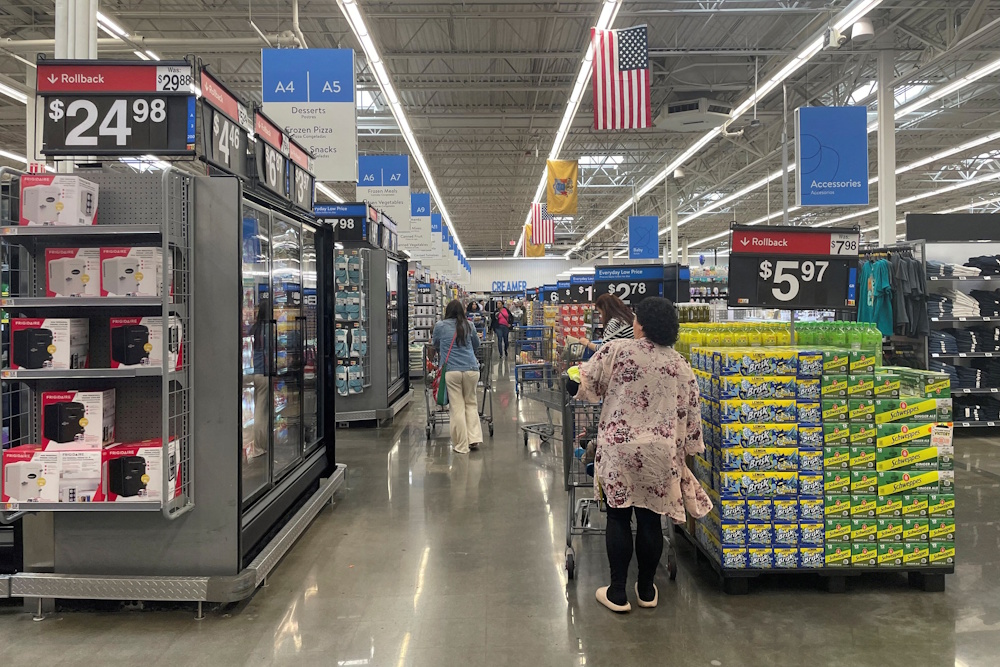
In February, American consumers increased their expenditures at retail establishments, reversing a trend of three consecutive months of decline. This development indicates that the US consumer remains resilient despite the challenges posed by sluggish job growth and subdued consumer sentiment. According to the Commerce Department, retail sales experienced an increase of 0.6% in February compared to the previous month, a notable improvement from January’s downwardly adjusted figure of -0.1%. Wednesday’s figure exceeded the 0.4% increase anticipated by economists. Retail sales are modified for seasonal fluctuations, yet they do not account for inflation. The February retail sales report experienced a delay of several weeks due to the previous year’s government shutdown. In February, retail sales experienced an upward trajectory across almost all categories, with the exception of grocery stores and furniture retailers, both of which saw a 1% decline. In the interim, retail expenditure saw the most significant uptick at department stores (3%), personal care establishments (2.3%), and clothing retailers (2%). A gauge of retail sales that excludes volatile sectors — including building materials, automobiles, and gasoline — increased by 0.45% in February, surpassing the anticipated rise of 0.3%. The figure referred to as the “control group” serves as a significant gauge of the fundamental demand within the economy.
Analysts closely monitor spending data as consumer purchases constitute approximately two-thirds of the US economy. In recent years, expenditure has become increasingly correlated with the dynamics of the US labor market — particularly in relation to layoffs — rather than individuals’ perceptions of the economic landscape. Despite a lackluster job growth over the past year, the incidence of layoffs has not increased significantly, indicating that Americans continue to sustain economic activity through their spending. New applications for unemployment benefits continue to be recorded at historically low levels. The Bureau of Labor Statistics is scheduled to publish the monthly jobs report on Friday, which will encompass job growth, wage increases, and the unemployment rate for March. At the start of the year, investors and economists widely projected that the labor market would maintain stability throughout the year, though in a somewhat diminished condition. The conflict between the US-Israeli alliance and Iran has now entered its fifth week. The Strait of Hormuz, a critical global chokepoint, has remained closed for several weeks. One-fifth of global oil traverses this critical waterway, alongside a range of other commodities. “The February retail sales report predates the recent escalation of conflict in the Middle East,” stated Vivian Chen in a release. “It does not yet reflect any potential drag from elevated energy prices, fluctuations in financial markets, or increased geopolitical uncertainty.”
The ongoing conflict poses a dual threat to the economy, potentially driving inflation higher while simultaneously undermining growth, with the associated risks escalating as the situation in the Middle East continues unabated. President Donald Trump stated that the conflict could conclude within a timeframe of two to three weeks and is scheduled to address the nation on Wednesday evening. Trump has suggested the possibility of concluding the war without re-opening the Strait of Hormuz, a move that experts have indicated would have minimal impact on alleviating the global energy crisis, according to sources. Earlier this week, WTI, the US benchmark, settled at $102.88, marking its highest closing level since July 2022. The conclusion of the conflict is expected to lead to a swift decline in oil prices; however, experts suggest that unless the strait is reopened, prices may stay high for an extended period. On Tuesday, the average price for a gallon of gasoline surpassed $4 for the first time since 2022. Recently, there has been an increase in the prices of plastic and fertilizer.
As the conflict persists, there is a noticeable decline in optimism among Americans regarding the economy, as indicated by various surveys and polls. A recent poll conducted, released on Wednesday, indicates that approximately two-thirds of Americans believe that Trump’s policies have deteriorated economic conditions in the US, reflecting a 10-point increase since January. The University of Michigan’s latest consumer survey indicated a 6% decline in consumer sentiment this month, reaching its lowest level since December, with a downturn observed across all income brackets, including the wealthiest segments. “Declines were observed across age and political affiliation,” stated Joanne Hsu in a release.