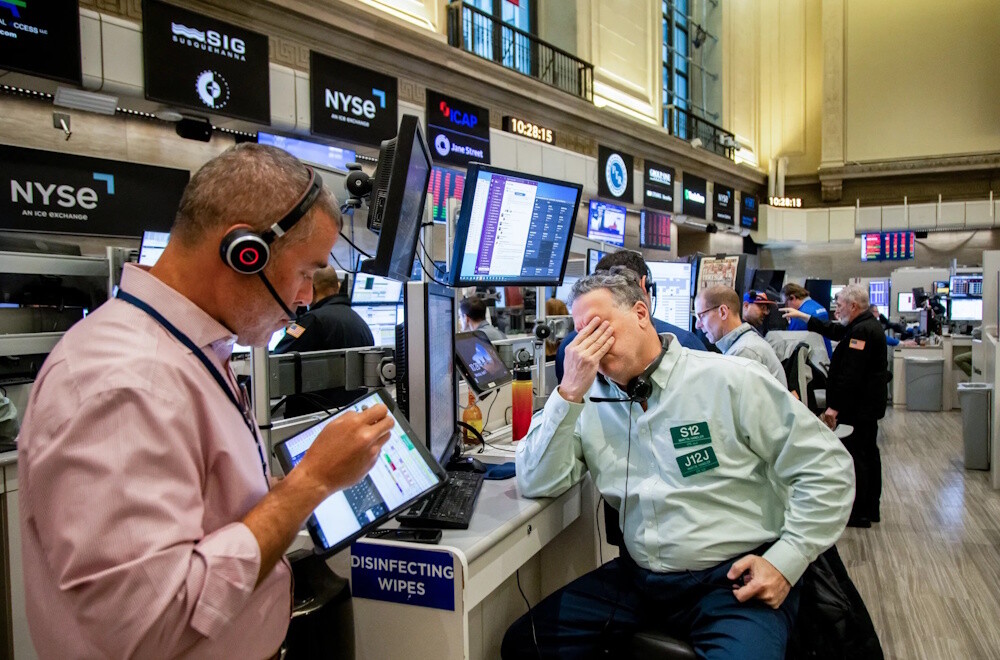
The major U.S. index futures are currently indicating initial weakness on Wednesday, suggesting that stocks may experience additional downside following yesterday’s volatile session, which concluded with modest losses. The futures declined following the Labour Department’s release of its highly scrutinised report on consumer price inflation for September. While the report indicated that consumer prices expanded in accordance with estimates, it also revealed a larger than anticipated rise in core consumer prices, which exclude food and energy costs. The report indicated that consumer prices increased by 0.6 percent in September, following a rise of 0.4 percent in August. The rise in prices aligned with the projections made by economists. The Labour Department reported that the annual rate of consumer price growth increased to 3.7 percent in September, up from 3.4 percent in August, aligning with expectations.
Meanwhile, the report indicated that core consumer prices, excluding food and energy prices, increased by 0.3 percent for the second consecutive month. Core prices were anticipated by economists to increase by 0.2 percent. The annual rate of core consumer price growth accelerated to 2.6 percent in September from 2.4 percent in August, coming in slightly above estimates for 2.5 percent growth. The larger-than-anticipated rise in core prices could rekindle worries regarding the future trajectory of interest rates in advance of the Federal Reserve’s upcoming monetary policy meeting later this month. Stocks exhibited a notable absence of direction throughout the trading day on Tuesday, continuing the uninspiring performance observed during Monday’s session.
The major averages oscillated around the unchanged line before ultimately finishing with a slight decline. The Dow fell 180.45 points, or 0.4 percent, to 51,670.10; the Nasdaq dipped 41.52 points, or 0.2 percent, to 27,204.38; and the S&P 500 edged down 1.79 points, or less than a tenth of a percent, to 7,805.45. Traders appeared hesitant to undertake substantial actions in anticipation of the forthcoming report on consumer price inflation scheduled for release on Wednesday. The choppy trading on Wall Street also came as traders reacted to mixed earnings news from financial giants Wells Fargo, JPMorgan Chase, and Goldman Sachs. Shares of Wells Fargo experienced a significant decline following the release of third quarter earnings that surpassed estimates, yet revenues fell short of expectations.
JPMorgan experienced a decline following the announcement of third quarter results that fell short of expectations, despite an upward revision in its net interest income outlook for the year. Shares of Goldman Sachs experienced a decline despite the company reporting third quarter results that surpassed analyst expectations on both revenue and earnings. Pharmaceutical stocks experienced a significant decline throughout the session, resulting in a 2.2 percent drop in the NYSE Arca Pharmaceutical Index. Significant weakness was also evident among gold stocks, as indicated by the 1.7 percent decline recorded by the NYSE Arca Gold Bugs Index. Airline, biotechnology, and banking stocks experienced notable declines, whereas energy stocks rallied in response to a sustained rise in crude oil prices.