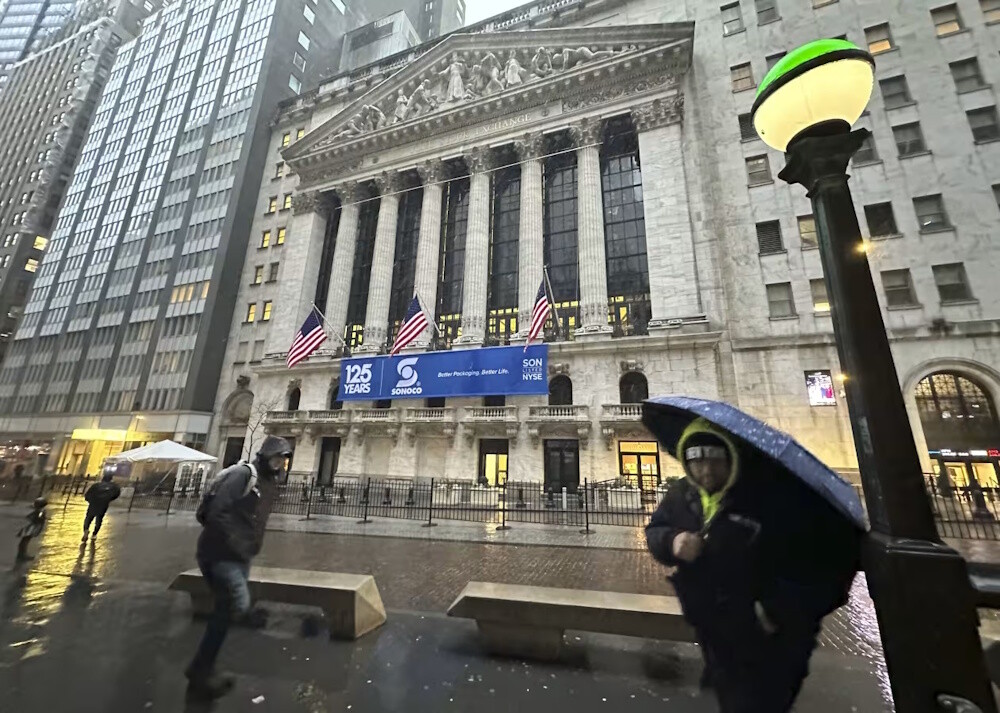
After recent success sent the Nasdaq and S&P 500 to new record highs, stock market participants may be selling off their holdings, leading to some initial downturn on Wall Street. While treasury yields have been on the rise, the yield on the benchmark ten-year note has surged back to its highest levels since 2002, adding to the downward trend for stocks. Crude oil prices are rising off their lowest point in a month, and bond rates are following suit. Crude oil prices have been rising recently on concerns that Iran may increase its attacks on tankers in the Strait of Hormuz. There have been nine attacks this month alone, according to U.K. Maritime Trade Operations. That’s half of what they reported for the entire month of September in the waterway and Persian Gulf combined. The Houthi rebel group from Yemen said on the X social media site that it has attacked Saudi Arabian airports and military facilities using drones and ballistic missiles. But, investors may be waiting for the Federal Reserve to disclose the minutes from its most recent monetary policy meeting later this afternoon, so overall trading activity could be modest.
In anticipation of the Federal Reserve’s next interest rate decision later this month, the minutes may provide further insight into the Fed officials’ thoughts. Prior to the minutes being released, the FedWatch Tool from CME Group now shows that there is a 78.4 percent likelihood that the Fed will keep rates steady and only a 21.6 percent possibility that they will boost rates by another quarter point. Stocks continued to perform well during Tuesday’s trading session despite giving back some ground after exhibiting a substantial rise to the upside early in the afternoon. With new closing highs for the Nasdaq and the S&P 500, the major averages continued their recent upward trend. Even though they were far from their session highs, the main averages finished the day strongly in the positive. Among the major market indexes, the S&P 500 gained 44.98 points, or 0.6%, to 7,818.93; the Nasdaq added 122.48 points, or 0.5%, to 27,599.79; and the Dow gained 253.38 points, or 0.5%, to 51,521.28. The early gains on Wall Street occurred as treasury yields and the price of crude oil both took a long nosedive.
Despite crude oil prices making a partial recovery during the trading day, yields continued to fall after hitting multi-decade highs not long ago. “The big bond market sell-off appeared to be yesterday’s news on Tuesday as the S&P 500 hit fresh record levels, supported by buoyant AI stocks,” said Dan Coatsworth. “Expectation is already building ahead of the U.S. third-quarter earnings season, with numbers starting to filter their way into the market in the coming weeks,” he added. “Perceived AI winners are likely to be under the spotlight, particularly given how dominant these companies now are in US indices.” On Wednesday, traders will also get to see the minutes from the most recent monetary policy meeting held by the Federal Reserve. According to a study provided by the Commerce Department, the U.S. trade deficit grew more than anticipated in August, which is a development in U.S. economic news.
The trade imbalance widened in August to $105.6 billion, according to the Commerce Department, up from a revised $92.8 billion in July. The trade imbalance was first recorded at $88.6 billion, but economists had anticipated it would rise to $99.0 billion. The NYSE Arca Networking Index hit a new high of 3.8% as networking companies surged higher throughout the day, leading to the greatest closing level seen in nearly two months. As the 2.7 percent jump by the NYSE Arca Airline Index demonstrates, there was also considerable strength among airline equities. The Dow Jones Utility Average rose 2.6% as interest rate-sensitive utilities stocks also did well in response to the decline in treasury yields. While equities in the biotechnology sector witnessed a sharp decline, those in the housing, telecom, and retail sectors enjoyed substantial gains.