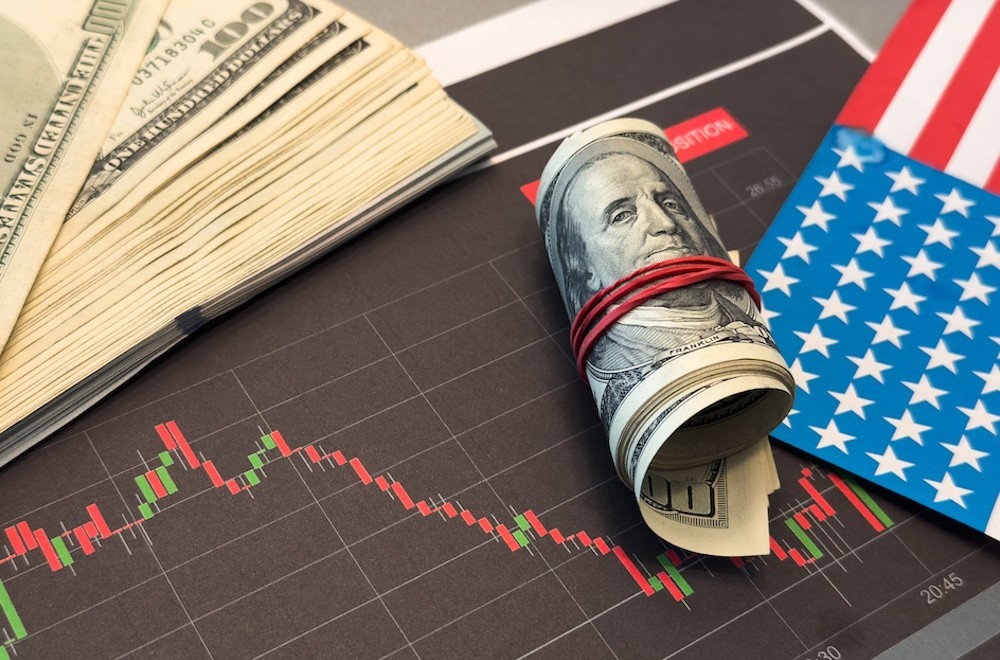
The US Treasury has unexpectedly announced an increase in buybacks of long-dated government debt, a decision made following the rise of yields on these securities to their highest levels in years. Just two weeks after releasing its planned schedule for buybacks this quarter, the Treasury Department on Wednesday said it’s “increasing, by at least double, the size of liquidity support buyback operations” for securities dated from the 10-year to the 30-year sector. The message resulted in a decline in yields on the longest bond by nearly 10 basis points to 5.185%, retracting from their peak levels since 2007. Treasury Secretary Scott Bessent referenced the buyback program last year as a component of the department’s “big toolkit we can roll out” should it be necessary to tackle dislocation in the Treasuries market. He has consistently stated, since assuming office, that his primary financial-market benchmark is the yields on 10-year securities. Last November, he stated, “my job is to be the nation’s top bond salesman – and Treasury yields are a strong barometer for measuring success in this endeavor.” And “This administration needs a win and maybe that comes in the form of artificially trying to keep long Treasury rates contained,” said Jack McIntyre. “They have to try something. Sentiment around the long-end globally is about as bearish as I have seen in a very long time.”
Officials made the announcement as long-dated government bond yields around the globe rose to significant levels this week, with the US 30-year trading at its highest since 2007. Traders are also preparing for an auction of new 20-year bonds amounting to $16 billion. A 10-year auction last week recorded the highest financing cost at that tenor since 2007, while a 30-year sale the following day achieved the greatest yield since 2001. “If yields go too far, Treasury will try and fight it – and now we know where some pain points are,” said John Briggs. The Treasury announced that the increased buybacks will commence on September 9. Two weeks ago, the department indicated its expectation of acquiring as much as $38 billion in older securities, referred to as off-the-runs, for the purpose of providing “liquidity support.” The tentative calendar for September 9 through November 4 indicated up to $14 billion in total buybacks of 10-year to 30-year Treasuries. At a minimum, this would imply an increase of at least $14 billion or more.
Treasury officials have reintroduced the buyback program in 2023, an initiative that was originally conceived over two decades ago, during a period when the government experienced budget surpluses and was actively repurchasing and retiring higher-cost securities. The new program was aimed in part at boosting liquidity in the market, as traders typically prefer to hold the current benchmark of given tenors, leaving older ones less easy – and more expensive – to trade. “This increase in buyback operation sizes reflects Treasury’s desire to provide greater liquidity support in longer-dated nominal sectors where there is consistent strong sponsorship from market participants, as evidenced by the significant volume of high-quality offers Treasury routinely receives in longer-dated buyback operations,” the Treasury said in its statement. The buyback gambit represents the latest in a series of interventions by Bessent, who assumed office following a lengthy career in hedge funds. Some analysts suggest these measures are intended to strategically lower borrowing costs in anticipation of the November midterm elections.
At the conclusion of the previous month, Bessent participated in the inaugural US-Japan coordinated yen purchases since 1998, which strategists interpret as a measure to prevent significant divestitures by Tokyo of its Japanese Treasury holdings. Days later, the Treasury’s quarterly debt-issuance policy statement included a modification in forward guidance that suggested a possible decrease in the issuance of long-term securities. Bessent has also been utilising various media platforms to advocate for the new communications strategy implemented by Federal Reserve Chairman Kevin Warsh. This strategy has drawn scrutiny following last month’s meeting, during which Warsh’s lack of clarity regarding the timing and methods for addressing inflation contributed to a notable increase in yields. The most recent buyback occurred on Tuesday, during which the Treasury proposed $2 billion for securities scheduled to mature between 2046 and 2056. The operation was 10 times oversubscribed, illustrating the extent of investors’ enthusiasm for the program. It also arrives merely days after the Treasury disbursed approximately $85 billion in interest to bondholders, marking the largest amount in records.
Wednesday’s statement did not clarify the funding mechanism for the operations; however, it is customary for the Treasury to depend on the issuance of bills, which have maturities of up to one year, to address its variable funding requirements. If officials are effectively substituting longer-dated debt with bills, Bessent’s recent action represents a Treasury Department equivalent of a strategy the Federal Reserve has employed multiple times over the years: a “Operation Twist.” The Fed’s version involved substituting short-dated Treasuries with longer-dated ones in the central bank’s portfolio, with the objective of reducing longer-term borrowing costs and enhancing economic growth. McIntyre compared the Wednesday announcement to “a version of Operation Twist.” How much of a lasting impact the move will have remains to be seen. “What really gets long rates lower is a slowing economy or resolution on the Iran conflict, and I’m not sure we’re there yet,” McIntyre said.