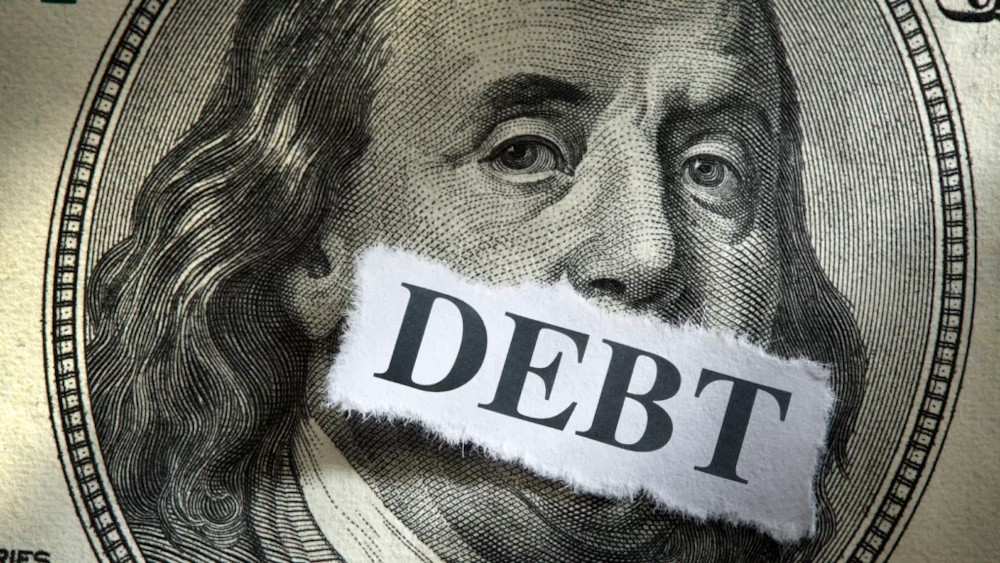
The United States is increasingly entrenching itself in a profound debt predicament. The federal debt reached an unprecedented $40 trillion on Tuesday, as reported by the Treasury Department. It represents a significant turning point that will impact Americans, businesses, and the government for an extended period. The Treasury Department’s data on the federal debt is published with a one-day lag. While the nation has historically maintained a considerable level of debt, several recent trends have heightened the concerns of budget and financial markets experts. The tab has been expanding at an accelerated pace in recent years; interest payments on the debt have surged as interest rates and borrowing have increased; and all this is occurring during a period of relatively favourable economic conditions. “On our current path, we’re going to be at $50 trillion in just six years. If you look backward, we were at $20 trillion less than 10 years ago,” said Michael Peterson. “We’re really putting our economy and our country’s future in jeopardy.” Multiple elements are driving the substantial increase in debt levels. A significant factor is the ageing population, with approximately 10,000 Baby Boomers retiring daily and an increasing life expectancy among senior citizens. That indicates that the federal government is expending increasingly larger amounts on Social Security and Medicare. These foundational programs face increasingly precarious fiscal conditions due to an insufficient workforce to sustain the growing population of beneficiaries.
Additionally, in recent decades, Congress has enacted various packages that have both reduced taxes and augmented spending, notably the Tax Cuts and Jobs Act of 2017 and the One Big Beautiful Bill Act of 2025 during President Donald Trump’s administration, along with several Covid-19 pandemic relief measures under both Trump and former President Joe Biden. These measures are anticipated to elevate the federal debt by trillions of dollars in the long run. The $40 trillion milestone is being reached sooner than anticipated just a few years prior. The Congressional Budget Office projected in May 2023 that the US would cross that threshold in fiscal year 2028. The magnitude of the debt, along with the rapidity of its increase, raises significant concerns, according to experts. The national debt increased by $1 trillion over the last five months, as reported by data from the Treasury Department. Federal government spending continues to exceed the revenue it generates. In the first 10 months of this fiscal year, which concludes on September 30, the government has accumulated a deficit of $1.8 trillion. The increasing debt, coupled with escalating interest rates, has resulted in a significant surge in the interest payments that the federal government is required to disburse.
For years, the prevailing low interest rates facilitated the government’s ability to borrow without constraint. However, this trend ceased a few years back when the Federal Reserve initiated interest rate hikes to address inflation stemming from the pandemic. Interest payments are projected to exceed $1 trillion in this fiscal year, marking an unprecedented level. Those costs have more than tripled over the past five years and are now in close competition with Medicare as the government’s second-largest expense, following Social Security, according to Marc Goldwein, senior policy director for the Committee for a Responsible Federal Budget, a watchdog group. That indicates the United States allocates a greater portion of its budget to interest payments compared to national defence, and this expenditure exceeds that on children’s programs by 50%. The obligation to make interest payments complicates the government’s ability to fund other federal programs and priorities. “We’re spending significantly more to service past debt than to invest in our future,” Goldwein said, adding that “Our debt is begetting more debt. It creates a vicious cycle.” Although former Federal Reserve Chair Jerome Powell and others have said the US is on an “unsustainable fiscal path,” Congress has shown little appetite in recent years to address the nation’s unbalanced finances, which has led to downgrades of its credit ratings.
Republicans on Capitol Hill increased the debt limit by $5 trillion last year through the One Big Beautiful Bill Act, indicating that lawmakers are unlikely to face the issue of the US reaching the debt ceiling until around 2027, according to experts. The debt ceiling has led Congress to reassess its spending levels periodically, with the most recent review occurring in 2023. The increasing national debt has significant implications for the bond market and the interest rates that determine borrowing costs throughout the economy. The 30-year US Treasury yield on Tuesday reached its peak level since 2007. The 10-year yield was observed trading close to its peak during Trump’s second term. Yields have risen this year as investors evaluate various factors such as concerns over inflation, escalating government deficits, a greater supply of corporate bonds, and ambiguity regarding the Federal Reserve’s trajectory for interest rates. As the United States descends deeper into a debt predicament, investors are increasingly seeking higher returns to offset the risks associated with lending to the government. Bond yields, which affect borrowing costs throughout the economy, are increasing in this context. The 10-year US Treasury yield exerts a significant influence on mortgage rates, auto loans, and the rates applicable to business loans. Increased yields result in more stringent financial conditions, potentially impacting consumer behaviour and limiting business investment. Higher yields also signify increased borrowing costs for the government, rendering it more costly to address the escalating national debt.
“$40 trillion of debt doesn’t exist solely on the government’s ledgers; it is felt throughout the economy and finds its way to the pocketbooks of people one way or another,” Maya MacGuineas said in a statement. “The more we borrow, the more we exacerbate inflation, squeeze out other priorities in the budget, and leave ourselves vulnerable to emergencies at home and turmoil abroad,” MacGuineas said. The Treasury Department on Wednesday announced an increase in its buybacks of long-term bonds in the forthcoming months. Analysts indicated that this reflects the Trump administration’s apprehension regarding increasing yields and their potential effects on affordability and debt repayment capacity. An auction for 30-year Treasuries earlier this month recorded the highest yield since 2001 – indicating that investors are seeking greater compensation for holding US debt. In 2025, Moody’s downgraded US debt, thereby removing the United States’ final perfect credit rating. Despite the downgrade, US debt remains positioned just below the highest rating and continues to surpass the debt ratings of significant economies such as France and Japan. Other governments are encountering comparable challenges. In the United Kingdom, France, Germany, and Japan, government bond yields are currently positioned at or approaching multi-year highs as investors grapple with apprehensions regarding fiscal spending and budget deficits.