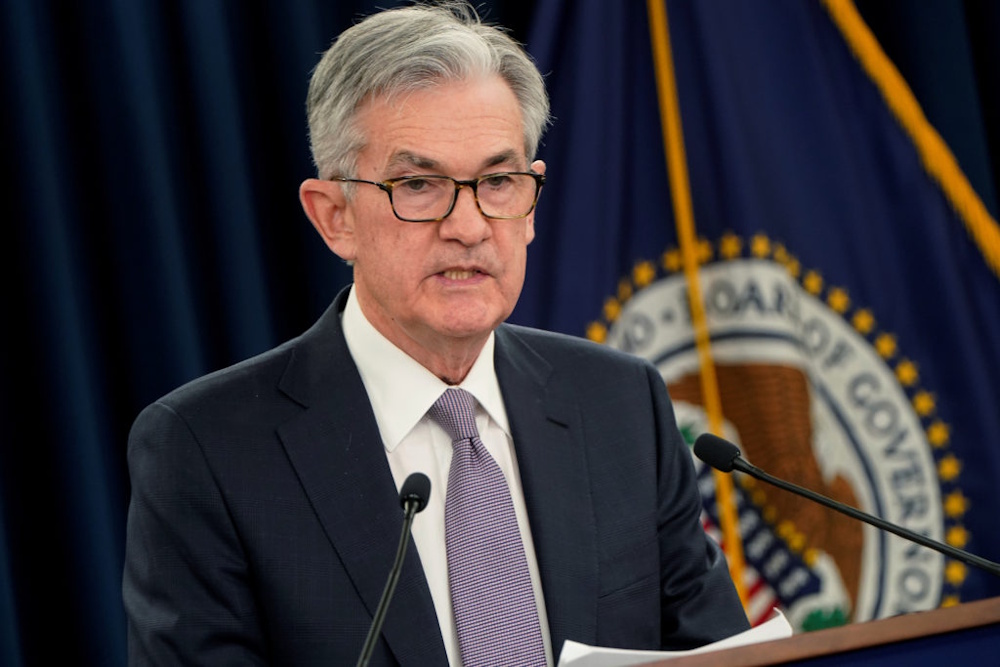
Chair Jerome Powell stated on Monday that the Federal Reserve’s response to the US-Israeli war on Iran is significantly influenced by the impact of the conflict on Americans’ inflation expectations. “The tendency is to look through any kind of a supply shock,” he stated. “However, a crucial and fundamental element of this is the necessity to meticulously observe inflation expectations.” The Fed chief indicated a likelihood of maintaining interest rates at current levels in the near term, acknowledging the persistent global energy price shock: “Monetary policy works with long and variable lags, famously, and so, by the time the effects of a tightening in monetary policy take effect, the oil price shock is probably long gone,” he stated. Powell’s recent comments emerge as the conflict in Iran enters its fifth week, with President Donald Trump warning of potential destruction to the nation’s energy infrastructure should a resolution not be achieved to conclude the hostilities and restore access to the Strait of Hormuz, a critical global chokepoint responsible for one-fifth of the world’s oil supply, in addition to various other commodities.
Oil prices experienced an uptick on Monday following remarks made by Trump: Brent crude, the international benchmark, surged beyond $116 a barrel earlier in the day, subsequently retracing some of those gains. Gas prices throughout the United States have experienced a notable increase in the last month. The blockade has significantly increased the prices of plastic and fertilizer. Consumer sentiment among Americans has experienced a notable decline of 6% this month, reaching its lowest level since December, as reported by the University of Michigan’s latest consumer survey. The survey indicated that individuals’ inflation expectations for the upcoming year have risen significantly, while their longer-term expectations have remained stable. Federal Reserve officials are increasingly prioritizing long-term expectations, specifically over the next five to ten years, as these serve as an indicator of the American public’s confidence in the Fed’s capacity to control inflationary pressures. However, that situation could deteriorate if the conflict in Iran persists for an extended period.
Recently, Federal Reserve officials indicated the possibility of one rate cut this year during their latest update of economic projections. Currently, forecasters on Wall Street are progressively anticipating an increase in interest rates as the situation with Iran continues to unfold. The US economy is experiencing its fifth consecutive year of heightened inflation, with the conflict in Iran posing a risk of exacerbating this trend. The ongoing conflict in the Middle East has placed the Federal Reserve in a particularly challenging position: Policymakers at the central bank are grappling with a global price shock while also navigating a US labor market that remains in a fragile condition. Sustained higher energy costs could ultimately impact economic growth and employment levels.
This indicates that Federal Reserve officials must prioritize which issue to tackle initially — elevated inflation or a deteriorating labor market. Powell remarked earlier this month following the decision by officials to maintain borrowing costs at their current level for the second consecutive meeting that “we just don’t know” how the situation will ultimately unfold. The economic ramifications of the war are contingent upon its length and scope, according to economists. “No one has been able to successfully predict the economy,” Powell stated at the Harvard event.