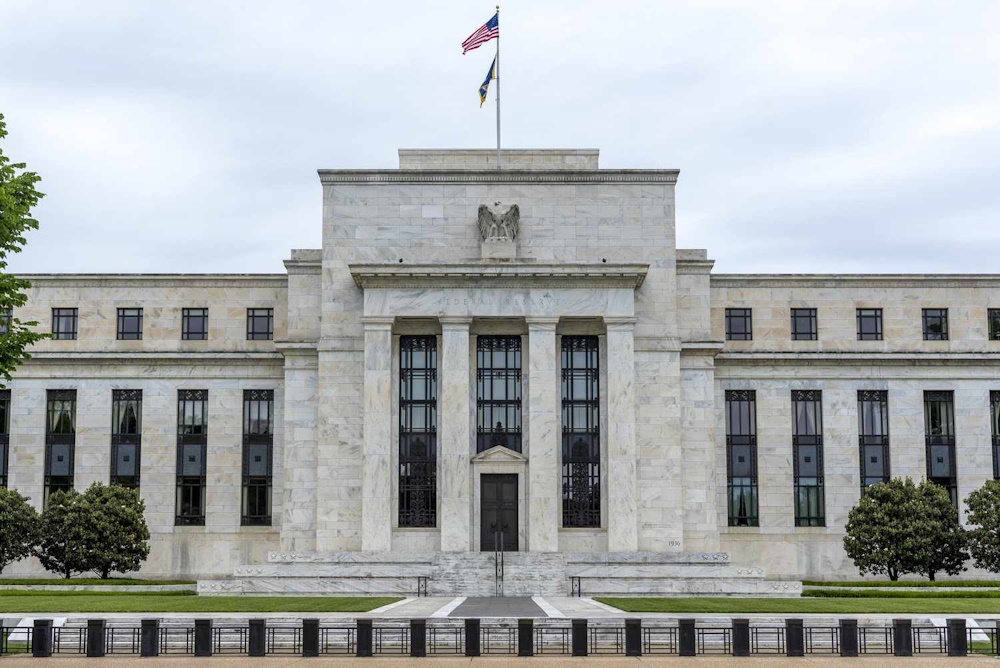
Federal Reserve officials concur that inflation must revert to the central bank’s annual target of 2%. Instead, the conflict with Iran has led to a significant rise in petrol prices, and these price increases are beginning to extend beyond the fuel retail sector. Last month, this led Fed officials to increase rates for the first time in three years in an effort to temper the economy and reduce inflation. Yet this month, even with the inflation picture deteriorating, the Fed is broadly anticipated to maintain rates at its Wednesday meeting. Would that still hold true if the midterms were not merely six days away? At his 2:30 p.m. press conference Wednesday, Fed Chairman Kevin Warsh is expected to encounter enquiries regarding political pressure should the central bank decide to maintain current interest rates. The independence of the Fed serves as a fundamental pillar in its monetary policy decisions. However, in an election year, that independence inevitably faces scrutiny.
Excluding the pandemic period, during which interest rates were maintained at near-zero levels, the Federal Reserve modified rates within a two-month window prior to Election Day in four out of the last five election years. In September 2024, the Federal Reserve reduced its benchmark interest rate by fifty basis points merely six weeks prior to the presidential election. That marked the commencement of a cutting cycle as inflation moderated and officials expressed apprehension regarding a deteriorating labour market. In the lead-up to the 2022 elections, the central bank implemented two successive increases of three-quarters of a percentage point, a move three times larger than the standard adjustment, in an effort to combat the most severe inflation experienced in nearly forty years. At the meeting following Election Day, it was announced that there would be an additional increase, albeit a more modest half point this time. In 2016, officials opted not to alter rates during the two meetings leading up to Election Day, subsequently increasing rates by a quarter point at the following meeting. At that time, the then-President of the Philadelphia Fed, Patrick Harker, expressed support for a rate hike in September. However, he expressed opposition to an increase at the November meeting, which occurred just six days prior to the presidential election.
“What I’m worried about is depending on the outcome of the election and what happens after that, if there are policies that would have distortive effects that we would have to respond to, we’ll have to respond,” Harker said in remarks in October 2016. “And I don’t know which way that will go. But it may be prudent to wait until we have resolved some of that uncertainty.” Then-Fed Chair Janet Yellen stated that the election did not influence the decision-making process of officials. In the lead-up to this week’s meeting, Federal Reserve officials have indicated their belief that current economic conditions do not necessitate an immediate rate hike, preferring instead to await further data. Raising rates prematurely could lead to an unwarranted contraction in economic activity, as it may encourage consumers to reduce their spending in response to increasing borrowing costs. That measured approach stands in stark contrast to President Donald Trump’s calls for reduced rates. Elected officials, particularly presidents, generally prefer lower interest rates as this reduces borrowing costs for consumers and businesses. Trump, whose support has been waning in recent months due to rising petrol prices and other expenses, has intensified his calls for the Fed to reduce interest rates.
Trump selected Warsh to replace Fed Chair Jerome Powell following his consistent critiques of the central bank for its insufficient rate cuts. Warsh’s initial significant action as the leader of the central bank was an increase in interest rates, a choice that many interpreted as an indication of his commitment to maintaining the independence of Fed policy from political influences. Nonetheless, if the Fed does hold rates steady as expected, Warsh may need to exert additional effort to persuade Americans that the political calendar had no influence on its decision. (Although the Fed chair wields significant influence within the Federal Reserve, the role constitutes merely one vote among a committee of twelve members.) “Tightening cannot appear to be a move against the administration, while holding cannot look like accommodation,” Gregory Daco said in a note last week. Meanwhile, Bank of America head of US economic research Aditya Bhave observed that as investors anticipate the Fed to maintain steady rates, an unexpected hike could surprise markets and induce additional volatility during an already precarious period.