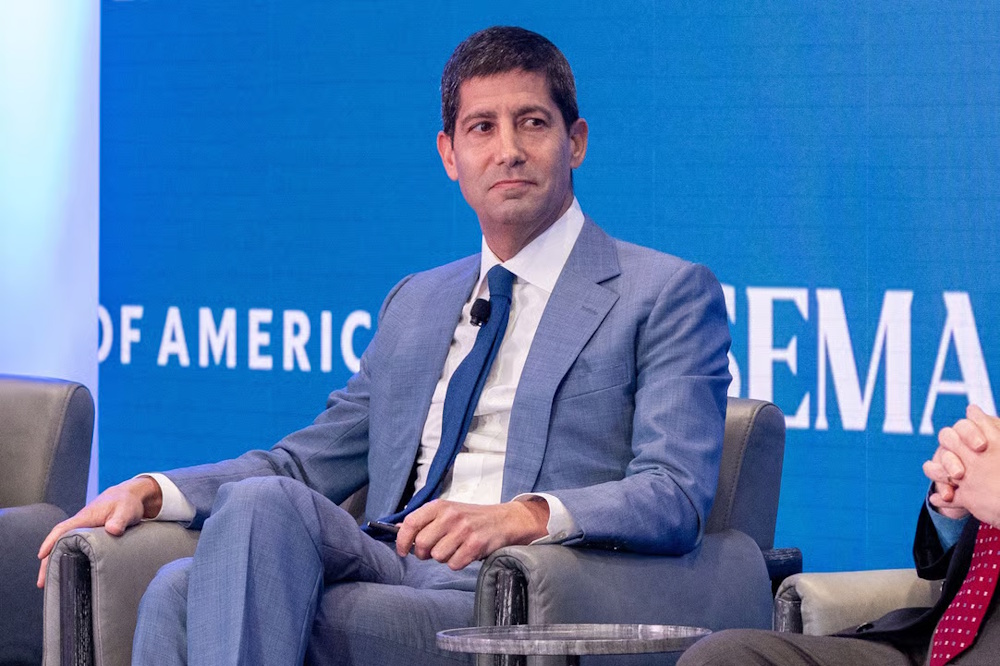
Kevin Warsh was sworn in Friday at the White House as Chairman of the Board of Governors of the Federal Reserve System, succeeding Jerome Powell in one of the world’s most influential economic roles. Warsh, 56, assumes the four-year position amid increasing uncertainty surrounding inflation, geopolitical tensions, and fluctuating financial markets, coupled with escalating political pressure on the autonomy of the central bank. “I expect he will go down as one of the truly great chairmen of the Federal Reserve that we’ve ever had, I really believe that,” President Donald Trump stated, marking his first public appearance with Warsh since nominating him earlier this year. “He possesses skills that are rare among individuals, spans a considerable range, and commands respect from all.” Warsh has openly articulated the substantial transformations he foresees for the Fed, a point he underscored in succinct comments following his swearing-in. “I will lead a reform-oriented Federal Reserve, learning from past successes and mistakes, both escaping static frameworks and models and upholding clear standards of integrity and performance,” Warsh stated. Selected by Trump in January when forecasts suggested stabilising growth and moderating inflation, Warsh now assumes control of an economy that is being reshaped by the pressures of the US-Israeli conflict with Iran. The oil shock has significantly elevated petrol prices, mortgage rates have reached their peak in nine months, and overall inflation has surged to its highest level in three years.
The US consumer has demonstrated notable resilience, maintaining spending levels in the face of rising prices and thereby providing a buffer for the economy against potential downturns. Affordability concerns have resulted in widespread dissatisfaction among Americans regarding the economy, potentially leading to significant political consequences in the upcoming midterm elections. Consumer sentiment has reached unprecedented lows, with Americans expressing greater discontent now than during periods of significant turmoil, including wars, the events of 9/11, the Great Recession, the Covid-19 pandemic, and the subsequent inflation surge. That leaves Warsh navigating a more complex balancing act and places him under immediate pressure to indicate how the Fed will address the tensions within the US economy: Maintain current rates and seek further clarity, or adopt a more restrictive approach should inflation become more difficult to manage. Warsh is commonly perceived as having a connection to Trump, who has fervently called for rate reductions and even humorously suggested he would take legal action against Warsh if borrowing costs are not decreased. Trump has asserted that lower rates are necessary to decrease the government’s borrowing costs and to stimulate economic growth.
However, Trump stated on Friday that he desires Warsh to be entirely independent. “Don’t look at me, don’t look at anybody, just do your own thing and do a great job,” Trump stated. However, he consistently criticised Powell for his failure to expedite rate cuts, labelling him a “numbskull” and a “average mentally person,” and even issued threats of termination. Warsh emphasised his responsibility to guide the Fed autonomously, aiming for reduced inflation and enhanced economic growth. The Fed chair alone, however, lacks the authority to implement rate cuts. The monetary policy arm of the central bank, known as the Federal Open Market Committee, establishes interest rates in accordance with prevailing economic conditions and forecasts, rather than in response to the requests of an incumbent president. Trump stated on Friday that he believes Warsh possesses “the temperament and leadership abilities to foster collaboration among the entire board, and I know he will welcome robust debate in his mission to keep prices stable and employment high. “Kevin will have the full support of my administration.” In March, Fed policymakers anticipated a rate cut later in the year; however, their perspective has evolved in recent months as they evaluate the economic ramifications of rising energy prices and geopolitical uncertainties. The prevailing sentiment among policymakers is to maintain current interest rates, with a few suggesting the potential for an increase in the future. Warsh’s inaugural meeting as Fed chair is scheduled for June 16-17.
Warsh has proposed several key changes for the central bank, including limiting Fed officials’ communications with the public regarding their views on interest rate levels. Warsh has consistently advocated for the Federal Reserve to refrain from engaging in matters that lack direct ties to its fundamental responsibilities. That aligns with Trump’s perspective. “The Fed has deviated from its intended path in recent years,” Trump stated. “It became distracted by concerns far removed from its core mission and mandate, drifting into matters such as climate policy and DEI initiatives, with the Fed straying from its mandate.” Powell, throughout his tenure as chair, exhibited a particularly careful approach when addressing these subjects. “The Federal Reserve is not and will not be a ‘climate policymaker,’” Powell stated in a 2023 announcement. “Decisions regarding policies to tackle climate change should be determined by the elected branches of government.” He stated that the Fed possesses “narrow, but important, responsibilities regarding climate-related financial risks.”