

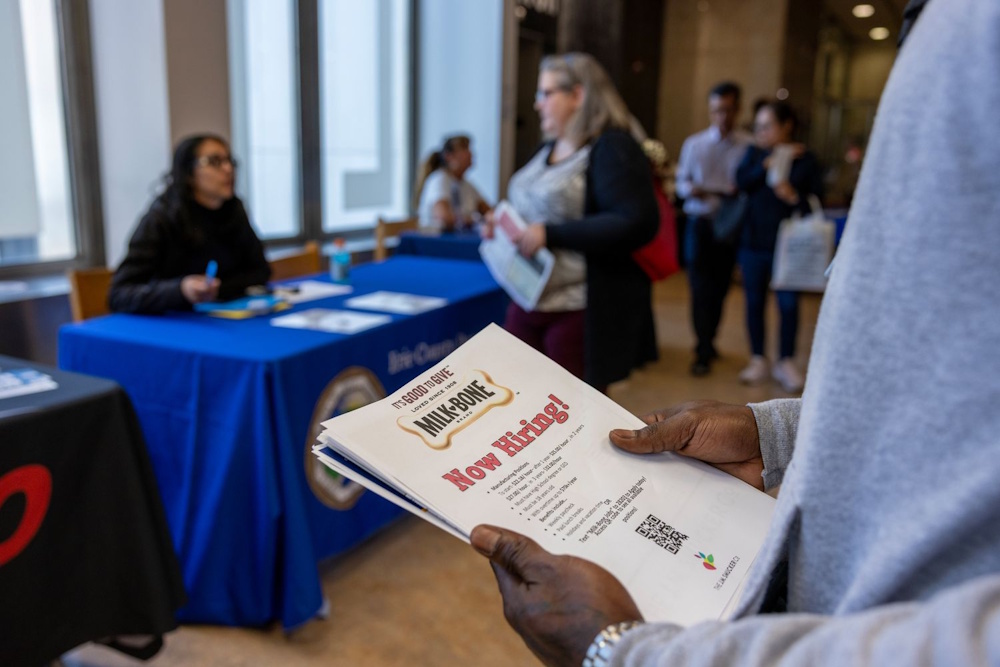
The labor market remained challenging as the year drew to a close, according to recent data: US businesses reduced their demand for workers in November, and hiring rates declined further. The estimated number of job openings, a key indicator of labor demand, declined to its lowest level in over a year, decreasing to 7.15 million at the end of November from 7.45 million the previous month, as reported by the latest Job Openings and Labor Turnover Survey data. Excluding retail and construction, job openings exhibited a downward trend across most industries. Hiring activity exhibited a comparable trajectory. In November, the number of new hires was estimated at 5.12 million, reflecting a decrease from the previous month’s figure of 5.37 million. Job openings have reached their lowest level since September 2024, and hires have similarly declined to their lowest point since June of that year.
In November, only a limited number of industries recorded net gains, and those gains were modest at best. Information revealed the addition of 12,000 jobs, with the federal government contributing 11,000 and the construction sector experiencing an increase of 11,000 new positions. The hiring rate, defined as hires as a percentage of total employment, has declined to 3.2%, aligning with its lowest level in over ten years, excluding the pandemic, according to data. However, the report released on Wednesday indicated a decline in layoffs in November, accompanied by an increase in the number of employees voluntarily resigning, which serves as a significant measure of worker confidence. Nonetheless, in spite of the monthly fluctuations, the enduring trend is evident: the labor market continues to exhibit low hiring and low firing rates, with the critical turnover activity progressively decelerating.
The November JOLTS report represents one of the critical components of labor market data unveiled this week, leading up to the December jobs report scheduled for release on Friday morning. Analysts anticipate that the US labor market experienced an increase of approximately 55,000 jobs in December. This would conclude a lackluster year for employment growth, as significant uncertainty stemming from extensive policies, including those concerning tariffs, alongside substantial changes in the country’s immigration patterns, adversely impacted hiring activities. “You’re not seeing a dynamic labor market,” stated Nela Richardson after the release of the payroll company’s monthly private-sector hiring data. ADP on Wednesday indicated that hiring activity within the US private sector experienced a resurgence in December, following a contraction in employment the previous month. Private-sector employers recorded an estimated addition of 41,000 jobs last month, surpassing expectations following a net loss of 29,000 jobs in November, as indicated by ADP’s latest National Employment Report.
The job gains reported for December were primarily driven by the health care and education sectors, which added an estimated 39,000 jobs, alongside the leisure and hospitality sector, contributing an additional 24,000 jobs for the month. The most significant net job reductions occurred in the professional and business services sector, which saw a decline of 29,000 positions, alongside the information sector, which experienced a decrease of 12,000 jobs. “Health services represent a significant cost burden for the majority of consumers, whereas leisure and hospitality are classified as discretionary services accessible to all consumers,” Richardson stated. “These two sectors align with a K-shaped economy characterized by higher-income consumers propelling expenditure.” In the previous month, businesses across various sizes experienced an increase in job creation, indicating a shift from November, during which smaller enterprises faced a notable decline in employment levels. “Small establishments recovered from November job losses with positive end-of-year hiring, even as large employers pulled back,” Richardson stated on Wednesday. In November, pay increases for individuals remaining in their positions remained constant at 4.4%. Conversely, wage growth for those transitioning to new jobs saw an uptick, rising to 6.6% from the previous 6.3%, according to report.