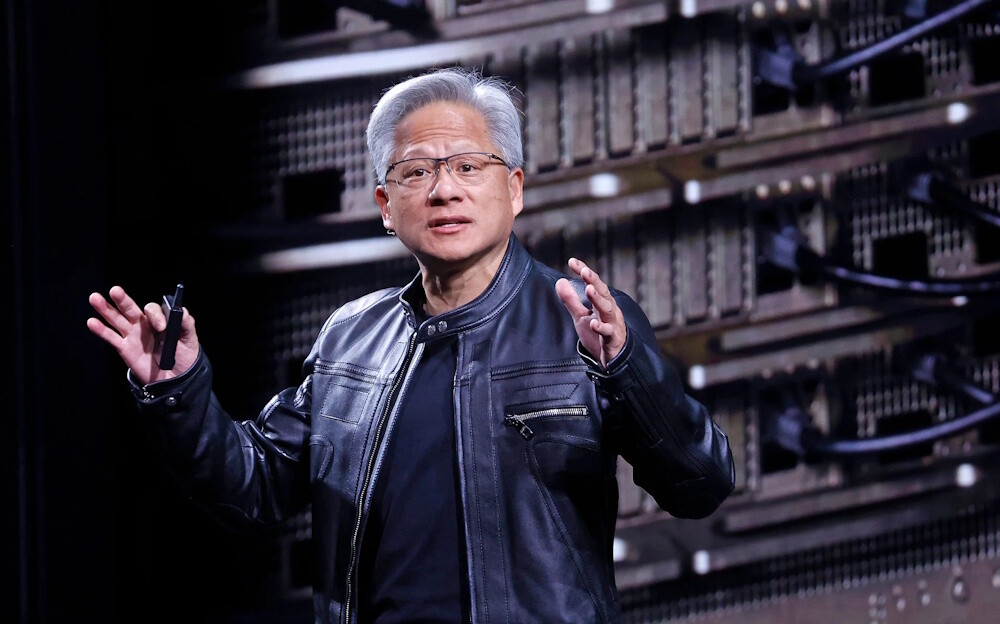
Jensen Huang’s unexpected return to Nvidia has rekindled optimism for an AI sector that has faced significant turbulence in recent weeks. Since Huang’s departure 11 days ago, Nvidia has experienced a decline exceeding $1 trillion in market value, while the tech-heavy Nasdaq Composite approaches the threshold of a bear market. Shares of companies engaged in the AI buildout – from the neoclouds such as CoreWeave to the chipmakers including Micron – experienced a significant decline. Stocks were rebounding early Monday; however, Huang’s return significantly enhanced the rally. The Nasdaq Composite surged 6.5% – its best day in 19 months. The magnitude of the market’s moves underscores the significance of Nvidia and its CEO to the vitality of the AI boom. Nvidia has transcended its role as a semiconductor chip designer. The company plays a central role in facilitating investments throughout the AI sector. Huang’s return “gives some hope to the idea that Nvidia’s role as the central bank of AI is still intact,” stated Jay Goldberg. Huang championed much of the AI industry’s financing, and he positioned Nvidia at the center of it all.
“Circular financing” or “vendor financing” have emerged as terms to describe Nvidia’s financial agreements, because the company is backing the companies that, in turn, buy its products. Huang has consistently advocated for Nvidia’s involvement in funding infrastructure projects. With his return, investors are assessing whether he will accelerate his efforts or encounter fresh obstacles. “He’s clearly been a big advocate of some pretty aggressive financing policies, and I think those continue, for better or for worse,” Goldberg said. Huang has emerged as a pivotal figure in the AI sector, leveraging Nvidia’s substantial balance sheet and esteemed reputation to secure loans, invest in emerging startups, and channel capital to support the expansion of data centers. Under Huang, Nvidia also established a significant venture capital and mergers and acquisitions division. The value of its venture capital deals this year reached approximately $220 billion, while M&A deals amounted to around $33 billion, based on data from PitchBook. His brief absence raised questions about the sustainability of the ecosystem he created in his absence, as well as the potential for adverse ripple effects throughout the markets and the broader economy.
“Jensen’s return gives investors more confidence that Nvidia can execute the deals it has already put in motion, that without him were clouded,” said Ken Mahoney. Wells Fargo equity analysts wrote in a note that Huang’s reinstatement helps answer multiple investor questions and concerns about the “broader AI ecosystem financing support.” Nonetheless, questions persist regarding whether the recent turmoil will hinder Huang’s ability to operate with the same vigour as previously. Huang’s actions will now be subject to increased scrutiny, analysts observed. “Even before Jensen fell into trouble, there were all kinds of concerns about the viability of the model,” Goldberg said. “That doesn’t go away.”And “There’s still lots of legitimate questions about the business model behind all these data centers, but at least for the moment they get another lease on life,” he added. “They live to fight another day.” Huang’s return triggered a significant rally in the neoclouds, such as CoreWeave, which lease computing power to capitalise on the AI surge and are supported by Nvidia.
CoreWeave shares on Friday closed at $39.51, below their IPO price in 2025, and were down 35% since Huang’s initial ousting from Nvidia – highlighting the significant challenges they faced during Huang’s absence from the company. “The ability of the U.S. to continue to grow its AI ecosystem, which is driving most of the economy, as of Friday, felt impaired,” said Gil Luria. “With Jensen Huang coming back and really being exonerated by the president, I’d say we’re back in business, and it is likely that Nvidia will continue to fund partners in its ecosystem,” Luria said. CoreWeave shares surged 22% on Monday, as Huang’s return appears to have alleviated significant uncertainty for investors. Nonetheless, it fails to tackle the overarching issues regarding the sustainability of the ecosystem. If demand for AI continues to grow and translates into strong revenue and profits for tech companies, the data center buildout will likely persist to meet that demand, allowing the financing machine to remain operational.
However, should growth decelerate, or if investors start to closely examine the cost-benefit analysis regarding the expenditure versus the return on investment, additional challenges may arise for the AI boom. That core premise persists regardless of Huang’s presence at the helm of Nvidia. Nvidia’s stock is not out of the woods, analysts noted. Investors continue to face a multitude of enquiries, ranging from legislative scrutiny to the implications of export controls on sales. It is yet to be determined if Huang can reclaim his status as a leader in the AI industry as he once did, but currently, the market has responded positively to his return. “If AI is a modern day gold rush, Nvidia sells the picks, owns shares in the mines, and even acts as the bank that lends to the prospectors,” said Robert Lalka. “Evidently, Nvidia is too big to fail, and Jensen Huang is too big to fire,” Lalka said.