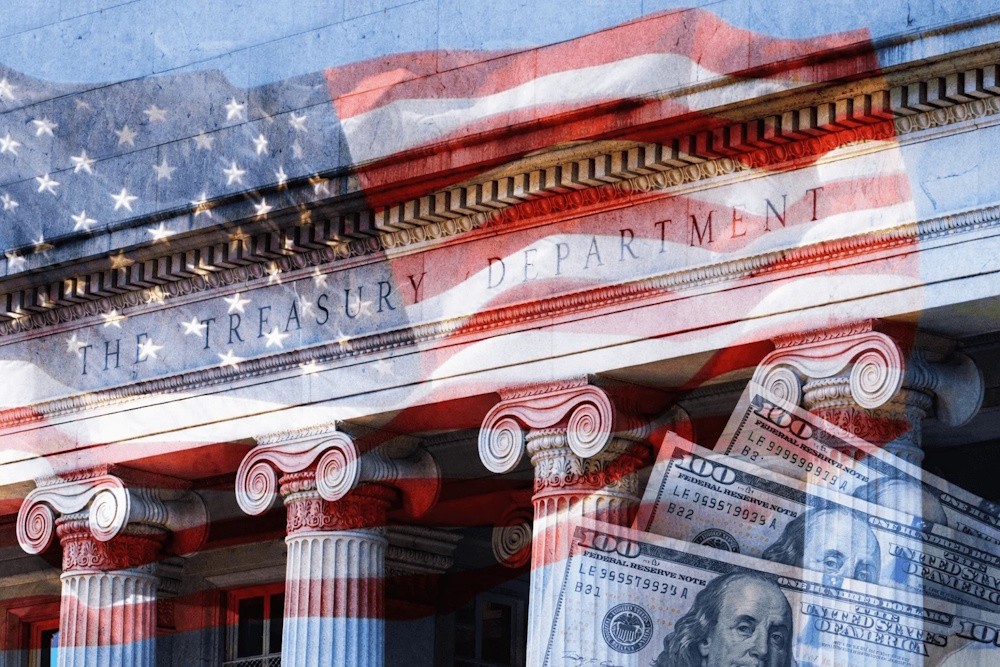
Investors are increasingly worried about factors such as inflation and substantial government deficits, alongside heightened competition from corporate bonds. This has led to a sell-off in the global bond market, resulting in rising borrowing costs for both governments and individuals. The 30-year US Treasury yield on Tuesday reached its peak since 2007, climbing to 5.34% before experiencing a minor decline. The 10-year yield reached 4.74%, approaching the peak observed during President Donald Trump’s second term. It was not limited to US bonds. In France and Germany, 10-year bond yields this week reached their highest levels since 2008 and 2011, respectively. In Japan, the 10-year yield reached its peak level in three decades. Bond yields increase as prices decrease. Investors are divesting from bonds, resulting in decreased prices and an increase in yields. However, the impact extends beyond just investors — it is far more widespread. Bond yields play a crucial role in determining the interest rates that individuals encounter across various loan types. In the United States, the yield on the 10-year Treasury serves as a key determinant for mortgage rates, auto loans, and business loan rates. A significant increase in yields can lead to higher costs for mortgages and loans, thereby complicating affordability for many individuals in their daily lives. The global bond market sell-off partially reflects investors’ enduring apprehensions regarding unrestrained government expenditure and escalating deficits. Investors are seeking greater compensation for the risks associated with lending to governments, reflecting concerns over deteriorating financial conditions.
“The market is responding to a world of greater fiscal, geopolitical and policy uncertainty by demanding higher compensation for holding long-dated debt,” Jonas Goltermann said in a note. Still, the US 10-year yield exerts a greater influence on everyday borrowing costs compared to the 30-year yield, and it has not experienced as significant a surge, Goltermann noted. The bond market’s unease has been further intensified this year by the US-Israeli conflict with Iran and the increase in oil prices. Brent crude on Tuesday concluded trading at $91 per barrel. Investors may require an elevated yield on bonds as a hedge against the potential erosion of their returns due to inflationary pressures. The perspective on central banks is significant for bond yields. Central banks may maintain elevated interest rates for an extended period, or potentially increase them further, in response to inflation driven by rising energy costs. “The worsening situation in the Middle East is likely a factor in intensifying concerns over inflation and concerns over the US fiscal position,” Derek Halpenny said in a note. “There remains zero appetite in the US for addressing the US fiscal position and that is increasingly weighing on the long end of the curve,” Halpenny said. Government bonds are currently facing pressure due to an influx of new corporate debt, particularly from technology firms that are concentrating on artificial intelligence.
Technology firms are leveraging debt instruments to finance the expansion of artificial intelligence infrastructure, with these bonds vying for investor interest alongside government securities. Decreased demand for government bonds results in lower prices, consequently leading to higher yields. “Hyperscaler borrowing to fund AI infrastructure is competing for the same pool of buyers at the same moment governments need those buyers most,” Nigel Green said in a note. “Crowd two urgent borrowers into one market and the price of patience goes up for everybody.” Wall Street is recalibrating in response to Kevin Warsh’s leadership as chairman of the Federal Reserve. While a change in leadership at the Fed can trigger some market volatility, Chairman Warsh’s approach of reduced communication has contributed to uncertainty regarding the central bank’s response to inflation and other economic shocks. His refusal to provide forward guidance leaves investors with diminished clarity regarding the trajectory of US interest rates. “It is hard to pinpoint a particular development that has triggered this latest bond market sell-off, although unease around Fed Chair Warsh’s ambiguity on the Fed’s policy framework is probably part of the explanation,” Goltermann said in a note.
For government bonds, the yield represents the interest rate that the government compensates bond investors, effectively reflecting the government’s cost of borrowing funds. The global bond sell-off is increasing the borrowing costs for governments in the United States, the United Kingdom, France, Japan, and others. The increase in bond yields presents challenges for policymakers, as governments contend with escalating debt levels. In the United States, the national debt approaches a historic $40 trillion. A surge in bond yields can also exert pressure on the stock market. Elevated yields may divert investors from equities, simultaneously impacting analysts’ assessments of stock valuations. US stocks experienced a decline on Tuesday, with the S&P 500 decreasing by 0.7% and the tech-centric Nasdaq Composite falling by 1.3%. The 30-year US Treasury yield was approximately 4.7% in February prior to the conflict with Iran, subsequently rising in recent months to exceed 5.3%, reaching its highest point since 2007. “Bonds are on the move: a sharp rise in government bond yields around the world may start to pose a threat to equity valuations and make life even trickier for deeply indebted nations and policymakers,” Neil Wilson said in a note.