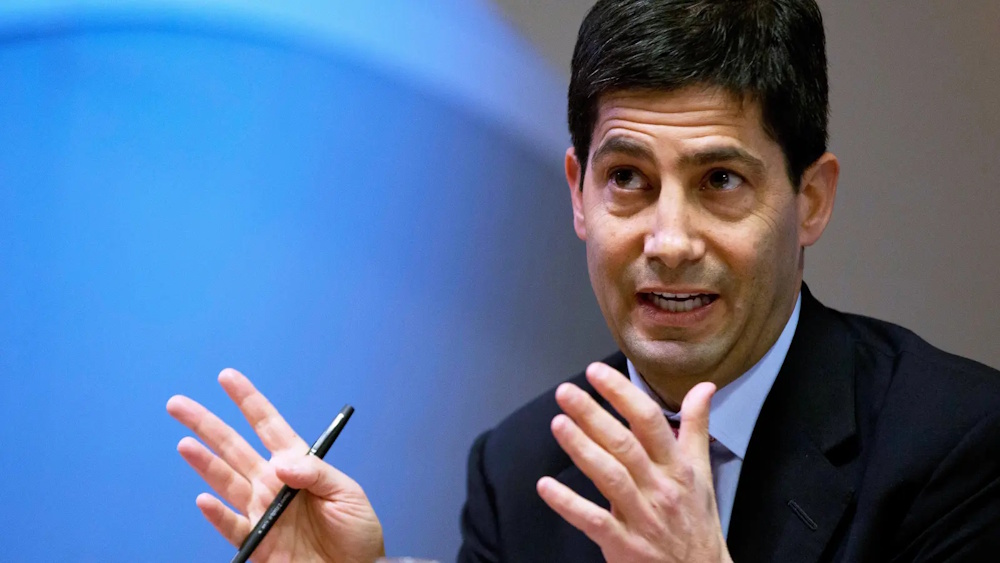
Federal Reserve Chairman Kevin Warsh on Tuesday provided his most comprehensive explanation to date regarding the extensive reforms he is implementing at the nation’s central bank and the underlying philosophy guiding these changes. Warsh appeared before the House Financial Services Committee to present the Fed’s semiannual Monetary Policy Report, a customary assessment of the central bank’s activities in recent months. He is set to present himself before the Senate Banking Committee on Wednesday. The new Fed leader reiterated several themes from his initial news conference last month, following the decision by officials to maintain their benchmark lending rate unchanged for the fourth consecutive meeting. That included his commitment to controlling inflation and his plan to establish five task forces to review factors affecting monetary policy. In his discussions with House lawmakers on Tuesday, Warsh offered additional insights into the manner in which the task forces will convey their findings. He was also pressed repeatedly on his views regarding the Fed’s political independence, the potential economic implications of AI, and the insights he gained from his tenure as a Fed governor during the 2008 global financial crisis.
Key takeaways from Warsh’s initial congressional testimony highlight the challenges policymakers face amid persistent inflation and escalating geopolitical risks: In his post-meeting news conference last month, Warsh announced the establishment of task forces aimed at studying and providing recommendations for enhancing various aspects of US monetary policymaking. These areas include communications, balance sheet policy, economic data, productivity and jobs, as well as inflation frameworks. On Tuesday, Warsh stated that the task forces will present their findings “first with the decision makers,” referring to the 19 members of the Federal Open Market Committee, the group responsible for setting interest rates. Then Warsh himself will present that to the public. Warsh also explained that any proposed policy changes to the Fed’s $6.7 trillion balance sheet will be communicated to the public prior to the implementation of any actual changes. “If there were a change in balance sheet policy, we would preview it, explain it, debate it, and no changes in balance sheet policy would happen without good advance notice to the likes of this committee and broadly, financial markets,” Warsh said.
The Fed’s balance sheet emerged as a significant instrument of monetary policy during the Great Recession, as the central bank acquired substantial amounts of Treasuries and mortgage-backed securities to bolster the economy. Critics contend that the expansion has extended the central bank’s role beyond its conventional boundaries. Warsh was pressed several times regarding his belief in the Federal Reserve’s capacity to set interest rates free from political interference. Democratic Representative Nydia Velázquez of New York enquired of Warsh regarding his affiliation with Trump, to which the Federal Reserve leader replied: “We’re an independent central bank.” And “We’re honored to be independent,” he told Velázquez. “Outside the four walls of the Federal Reserve, there’s no doubt a lot of politics.” He reiterated that view in an exchange with Democratic Rep. Gregory Meeks of New York, who pressed Warsh on how he would respond if Trump “publicly pressures you to pursue a different course” than that warranted by economic data. “My commitment to you is to follow the law and follow the data. Follow our very best judgment,” Warsh responded. Warsh’s dedication to maintaining independence remains under examination. The president last year conducted an assertive pressure campaign against the central bank in an attempt to compel lower interest rates. During the search for the next Fed chair, Trump expressed his expectation that his appointee would advocate for lower rates. Warsh asserts that he did not make any such commitment to the president and will proceed autonomously.
Warsh highlighted the current expansion of AI infrastructure as a significant factor influencing the US economy, while also recognising that a considerable portion of its economic effects is still unclear. “We don’t know the extent to which the economy will benefit from the AI buildout,” Warsh said in his opening remarks. “Yet it seems inevitable that what is now called ‘AI investment’ will soon be called just ‘investment.’” In a discussion with Republican Representative Bryan Steil of Wisconsin, Warsh expressed a positive outlook on the potential advantages of AI for the US economy and society at large. “Like previous positive technology shocks, the US will be richer, will be more productive, there’ll be more labor, there’ll be more wage compensation,” Warsh said. “This is probably the biggest change in my adult lifetime, because it’s not just the creation of a new widget.” And “What it’s changing is the method of innovation and the speed of innovation, and I can’t think of a country on earth as well positioned to take advantage of it,” he added, though he also recognized “it might be disruptive in the near term.” Warsh reflected on his tenure as a Fed governor from 2006 to 2011 and the insights he gained as the US economy plunged into the most severe recession since the Great Depression. “I still have the scars from the 2008 crisis,” Warsh said.
The Fed chief indicated that he recognised the significance of working alongside other regulators and custodians of the US economy during periods of crisis, especially the Treasury secretary. “The Treasury secretary and the Fed chairman, they often had to work in tandem,” he said. “It’s hard to distinguish in crisis times, separate from more benign times, exactly where those roles and responsibilities are.” At that juncture, the Federal Reserve resorted to extensive asset acquisitions to enhance its portfolio, aiming to infuse liquidity into the financial system and stimulate lending, given that interest rates were already approaching the zero lower bound. That policy became known as “quantitative easing,” or QE. Warsh initially endorsed the Fed’s actions, but subsequently stepped down after expressing apprehensions regarding further rounds of asset purchases. On Tuesday, Warsh indicated that the Fed is reassessing that strategy via one of the task forces. “The Fed balance sheet, both its size and duration, are worthy of a very worthwhile review,” he said. “I’m inclined to think that there are better regimes we can go to, but we’re not going to do it without due consultation with the markets and with members.” In 2019, as the Federal Reserve was reducing its balance sheet, the reserve cushion within the banking system diminished, resulting in a surge in overnight lending rates. This situation compelled the central bank to intervene and inject liquidity back into the markets. That episode underscored the complexities associated with overseeing a significantly larger portfolio.