

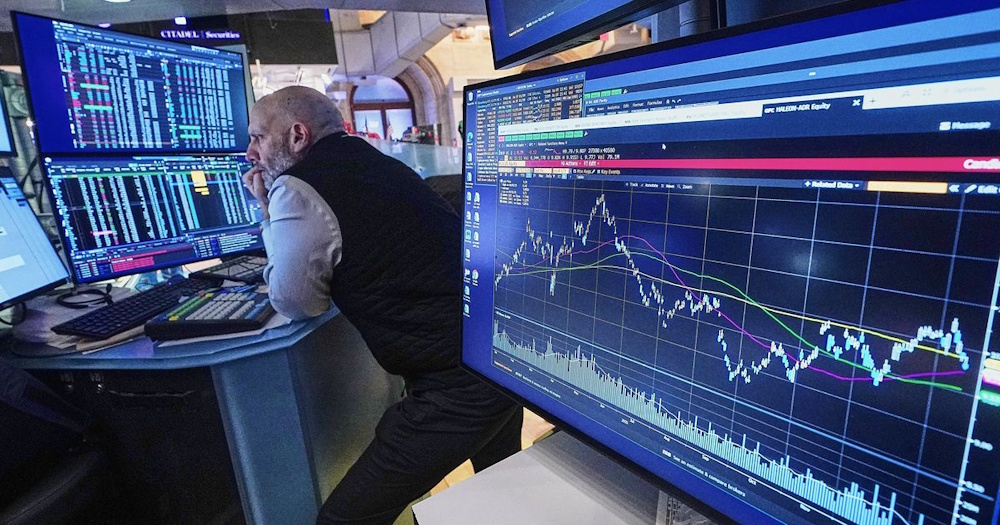
US stocks rebounded from losses on Monday, while oil prices experienced a significant decline after reaching their peak since 2022, amid ongoing market turbulence due to the conflict with Iran. The past 24 hours have exhibited significant volatility in the markets. US crude oil prices surged to nearly $120 per barrel late Sunday, subsequently stabilizing at approximately $95 by Monday afternoon. Oil subsequently declined to $86 per barrel by 4 pm following President Donald Trump’s statement to CBS, in which he expressed his belief that “the war is very complete.” The Dow experienced an increase of 239 points, equivalent to 0.5%, recovering from earlier declines and shifting into positive territory after a drop of 886 points. The S&P 500 experienced an increase of 0.83%, while the Nasdaq Composite advanced by 1.38%, with both indices rebounding from earlier declines. Earlier in the session, US crude oil settled higher by 4.26%, to $94.77 per barrel, paring gains after climbing to nearly $120 per barrel late Sunday. Brent crude, the international benchmark, concluded with an increase of 6.76%, reaching $98.96 per barrel, following a near approach to $120.
Oil prices conclude their daily settlement at 2:30 p.m., whereas equities finalize at 4 pm. Following the conclusion of trading on Monday, oil prices experienced a significant decline as Trump conveyed to CBS his belief that “the war is very complete,” which alleviated market anxieties and contributed to a recovery in stock prices. US crude oil experienced a decline of 8.76% from its 2:30 pm settle price, reaching $86.47 per barrel by 4 pm. Brent crude experienced a decline of 9.5% from its settlement price, now standing at $89.58 per barrel. On Monday, oil prices reached their highest level since the markets were disrupted by Russia’s invasion of Ukraine in 2022. US crude and Brent experienced increases of 36% and 27% last week, respectively, before surging higher on Sunday evening as trading commenced. Following a surge past $100 per barrel and nearing $120 per barrel on Sunday night, oil prices retreated from their peaks in response to reports indicating that finance ministers from G7 nations were preparing to convene to deliberate on a potential coordinated release of strategic oil reserves. Oil further pared gains Monday following a statement from G7 finance ministers indicating they would take “necessary measures” to address soaring oil prices. However, French finance minister Roland Lescure noted that G7 countries are “not there yet” on releasing oil reserves. Brent crude experienced a notable increase of nearly 7% before subsequently declining following Trump’s remarks that the war is “very complete.” The immediate response observed in the markets underscores the heightened anxiety among traders. Nerves surrounding an energy crisis heightened over the weekend as oil producers in the Gulf announced additional production halts, with Bahrain’s national oil company declaring force majeure.
Meanwhile, Mojtaba Khamenei, the son of the late Ayatollah, has been designated as the forthcoming supreme leader in Iran. “Investors were hoping cooler heads would prevail in the Iran war this weekend, and instead, tensions escalated, which is exacerbating last week’s stock market declines and oil price spikes,” stated Carol Shleif. On a day marked by significant fluctuations in the oil market, US crude oil prices experienced a remarkable increase of up to 31%, or $28.50, on Sunday night, before subsequently retreating from their peak and reducing gains on Monday. Crude prices experienced a decline of nearly $25 on Monday, concluding just below $95 per barrel. Crude prices experienced a further decline of $8 from their settlement price, now standing at $86.47 per barrel. The recent increase in energy prices over the past week has negatively impacted the stock market outlook. The Dow and S&P are experiencing their most significant weekly declines since April and October, respectively. Market participants have reacted to heightened concerns regarding the Middle East conflict, which poses a threat to the global oil supply and could potentially reignite inflationary pressures, particularly as the US labor market shows signs of instability. The three major US stock indexes are in the red this year. The Dow and Nasdaq have experienced declines exceeding 5% from their recent peaks, whereas the S&P has fallen approximately 3% since reaching a record high in late January. Japan’s Nikkei 225 experienced a decline of 5.2% on Monday. The decline has resulted in the index falling over 10% thus far this month, despite a year-to-date increase of 5%. Europe’s benchmark Stoxx 600 index experienced a decline of 0.63%, bringing it close to a negative performance for the year, following a drop of over 5% in the previous week. “Investors are clearly in a risk-off mindset as each day delivers headlines announcing a further widening of the conflict,” stated Sam Stovall. “No one knows if the current crisis will result in a pullback, correction, or bear market,” stated Stovall.
The conflict with Iran has significantly disrupted the passage of oil via the Strait of Hormuz, the constricted channel adjacent to Iran’s shoreline that facilitates 20% of worldwide oil consumption. “This chaos in the financial markets is all about the Strait of Hormuz,” stated Ed Yardeni. “This oil shock won’t end until ships can sail freely through the Strait,” Yardeni stated. “Until then, the financial markets are likely to become increasingly concerned about a stagflation scenario reminiscent of the 1970s.” Treasury yields experienced fluctuations and declined following the release of a disappointing jobs report on Friday, which indicated a loss of 92,000 jobs in February. The 10-year Treasury yield declined to 4.10%, remaining close to its peak level observed in almost a month. The US dollar index exhibited volatility, halting its upward trajectory following a robust start to the month. This month, the dollar has experienced gains attributed to heightened safe haven demand. The VIX, often referred to as Wall Street’s fear gauge, experienced a decline of 14% and remained at its highest level since November. The prevailing sentiment influencing markets was characterized as “fear,” as reported.