

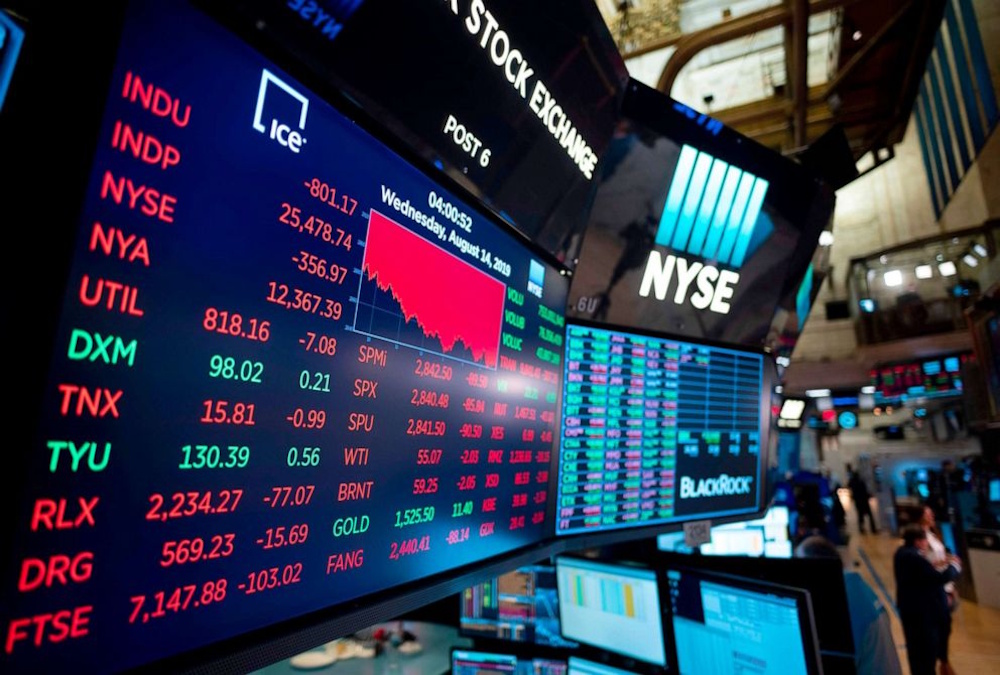
The major U.S. index futures indicate a significant decline at the open on Friday, suggesting that stocks are poised to continue the pullback observed in the prior session. The futures experienced additional declines subsequent to the publication of a Labor Department report indicating that producer prices in the U.S. rose more than anticipated in January. The report indicated that the Labor Department’s producer price index for final demand increased by 0.5 percent in January, following a downwardly adjusted rise of 0.4 percent in December. Analysts had anticipated a 0.3 percent increase in producer prices, a revision from the previously reported 0.5 percent rise for the prior month. The Labor Department reported that the annual rate of producer price growth decreased to 2.9 percent in January, down from 3.0 percent in December. Analysts had anticipated that annual growth would decelerate to 2.8 percent. Lingering concerns regarding AI-related layoffs and disruptions may also weigh on market after Block announced it is cutting its workforce by nearly half. Amrita Ahuja articulated that the payments company perceives a “opportunity to move faster with smaller, highly talented teams using AI to automate more work.” Following a significant increase in the preceding two sessions, equities experienced a pullback during Thursday’s trading activity. The tech-heavy Nasdaq experienced a notable decline, while the Dow managed to close the day with a modest gain.
The Nasdaq recovered significantly from its initial lows; however, it ultimately declined by 273.69 points, representing a decrease of 1.2 percent, closing at 22,878.38. The S&P 500 declined by 37.27 points, representing a decrease of 0.5 percent, settling at 6,908.86. In contrast, the narrower Dow experienced a modest increase of 17.05 points, or less than a tenth of a percent, reaching 49,499.20. The decline observed was influenced by a negative response to earnings announcements from Nvidia, leading the artificial intelligence chipmaker to experience a drop of 5.5 percent. Shares of Nvidia experienced a decline from their highest closing level in more than three months, despite the company announcing fiscal fourth quarter results that exceeded expectations and offering positive guidance. “It indicates a significant shift when a stock market favorite surpassing revenue expectations by billions of dollars fails to generate a favorable response in share prices,” remarked Dan Coatsworth. “The prevailing sentiment surrounding Nvidia is undergoing a transformation, indicating a notable change in investor attitudes.”
He noted that the emphasis has now transitioned to increasing competition, apprehensions regarding the potentially excessive levels of investment throughout the AI sector, which may be either unsustainable or unwarranted, and the question of whether this endeavor will conclude in disappointment. Nvidia contributed to the decline in the semiconductor sector, evidenced by the 3.2 percent drop in the Philadelphia Semiconductor Index. The index concluded the prior session at an unprecedented closing peak. Networking stocks exhibited a significant decline, further exacerbating the downturn experienced by the tech-heavy Nasdaq. In a notable development outside the technology sector, gold stocks experienced a significant surge, even as the price of the precious metal declined. This movement propelled the NYSE Arca Gold Bugs Index to an impressive 2.9 percent increase, culminating in a record closing high. Airline stocks exhibited notable strength during the day, culminating in a 2.3 percent increase in the NYSE Arca Airline Index.
The uptick by the Dow partly reflected a sharp increase in shares of Salesforce, with the customer service software maker spiking by 4.0 percent after reporting better than expected fourth quarter results. On the U.S. economic front, a report released by the Labor Department indicated a modest increase in first-time claims for unemployment benefits during the week ending February 21st. The Labor Department reported that initial jobless claims increased to 212,000, reflecting a rise of 4,000 from the revised figure of 208,000 from the prior week. Analysts had anticipated that jobless claims would rise to 215,000, up from the initially reported figure of 206,000 for the prior week.