

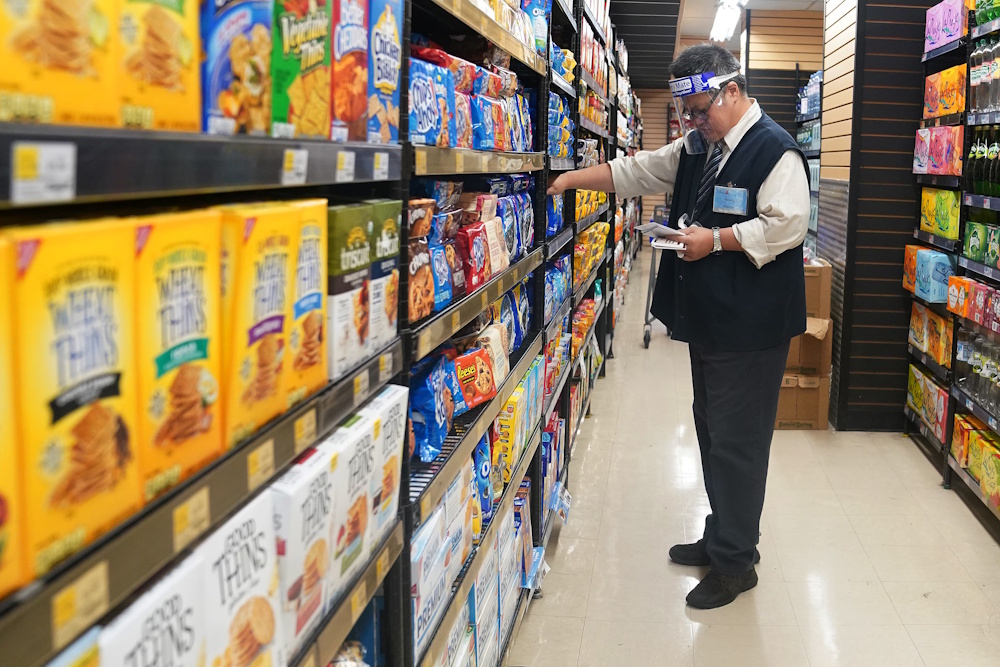
The government faces a liability of $134 billion – and increasing – in tariff revenue that was collected under President Donald Trump’s extensive tariffs, which were deemed illegal by the Supreme Court last week. To what extent will consumers, who have borne the burden of elevated tariffs through increased prices, recoup their expenditures? It is highly probable that there will be no significant developments. Consumers have effectively borne the cost of tariffs indirectly, as they are not typically the ones remitting payment to the government directly. When, and potentially if, any funds are returned, they will be allocated to the importer of record, which refers to the entity that settled the original tariff obligation. Consider the business models of Costco, Walmart, Target, and similar retailers.
At present, refunds remain predominantly a theoretical concept. The Trump administration and the Supreme Court have provided minimal clarity regarding the processing of these matters. The sole certainty is that the process will be protracted, as Trump indicated to reporters on Friday, suggesting it could extend over a period of five years to achieve completion. Businesses absorbed the majority of the tariff cost internally. However, a portion of that cost was ultimately transferred to you. According to a research, consumers accounted for approximately one-quarter of their tariff bills through increased prices imposed. The Tax Foundation estimates that tariffs resulted in an increase of $1,000 in tax payments for the average American household last year. Under pressure from constituents to enhance affordability, the Trump administration has been proposing $2,000 tariff rebate checks for several months to alleviate the burden of tariffs on consumers.
The proposed rebate checks, contingent upon Congressional approval, should not be viewed as refunds for tariff payments; rather, they function as stimulus checks aimed at revitalising an economy adversely affected by elevated border taxes. The implications of the Supreme Court’s decision on the potential rebate checks remain uncertain. It is evident that the overwhelming majority of consumers have not borne the burden of tariff costs directly, thus the Trump administration is not obligated to issue tariff refunds to them. Costco is among the numerous businesses that have initiated legal action against the US government prior to the Supreme Court ruling, aiming to obtain a refund. Treasury Secretary Scott Bessent reflected in an interview last month that Costco’s customers are unlikely to receive any portion of potential refunds the company may obtain. In any case, an increasing number of companies are expected to emulate Costco’s approach, as evidenced by FedEx’s recent legal action against the Trump administration, which represents the first significant corporation to take such a step following the Supreme Court ruling. There are no barriers preventing businesses from distributing a portion of the refunds they obtain to their customers.
However, considering the substantial legal fees they likely incurred to obtain them and the fact that they absorbed the majority of the tariff costs, this scenario appears to be largely unrealistic. Consumers might experience alleviation in alternative ways, however. David Suk expresses scepticism regarding the likelihood of recouping any portion of the $80,000 in tariff payments incurred since the implementation of Trump’s extensive tariffs last year. However, should he receive any funds, he intends to reduce prices. If he receives any reimbursement, it would not reflect the total expense of tariffs, as this also encompasses significant front-loading he undertook to preempt tariffs and premiums to accelerate production. “It could not feasibly be a one-to-one ratio regarding the provision of tariff refunds.” Suk conveyed, “As much as I would love to be able to do that, it’s just not feasible.” The company’s entire product line is produced in China, and with the reduction of tariff rates on Chinese imports at several intervals last year, he began to implement price cuts. “One is compelled to navigate business decisions aimed at ensuring sustainability, which constitutes the primary risk, while simultaneously striving to satisfy customer expectations.”