

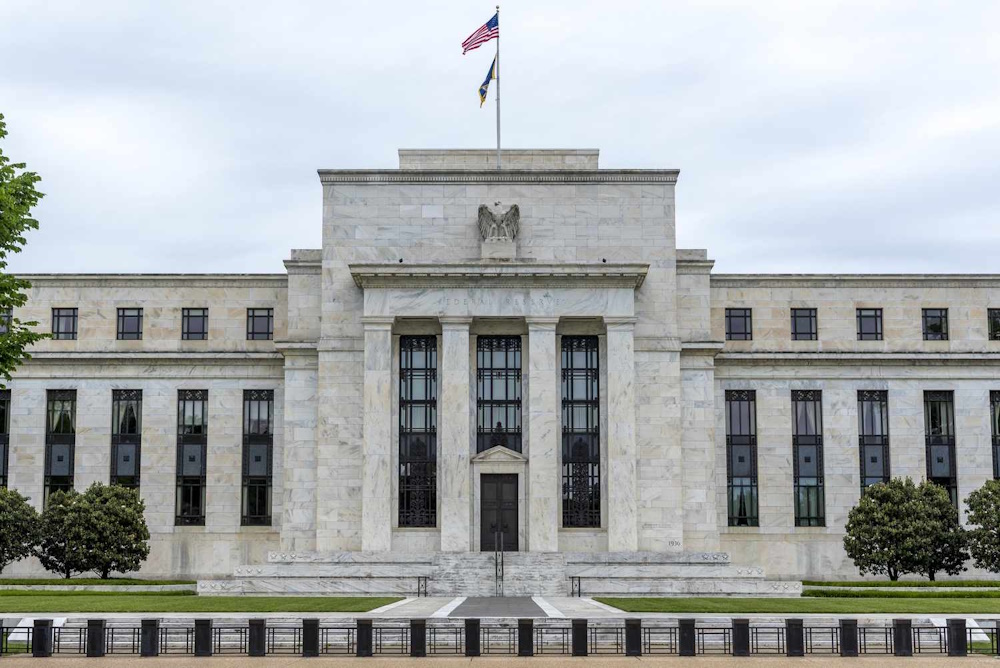
President Donald Trump may reveal his nominee for the next Federal Reserve chair as early as this week, indicating that his selection should advocate for substantial interest rate reductions. However, the individual selected will encounter a new policymaking committee — one that may exhibit increased resistance to rate reductions. At the start of each year, four of the 12 regional Federal Reserve presidents transition into voting positions on the central bank’s pivotal rate-setting committee for the subsequent eight policy meetings. This year, the individuals in focus are Lorie Logan from Dallas, Beth Hammack from Cleveland, Anna Paulson from Philadelphia, and Neel Kashkari from Minneapolis. The president of the New York Fed, along with all seven members of the Board of Governors, including the chair, holds a permanent voting position. In their most recent public statements, Logan and Hammack have articulated apprehension regarding the fact that inflation has remained above the Fed’s 2% target for the fifth consecutive year. Consequently, it is improbable that they will endorse a rate cut in the immediate future, as such a move could stimulate spending and exacerbate inflationary pressures. Federal Reserve officials will gather for their inaugural meeting of the year on Tuesday and Wednesday, with prevailing expectations pointing towards a decision to maintain current interest rates.
In December, Federal Reserve officials anticipated a singular rate reduction for the year 2026. Investors and economists characterize central bankers advocating for stringent inflation policies as “hawks,” whereas those prioritizing the labor market are labeled “doves.” This situation diminishes the probability of hawkish members endorsing rate reductions, in contrast to their dovish counterparts on the committee. The Federal Reserve is mandated by Congress to maintain price stability and foster full employment, a delicate equilibrium that was further complicated following the implementation of a comprehensive economic agenda by the previous administration last year, which posed risks to both objectives concurrently. Despite a weaker labor market prompting the Fed to reduce rates three times last year, the imposition of Trump’s tariffs — along with the potential for further levies — may exert upward pressure on inflation, complicating the case for additional rate cuts beyond a single instance this year. Hammack may emerge as the committee’s most hawkish member this year, asserting in an interview from December 21 that rates “can stay here for some period of time until we get clearer evidence that either inflation is coming back down to target or the employment side is weakening more materially.”
“I am highly concentrated on ensuring that we can return inflation to its target level. “That is one of our primary objectives and it’s important that we complete the job,” she stated. Logan is regarded as a hawk and indicated that she would likely have opposed the Fed’s December decision to reduce its benchmark lending rate for the third consecutive time by a quarter point. In her most recent interview on November 21, she remarked that “holding rates steady for a time would allow the (policymaking committee) to better assess” the impact of recent rate cuts on the economy. In December, Kansas City Fed President Jeffrey Schmid and Chicago Fed President Austan Goolsbee expressed dissent regarding the Fed’s decision to cut rates, advocating for a maintenance of the current rate levels instead. Regional Fed presidents, being less susceptible to political influences and possessing a closer perspective on local economic conditions, have historically demonstrated a greater propensity to diverge from the majority vote compared to their Washington-based counterparts. Paulson, in contrast, could be considered the most dovish Fed president on the committee this year, indicating a greater willingness to pursue rate cuts. In a speech delivered on January 14, Paulson expressed a “cautiously optimistic” outlook on inflation, characterizing the potential impacts of tariffs as constrained and anticipating a “decent chance that we will end the year with inflation that is close” to the Federal Reserve’s 2% target. According to Paulson, the labor market is not anticipated to experience a drastic decline this year; however, this should not preclude the Federal Reserve from implementing at least one interest rate reduction in 2026.
“I see inflation moderating, the labor market stabilizing and growth coming in around 2 percent this year,” Paulson stated. “Should all of that transpire, then some modest further adjustments to the funds rate would likely be warranted later in the year.” Paulson’s perspectives align more closely with those of Fed governors Christopher Waller and Michelle Bowman, though they are not as pronounced as those of Fed Governor Stephen Miran, who maintains that the economy faces a recession risk unless the Fed implements substantial rate cuts. Kashkari’s position has been relatively centrist, emphasizing that there remains a dual challenge to the Fed’s dual mandate. “The inflation risk is one of persistence — that these tariff effects take multiple years to work their way all the way through the system — whereas I do think there’s a risk that the unemployment rate could pop from here,” he stated in a January 5 interview. Trump has explicitly outlined his expectations for his Fed chair. While the president may acquire an influential leader aligned with his aim for lower rates, the new Fed chief is merely one vote on a 12-member committee that will persist in making rate decisions informed by economic realities.