

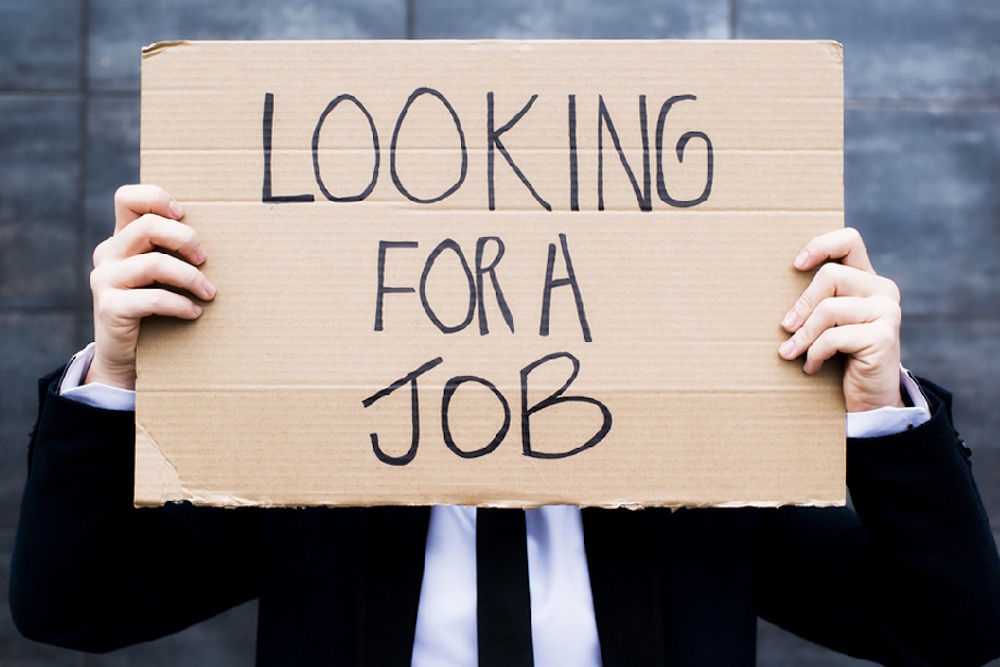
Recent survey data revealed a growing sense of hopelessness among Americans regarding their employment prospects. The perceived probability of securing employment reached an unprecedented low of 43.1% in December, as reported by the Federal Reserve Bank of New York’s most recent Survey of Consumer Expectations, a significant survey that has been conducted since 2013. Furthermore, the December survey indicated that the mean probability of respondents anticipating job loss increased to its highest level since April 2025, whereas the likelihood of individuals voluntarily resigning fell to its lowest rate since July 2023. US employers’ hiring activity has declined to levels reminiscent of the recession in recent months. This phenomenon has been linked to elevated uncertainty, partly stemming from significant alterations in trade and immigration policy, which have hindered substantial business investment. The labor market has stagnated, establishing a state characterized by minimal hiring and firing activity. Long-term unemployment has increased, and wage growth has decelerated, resulting in heightened pressure on lower- and middle-income Americans and further exacerbating economic inequality. On Friday at 8:30 a.m., the Bureau of Labor Statistics will unveil the latest data regarding the state of the US labor market – and projections from economists differ significantly regarding the anticipated outcomes for the final jobs report of 2025.
The consensus estimates indicate that 55,000 jobs were added in December, a figure consistent with year-to-date job growth, albeit slightly below the preliminary gains of 64,000 jobs recorded in November. However, certain economists suggest that seasonal influences, including the surge in holiday hiring, may elevate December’s monthly total to exceed 105,000. The unemployment rate is projected to decrease to 4.5%, following a four-year peak of 4.6% recorded in November, according to consensus estimates. Although such data might appear to be a positive sign of labor market robustness, it is more likely to be a “red herring,” according to Gregory Daco. “The true, underlying momentum for job growth is likely much softer and has been much softer for some time now,” he stated. Regardless of whether the figure is 55,000 or twice that amount, the job gains in December will not alter the narrative surrounding the labor market in 2025: Excluding the pandemic-affected year of 2020, the employment growth observed last year was the most subdued in decades. “Total job gains for 2025 are on track to be a meager 710,000,” stated Heather Long. “This represents the most unfavorable hiring conditions outside of a recession since 2003.” Even 2010, on the heels of the Great Recession, was a better year for hiring than 2025.
Over the past year, significant uncertainty stemming from broad policies like tariffs, notable changes in immigration patterns, and, to a lesser degree, corporate experimentation with AI, has led to subdued employment growth or, in some cases, outright declines across various sectors. The solitary exceptions have been health care – an industry expanding due to an aging demographic – and leisure and hospitality, which has benefited from a progressively divided economy. “Health services is an expensive type of service for most consumers; leisure and hospitality [spending] is a discretionary service for all consumers,” stated Nela Richardson. “These two sectors align with a K-shaped economy in which higher-income consumers are propelling expenditure.” The two sectors in question, representing approximately 22% of total employment, were responsible for a remarkable 84% of the overall job gains recorded from January to November 2025. For the remaining 78%, the narrative has diverged significantly. The labor market exhibited increased asymmetry following April 2025, coinciding with President Donald Trump’s most significant and expansive tariff declaration. Sentiment has declined sharply, while uncertainty has surged, thereby constraining hiring intentions. Between April and November 2025, employment increases in the health care and leisure and hospitality sectors surpassed the overall net job additions in the labor market during that eight-month period.
According to Long from Navy Federal Credit Union, nearly all other sectors are currently experiencing a “hiring recession.” Data released earlier this week provided additional evidence of the stagnant condition of the broader labor market. The latest Job Openings and Labor Turnover Survey data, released Wednesday, indicated that US businesses reduced their search for workers in November, with hiring activity declining to its lowest rate in over a decade, excluding the distortions caused by the pandemic. Concurrently, layoff activity exhibited a low level in November, alongside a subdued rate of individuals resigning from their positions. A requisite level of turnover is essential for a robust labor market and an expanding economy. Currently, it is taking months for individuals to secure employment, as the US jobs market resembles a “exclusive club.” The persistent low-fire trend likely extended into December, as indicated by recent data that some economists suggest points to a potential bottoming out of the current labor market slowdown. In December, US businesses reported job cut announcements at a 17-month low, as indicated by data from Challenger, Gray & Christmas released Thursday morning. Last month, employers disclosed intentions to implement 35,553 layoffs, while hiring announcements reached their highest level for the month since 2022, as reported. “The year concluded with the least number of announced layoff plans throughout the year; although December is generally a slow month, this, along with increased hiring intentions, indicates a favorable trend following a year marked by significant job-cutting announcements,” stated Andy Challenger.
The most recent data on unemployment claims, regarded as the most reliable indicator of layoff activity, indicated that initial filings have remained subdued. During the week ending January 3, first-time claims for unemployment reached an estimated 208,000, reflecting an increase of 8,000 claims from the previous week, as reported by the Department of Labor in data released Thursday morning. Data on unemployment claims exhibit significant volatility and are often influenced by factors such as weather conditions or holiday periods. Nonetheless, the four-week moving average for claims has persisted at its lowest level in over a year, according to data from the Labor Department. Furthermore, distinct data from Bank of America indicated that there was no increase in unemployment payments within the bank’s customer accounts during December. The bank’s internal data indicated that year-over-year payroll growth registered at 0.6% in December, an increase from 0.2% in the preceding month. “While the labor market still appears to be in a low-hire or low-fire mode, our data suggests that the worst of the slowdown may be behind us,” stated David Michael Tinsley. December’s jobs report is set to offer a clearer perspective on the condition of the US labor market, following the unprecedented government shutdown that obscured the reliable employment data for October and November. “It’s not entirely certain that we’ll have completely moved beyond all of the shutdown impacts, so we’ll need to observe how the numbers develop,” Oren Klachkin, Nationwide’s financial market economist, stated. “However, I would argue that the December employment figures, overall, should provide us with a clearer understanding of the economic landscape compared to the November statistics.”