

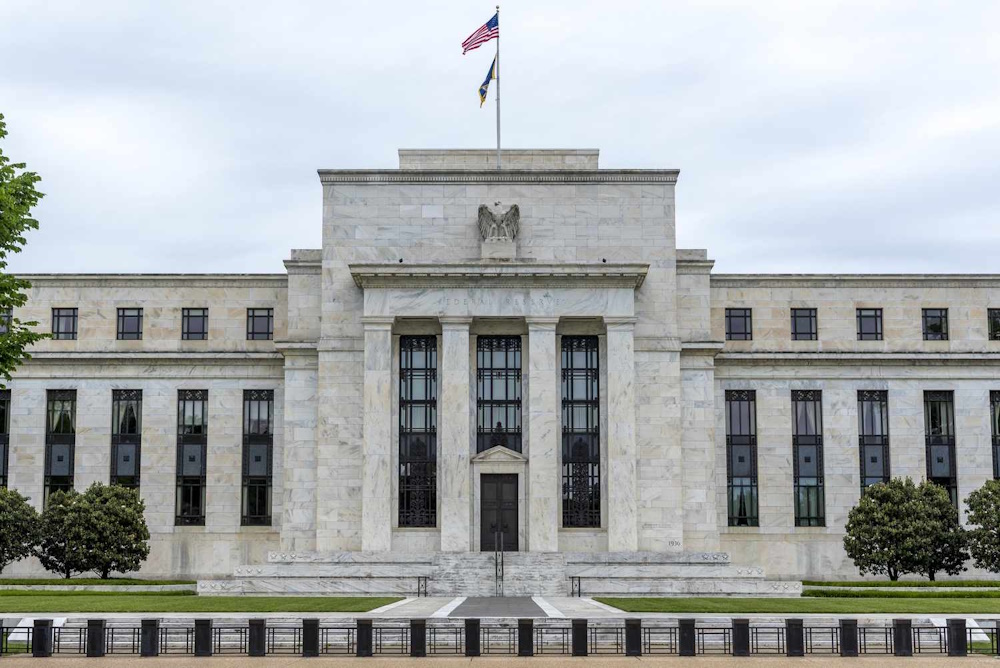
The most severe global oil crisis in decades may pose a significant challenge for the Federal Reserve, as its policymakers convene this week to assess the forthcoming strategies for the US economy. President Donald Trump’s conflict with Iran has caused a significant surge in oil prices, with WTI, the US crude benchmark, momentarily hitting $120 last week, posing a risk of increasing the prices of nearly all goods purchased by Americans. Simultaneously, elevated energy expenses may exert pressure on enterprises and households, potentially hindering employment growth and impeding overall economic expansion. The dual challenge of rising inflation coupled with a deteriorating labor market is placing Federal Reserve officials in a precarious position, particularly as Kevin Warsh, nominated by Trump to head the central bank, awaits Senate confirmation — an especially inconvenient moment for any official advocating for reduced interest rates. The Federal Reserve has not faced an oil shock of this magnitude since the 1973 Arab-Israeli War, which initiated the infamous stagflation period of that era. However, the current state of America’s economy presents a stark contrast to previous decades, and it is improbable that the central bank will react in the same manner as policymakers did fifty years ago, when substantial rate increases led to an economic downturn.
The United States, as the foremost oil-producing nation, exhibits a significantly reduced dependence on imported crude compared to previous energy crises. However, experts indicate that the disruption to global energy markets this time is more significant. “The total amount of Gulf oil production that’s currently locked up due to this war is much bigger than it was back then,” stated Nicholas Mulder in an interview. “We are discussing 20 million barrels compared to approximately four and a half million in 1973… thus, this figure is indeed several times larger.” In October 1973, Egypt and Syria executed a surprise offensive against Israel, a conflict that rapidly intensified and ultimately involved the United States. The Arab members of the Organization of Petroleum Exporting Countries implemented an oil embargo against Western nations as a form of retaliation. The US economy experienced considerable distress, given its substantial reliance on foreign oil during that period. During the tenure of former Fed Chair Arthur Burns, policymakers refrained from increasing interest rates, contending that the multitude of factors driving inflation at that time — notably the oil shock — were predominantly beyond the influence of monetary policy. Although the Federal Reserve ultimately increased interest rates, it did so in a sporadic manner. It is now asserted by economists that the “stop and go” approach contributed to the entrenchment of inflation while failing to effectively bolster growth.
One economist articulated that sentiment in a presentation delivered at one of the Fed’s rate-setting meetings at the time: “The question is whether monetary policy could or should do anything to combat a persisting residual rate of inflation … The response, in my view, is unfavorable. … We ought to consider ongoing cost escalations as a structural issue that cannot be effectively addressed through macroeconomic interventions”. Currently, the United States stands as the leading oil producer globally, supported by a services-oriented economy, which reduces its susceptibility to reductions in global oil output. Fed officials, taking lessons from Burns’ miscalculations, now widely acknowledge that monetary policy is crucial in addressing economic shocks. However, “We’re in a situation today where facilities are under attack from Iranian drones and missiles,” stated Josh Freed. “That represents physical damage that may require an extended period for repair, suggesting that it could be more severe than the oil embargo of the 1970s.” There exists a considerable amount of uncertainty surrounding this situation.
Americans are already experiencing increased costs at the pump, and the ongoing conflict is beginning to influence public expectations regarding inflation. The most recent consumer survey from the University of Michigan, published on Friday, indicated a 2% decline in sentiment this month compared to February, with a growing number of consumers referencing the war in their feedback. The labor market shows limited flexibility as well. The Bureau of Labor Statistics reported earlier this month that employers reduced their workforce by 92,000 positions in February, resulting in an increase in the unemployment rate to 4.4% from the previous 4.3%. A separate report Friday indicated that job openings increased by 400,000 in January compared to December, although the number of unemployed individuals seeking work continues to exceed the available openings. “There’s very little question that there is going to be an inflation effect” from the war with Iran, stated Tani Fukui. “However, the magnitude of it remains a subject of considerable uncertainty.” The inquiry facing Americans amid this oil crisis extends beyond the potential escalation of prices; it also encompasses the Fed’s ability to draw upon historical insights to prevent an economic downturn.