

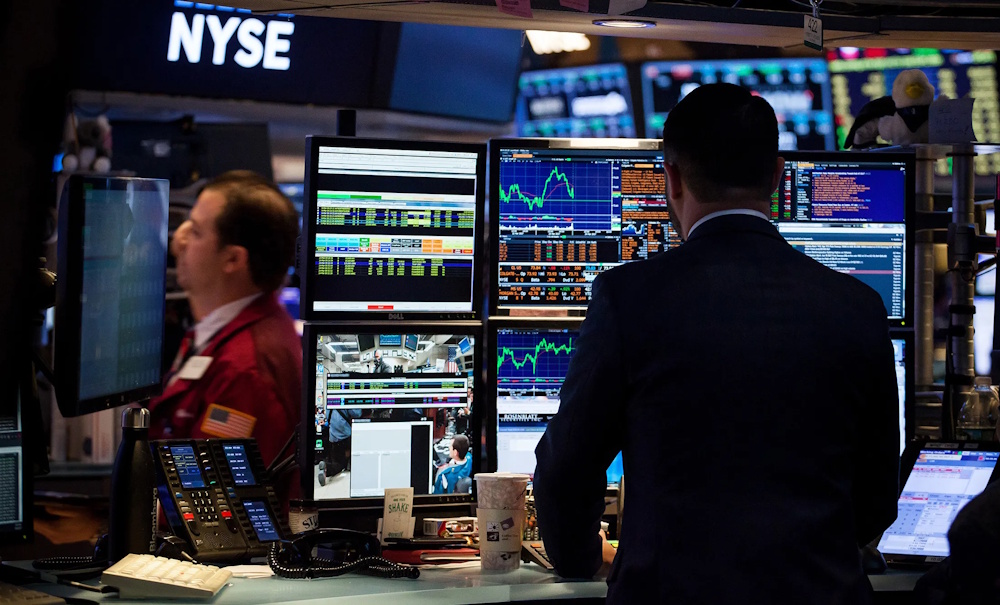
Technology stocks are no longer supporting the market as they once did — however, investors have strategies to safeguard their portfolios amid the fluctuations. After years of driving the market with the promise of transforming productivity, tech and AI stocks have entered a period of stagnation. Four months have passed since the tech-heavy Nasdaq Composite reached a record high. The S&P 500 and Nasdaq have both recorded their most challenging month since March. Meanwhile, stocks with reduced exposure to AI are rising steadily. The blue-chip Dow, which is less reliant on tech than the Nasdaq and the S&P, has risen by 1.9% this year. The S&P has increased by 0.49% this year, while the Nasdaq has experienced a decline of approximately 2.5%. It is indicative of a larger transformation occurring on Wall Street, which is maneuvering through an AI maelstrom. Nvidia, the standout in the AI sector, experienced its most significant decline since April on Thursday, despite delivering impressive quarterly earnings.
Concerns regarding AI’s impact on business models persist, causing significant turmoil within software companies. There remains ongoing concern regarding Big Tech’s substantial expenditures on data centers and the ambiguity surrounding whether this will yield a return on the hundreds of billions of dollars invested. However, analysts and portfolio managers advise that investors should not succumb to these anxieties at this moment, highlighting instead the market shifts that may present new opportunities. The broader market generally experiences upward movement over the long term, leading to robust average annual returns for the S&P 500. This indicates that long-term investors in indexes such as the S&P 500 can frequently disregard short-term fluctuations. US stocks experienced a decline on Friday, with the Dow dropping 521 points, equivalent to a 1.05% decrease. The S&P 500 experienced a decline of 0.43%, while the tech-heavy Nasdaq saw a drop of 0.92%. Fear gauge, the VIX, experienced an 8% surge.
The 10-year Treasury yield dipped below 4%, reaching its lowest point since October as investors shifted their focus to bonds. Oil prices surged over 2% amid ongoing tensions between the United States and Iran. Almost 40% of the S&P 500’s value is held within mega-cap technology stocks such as Nvidia, Microsoft, and Alphabet. Investors who are concerned may consider rebalancing their portfolios or exploring sectors that have reduced exposure to AI. “Investors can become heavily tech-exposed without realizing it,” stated Jon Ulin. The uncertainty surrounding technology is delicate, resulting in the S&P 500 remaining in a sideways trading pattern. The index reached a record high in late January; however, it experienced a decline in February and has remained approximately flat since late October. Ulin stated that it is crucial to avoid reacting to market noise while still assessing portfolios during turbulent times. He stated that he is depending less on Big Tech stocks, instead reallocating his portfolio to encompass more sectors such as materials, energy, infrastructure, industrials, health care, and staples. Craig Johnson this week adjusted his rating of the technology sector from “overweight” to “neutral.” In other words, he adjusted the composition of his portfolio to depend less on technology. Johnson expresses optimism regarding sectors such as energy, anticipating that a rotation will persist in the market as investors look for safeguards against the recent fluctuations in tech stocks. Energy, materials, and consumer staples have emerged as the three leading sectors in the S&P 500 this year, while technology and financials are trailing behind. A widely recognized exchange-traded fund that follows the energy sector has seen an increase of 25%, whereas an ETF that tracks the technology sector has experienced a decline of approximately 3.6%.
Analysts stated, “It’s unclear whether the worst of the AI uncertainty is behind us.” The response of investors to the current moment hinges on their savings and investment objectives — however, there are strategies available to safeguard your portfolio amid the increased uncertainty. “Investors have become really skittish and fearful of AI’s impact,” stated Jed Ellerbroek. “The market is skittish and volatile today.” The focus area appears to be changing quite swiftly, moving from one topic to another, and thus, I believe it is prudent to maintain a well-diversified portfolio.” Another strategy involves rebalancing, or investing in an index such as the equal-weighted S&P 500. The equal-weighted index gives each stock an identical weight, reducing the influence of significant declines in the tech sector. The equal-weighted S&P has risen by nearly 7% this year, surpassing the S&P’s increase of less than 1%. Enhancing exposure to international stocks may also contribute to improved returns. European and Asian markets are surpassing the performance of the United States this year, following impressive gains in 2025. In times of volatility and uncertainty, adhering to your long-term plan and ignoring the distractions can be a powerful strategy, analysts noted. “What we suggest is to always use diversification, to not just have one theme in your investments,” stated Johan Strand. “It’s always challenging to predict the stock market’s movements in the short term,” Strand said. “There could still be negative sentiment going on here, but we remain optimistic that 2026 will be a favorable year for the stock market.”