

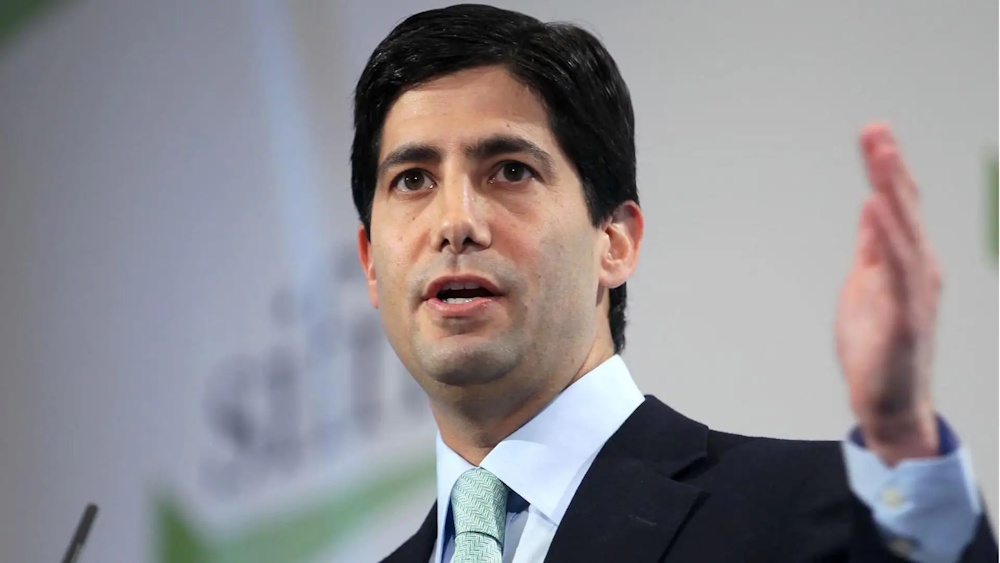
In June 2008, inflation was elevated — significantly exceeding the Federal Reserve’s 2% target — amid a sharp increase in oil prices. However, an additional issue arose: a subprime housing crisis driven by toxic mortgage assets. The crisis was of such magnitude that the investment bank Bear Stearns had failed merely three months prior. Kevin Warsh, akin to countless Americans, expressed concern. Except for Warsh, who is now President Donald Trump’s nominee to head the Federal Reserve, expressed greater concern regarding inflation rather than mass layoffs. “Inflation risks, in my view, continue to predominate as the greater risk to the economy,” Warsh, then serving on the Fed’s powerful Board of Governors, told his colleagues during the June 2008 meeting, according to transcripts. However, only a few months later, unemployment would surge to 10% in what subsequently came to be referred to as the Great Recession. In the spring of 2009, mere months following the dramatic collapse of Lehman Brothers and amidst widespread unemployment affecting millions of Americans, Warsh appeared to prioritize price dynamics. “I continue to be more worried about upside risks to inflation than downside risks,” Warsh stated. Warsh’s remarks from the crisis period prompt inquiries regarding the nature of his leadership as Fed chair, should he receive Senate confirmation.
While Trump has called for the lowest rates globally, Warsh is not typically associated with a preference for low rates. A significant number of analysts perceive Warsh as an inflation hawk, an individual who favors elevated interest rates to control price levels. Indeed, Warsh is regarded as the most hawkish among the candidates to lead the Federal Reserve. “The question is: Which Warsh do we get?” Ed Mills, a Washington policy analyst at Raymond James, provided insights. “The Warsh who was an inflation hawk at the Federal Reserve?” Or the individual who applied for this position? It is plausible that the answer encompasses both possibilities. In recent months, Warsh has advocated for lower rates, contending that rising productivity and the AI boom are creating conditions for rapid growth without significant inflationary pressures. Michael Feroli informed clients on Friday that his “best guess” is that Warsh will advocate for rate cuts, at least for this year. “We’d also suspect that as time goes on, his leanings will be more open to revision and perhaps reversion back to a more hawkish view,” Feroli wrote in a report, “particularly as we get past the midterms and into the last innings of a presumably lame duck administration.” Notably, JPMorgan is not forecasting any new rate cuts. Feroli indicated that the bank maintains its expectation that the Fed will “be on hold for the rest of the year” — even with Warsh potentially in charge. Joe Brusuelas informed that Warsh’s predictions regarding inflation during 2008-2009 serve as a “red flag” and demonstrate that he “got the policy response wrong.” Brusuelas remarked regarding Warsh: “His first instinct is hawkish and rarely saw a potential rate hike he didn’t like.” Indeed, hindsight offers a clear perspective. Warsh is certainly not the sole Federal Reserve official whose remarks have not stood the test of time, and he did indeed support the emergency measures implemented by the Fed under Bernanke’s leadership during that period. Still, the market is not behaving as if a low-rate dove has been appointed to lead the Federal Reserve. US equities experienced a decline, the beleaguered US dollar strengthened, and the market for precious metals surged significantly.
Gold, regarded as a safeguard against inflation and a decline in Federal Reserve autonomy, experienced a significant drop of 8% on Friday. Silver, which had experienced significant gains, plummeted 25% — marking its most severe decline since 1980. “Kevin Warsh has been a monetary policy hawk his entire career and most importantly, during a time when the labor markets fell out of bed,” Renaissance Macro Research noted in a post on X. “His dovishness today stems from convenience.” The President faces the possibility of being misled. Trump characterized Warsh as the “central casting guy that people wanted.” Warsh’s credentials — a former economist during the George W. Bush administration, a fellow at the Hoover Institution, and extensive experience at the Federal Reserve — position him as a reliable choice to head the Fed under a conventional Republican administration. In a hypothetical scenario where Mitt Romney secured the presidency in 2012, Warsh might have ascended to the position of Fed chair. Stanley Druckenmiller, the billionaire investor and mentor of Warsh, stated that it is “not correct” to label Trump’s Fed pick as “always hawkish.” Druckenmiller remarked in an interview “I’ve seen him go both ways.” Warsh has adopted a more dovish stance recently, described as a “convenient shift just as he became a Fed Chair nominee,” according to Stephanie Roth, chief economist at Wolfe Research.
Warsh’s theory of the case is partially founded on his enduring critique of the Federal Reserve’s substantial balance sheet. Warsh has indicated that the Fed possesses the capability to reduce its balance sheet with such intensity that it would enable officials to implement significant rate cuts. Nonetheless, JPMorgan’s Feroli expresses skepticism, warning that a reduced Fed balance sheet would probably elevate long-term rates — consequently increasing the very mortgage rates that Trump has been striving to decrease. “The balance sheet is wonky, but the real-world implications are not,” stated Mills of Raymond James. “The emphasis on affordability, particularly concerning mortgage rates, may be entirely disrupted by this Federal Reserve appointment.” A former official from the Federal Reserve who collaborated with Warsh remains optimistic that “the real Warsh” will ultimately emerge. “Kevin has desired this position for an extended period. He’s a slick operator, highly skilled at climbing the greasy pole,” the official told on the condition of anonymity. “However, this post represents the culmination of his life’s work. Acquiring it at this juncture, solely to demonstrate subservience, would constitute a Pyrrhic victory. The extended duration of his tenure enhances his capacity for independence. Trump’s new Fed chair is poised to remain in position beyond his tenure. Trump’s tenure in the White House will conclude in January 2029, whereas the new Fed chair’s term may extend into mid-2030. The incoming Fed chair may receive support from the Supreme Court. During a hearing last month, justices at the high court, including those with conservative leanings, voiced skepticism regarding Trump’s attempts to dismiss Fed Governor Lisa Cook.
A ruling by the Supreme Court against Trump could potentially enhance Warsh’s job security, should the president experience buyer’s remorse once more. “Did Trump’s attempt to dismiss Governor Cook ultimately result in unintended consequences?” Mills inquired. “A Supreme Court ruling reaffirming Federal Reserve independence will provide Warsh with greater latitude to avoid allegiance to Trump.” It is a matter that seemed to occupy Trump’s thoughts significantly during his recent appearance at Davos. “Everyone that I interviewed is great,” Trump remarked regarding his Federal Reserve selection process during his address at the World Economic Forum. “The issue arises when individuals alter their behavior after securing employment … It is remarkable to observe the transformation individuals undergo upon securing employment. It is unfortunate, a certain sense of disloyalty, yet they must act according to their own convictions.