

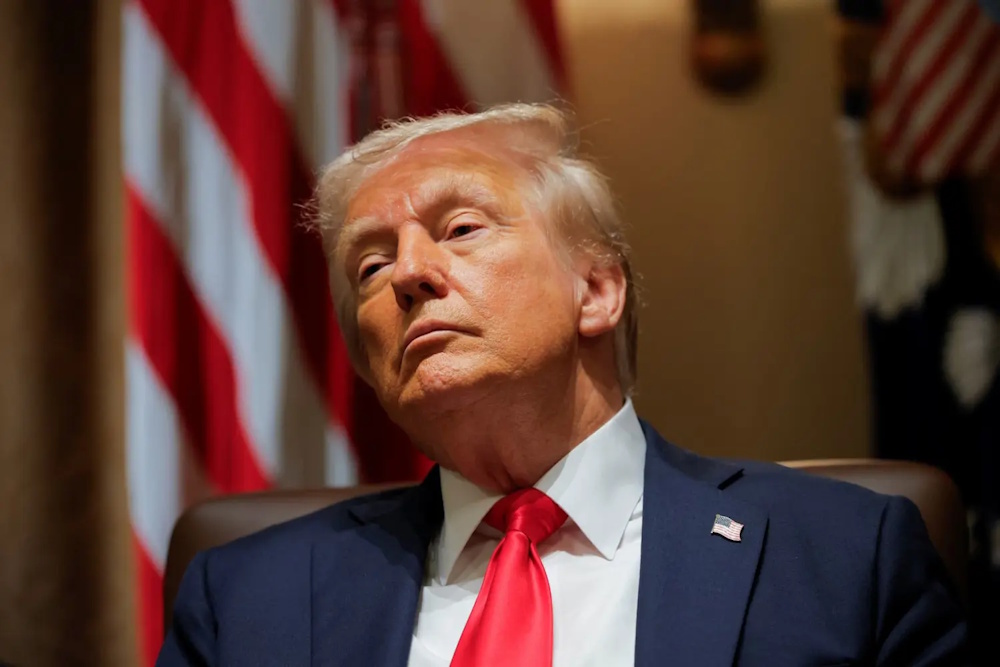
A week marked by geopolitical uncertainty and rapid shifts in policy has unfolded. Stocks and bonds regained ground, the US dollar sank, and gold posted its best week since 2020. As President Donald Trump withdrew his recent tariff threat, stocks experienced a notable rebound. Investors are now grappling with the uncertainty surrounding the White House’s strategies for achieving its policy objectives and the evolving perspective on the global economic landscape. Trump’s reversal on tariffs, combined with fluctuations in Japan’s bond market, caused US stocks and bonds to experience significant movement. Fear gauge experienced its most significant daily increase since October before changing direction. The S&P 500 experienced its most significant decline since October on Tuesday, only to rebound with its strongest performance since November on Wednesday. In summary, the S&P concluded the week with a decline of only 0.35%. Other markets reflect lingering concerns: Gold, a refuge in times of uncertainty, surged past records this week, achieving its largest weekly gain in nearly six years. The US dollar — a measure of investors’ confidence in America — experienced its most challenging week since May.
The policy proposals from the Trump administration are causing significant fluctuations in the markets this year, and the Greenland saga may serve as yet another prompt for investors to consider safeguarding themselves against uncertainties in the US. “Despite the framework deal on Greenland and stabilization in [Japan’s bond market], the episode of coordinated US equities, bonds and dollar sell-off may have raised some fresh concerns among global money managers that are perhaps increasing their protection,” Francesco Pesole. On Sunday, Trump declared that he would impose a 10% tariff on imports from eight European nations beginning February 1, following their opposition to his intentions regarding the acquisition of Greenland. US markets were closed Monday in observance of Martin Luther King, Jr., Day, and the pent-up angst poured into markets Tuesday. The Dow experienced a decline of 871 points, equating to a drop of 1.76%. By Wednesday morning, the mood was already on the upswing. Trump stated his opposition to employing “force” to acquire Greenland. In the afternoon, the president shared on social media that he had a productive meeting with Mark Rutte, the secretary general of NATO. The proposed tariffs were rescinded, leading to a rally in stocks. The Dow surged by 895 points over the course of two days, recovering its previous losses. “Just like what took place several times last year, the president fixed a problem of his own making … and the market responded with a nice advance,” said Matt Maley.
The Dow on Friday fell by 285 points, or 0.58%, ultimately closing down 0.53% for the week. Meanwhile, a remarkable shift in Japan’s bond market earlier this week ignited volatility in US markets. Yields on Japan’s government bonds, which rise when bonds fall, surged sharply on Tuesday as investors responded to Prime Minister Sanae Takaichi’s proposal to temporarily reduce taxes on food and her announcement of a snap election. Investors sold off bonds due to concerns regarding the government’s ability to finance its spending plans in conjunction with new tax cuts. Japan currently carries a substantial debt burden. On Tuesday, anxiety permeated the US bond market as stocks and the dollar experienced declines, driven by uncertainty surrounding Trump’s tariff plan. Increased bond yields may exert pressure on stock markets. However, Japan’s bond market showed signs of stabilization on Wednesday, alleviating concerns in global markets. That contributed to a recovery in US bonds on Wednesday, although yields still stand slightly elevated for the week. However, apprehensions persist: This week, gold surged approximately 8.4%, surpassing $4,700, $4,800, and then $4,900 per troy ounce for the very first time. The yellow metal has already increased by nearly 15% this year, following a remarkable surge of 64% in 2025 — marking its best performance since 1979. Silver, a refuge in times of uncertainty, surged 16% this week, exceeding $100 a troy ounce for the first time in history. Silver achieved its highest weekly performance since 2020 and has risen nearly 46% this year, following a remarkable 141% increase in 2025 — marking its most successful year since 1979.
The dollar index experienced a decline of approximately 1.9% this week, negating its gains for the year and resulting in a nearly 10% decrease over the past 12 months. A weaker dollar can support higher gold prices, as bullion becomes relatively more affordable for international investors. Meanwhile, central banks around the globe, including China, continue to accumulate their gold reserves, reducing their dependence on US assets. Momentum from regular investors is increasingly becoming a significant force behind gold’s meteoric rise. Investors are now directing their attention to a series of earnings results for the fourth quarter. Next week, earnings reports are anticipated from Meta, Microsoft, and Tesla. The Federal Reserve is set to convene on Wednesday for its inaugural policy meeting of the year. The rally in US stocks is expanding. The Dow is currently outperforming the tech-heavy Nasdaq this year. The Russell 2000, an index of smaller companies, has seen a remarkable increase of 7.5% this year.
However, volatility is expected to stay high, according to Larry Adam, CIO at Raymond James, who pointed out the elevated valuations of stocks, the “overoptimism” among investors, and the upcoming US midterm elections this year. Steve Sosnick stated that the market whipsaw can present significant opportunities for traders looking to profit during market dips. Nonetheless, it may evoke a feeling of increased uncertainty. “When it comes to major economic policies or major geopolitical, diplomatic policies, it’s not always easy to deal with if you’re getting these comings and goings basically spuriously,” Sosnick said. “I do think that these policy 180s, it’s not necessarily in the markets’ best interest long term,” he said.