

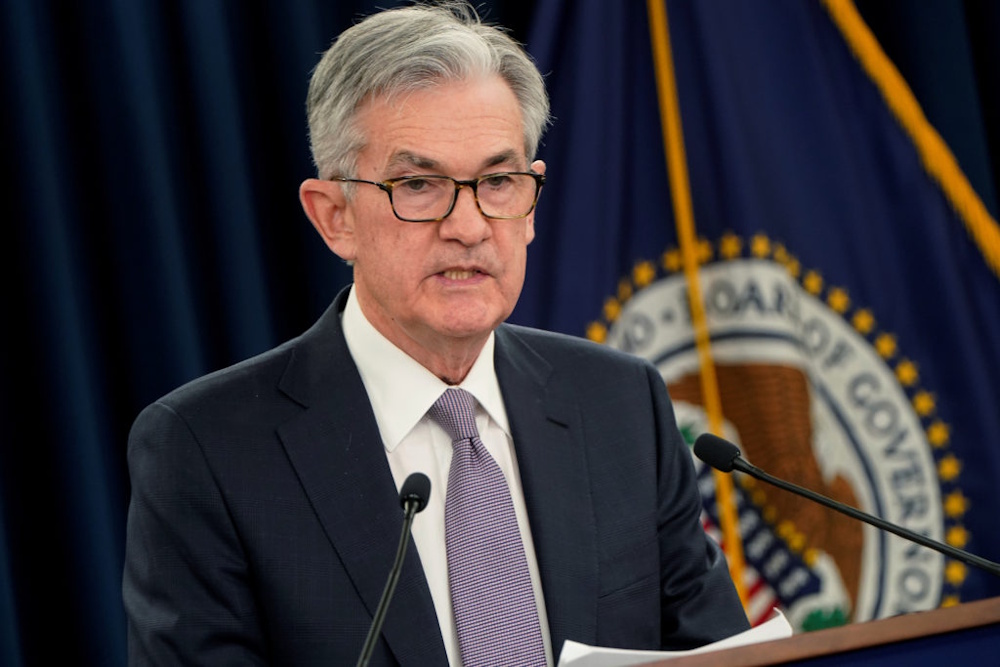
The Federal Reserve reduced interest rates once more in an ongoing attempt to maintain the stability of the labor market, notwithstanding dissent from various prominent Fed officials who argue that the central bank ought to focus on addressing the elevated cost of living instead. Nonetheless, this could represent the final reduction in rates for the foreseeable future. During a post-meeting news conference, Chair Jerome Powell indicated that further rate cuts will be increasingly difficult to substantiate, repeatedly emphasizing that central bankers have already reduced rates three times this year. “We are well positioned to wait to see how the economy evolves,” stated Powell. A majority of policymakers have opted to reduce the benchmark lending rate by a quarter point for the third consecutive time, bringing it to a range of 3.5% to 3.75%, marking the lowest level in over three years. Wednesday’s decision attracted three dissents — from Fed Governor Stephen Miran, Jeffrey Schmid, and Austan Goolsbee — marking the highest number of dissents since September 2019. The current meeting marks the fourth consecutive occasion on which the Federal Reserve’s decision was not unanimous, representing the longest such stretch since 2019.
In their most recent economic forecasts, Fed officials indicated a singular rate cut anticipated for the upcoming year, consistent with their assessment from September. Nevertheless, the most recent policy statement indicates a tendency to maintain the current stance in the short term, noting that they will “carefully assess” the “extent and timing” of any further reductions. Powell affirmed that understanding of the statement during his interaction with reporters. This year’s rate cuts have been a reaction to increasing indications of a deteriorating labor market, characterized by notably sluggish job growth and elevated unemployment rates among youth and minority groups. However, those decisions have proven to be challenging, as the Fed’s influential rate-setting committee is markedly split on the appropriate course of action regarding interest rates. Despite stagnant job growth, inflation continues to exceed the Fed’s 2% target and is anticipated to rise further next year as the impact of President Donald Trump’s tariffs intensifies.
Federal Reserve officials are experiencing a divergence of opinions in the concluding meetings of Powell’s leadership at the central bank, debating which aspect of their dual mandate should take precedence: achieving full employment or maintaining stable prices. In response to inquiries regarding the potential counterproductive or adverse effects of the intense debate surrounding the Federal Reserve, Powell remarked that policymakers have engaged in “thoughtful, respectful discussions.” Miran cast a dissenting vote, as he did in the previous two meetings, advocating for a more substantial, half-point cut instead. Schmid, who previously expressed dissent at the last meeting, reiterated his preference for maintaining the current rates, this time supported by Goolsbee. However, the atypical divergence among Federal Reserve officials is not inherently negative, as Powell highlighted during his press conference. Numerous experts have indicated that a certain degree of dissent influences the Fed’s actions and demonstrates the absence of groupthink. “You possess a singular instrument. “You can’t do two things at once,” Powell remarked regarding the Federal Reserve’s challenging responsibility of balancing interest rates while addressing the pressures on both aspects of its dual mandate. Nonetheless, this complicates market’s ability to evaluate the trajectory of monetary policy.
In the weeks following the Federal Reserve’s October decision to lower rates for the second time this year, investor sentiment was divided regarding the possibility of another rate cut in December — until New York Fed President John Williams provided his insights. Williams occupies a position that has traditionally been in close alignment with the Federal Reserve chair. In a speech delivered on November 21, he articulated that the more significant risk pertains to the health of the labor market. Following Williams’ remarks, expectations for a December shifted to approximately 70% from 40%, as indicated by futures. Powell indicated that the trajectory for interest rates remains uncertain; however, the forthcoming release of economic data, which was postponed due to the government shutdown, is expected to provide valuable insights for officials ahead of their January meeting. The Labor Department is set to release inflation and employment data for October and November next week, a development that has the potential to significantly alter the prevailing economic narrative. This year’s series of rate reductions indicates that the central bank is placing a premium on the labor market, with Powell noting that a significant factor is the potential for underlying conditions to be less robust. “There is an overcount in the payroll job numbers, we think,” Powell stated, suggesting that job growth might even be negative. “I believe that a scenario characterized by negative job creation warrants close scrutiny, and it is imperative that our policies do not exert downward pressure on job creation.” Powell stated that the Federal Reserve’s measures to alleviate pressure on the labor market do not suggest a lack of concern regarding persistently high inflation. “Everyone should understand, and the surveys show that they do, that we are committed to 2% inflation, and we will deliver 2% inflation,” Powell stated. “However, this presents a complex and typically challenging scenario, particularly as the labor market faces significant pressures.” Regarding inflation, Powell attributed the gradual rise in inflation over the past year to Trump’s extensive array of tariffs, while indicating that officials generally anticipate it will lead to a singular increase in the price level. “It is really tariffs that are causing most of the inflation overshoot,” Powell stated. “We consider those to be a probable… one-time price increase.”
The divergence between Fed officials’ anticipation of a singular rate cut in the forthcoming year and Trump’s continual calls for substantial reductions in rates is noteworthy. The president has indicated that he is nearing a decision on the appointment of the next Federal Reserve chair, who will take over from Powell when his term concludes in May. In an interview with Politico on Tuesday, Trump indicated that Powell’s successor will face pressure to implement rate cuts, a task that may prove challenging due to the inherent complexities of the Federal Reserve’s framework. The chair of the Federal Reserve holds a single vote and lacks the authority to unilaterally overturn the decisions made by the majority, indicating that Trump’s nominee for the position will need to convince fellow members to support additional rate cuts. Two Federal Reserve officials who will gain voting rights next year – Dallas Fed President Lorie Logan and Cleveland Fed President Beth Hammack – have articulated concerns in recent public addresses regarding the prospect of further rate reductions. Among the twelve regional bank presidents of the Federal Reserve, only four possess voting power annually on a rotating basis, alongside the president of the New York Fed, who maintains a permanent vote. In response to a query Matt Egan regarding his desired legacy as chair, Powell remarked: “I really want to turn this job over to whoever replaces me with the economy in really good shape.” “I desire inflation to be managed effectively, returning to the target of 2%, alongside a robust labor market. That is what I want,” he added.