

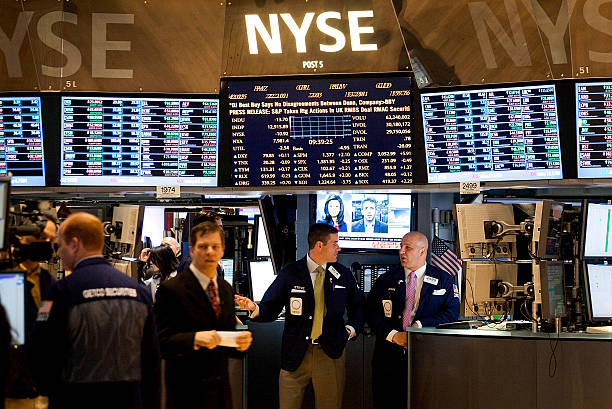
The major U.S. index futures indicate a significantly higher opening on Thursday, suggesting that stocks are poised to recover after experiencing substantial selling pressure in the prior session. The futures surged in response to the Labor Department’s report on consumer price inflation, which indicated an unforeseen deceleration in the annual rate of price growth. The report indicated that the annual growth rate of consumer prices decelerated to 2.7 percent in November, down from 3.0 percent in September, while analysts had anticipated the annual growth rate to rise to 3.1 percent. The annual growth rate of core consumer prices, excluding food and energy, decelerated to 2.6 percent in November from 3.0 percent in September, even though the rate of core price growth was anticipated to stay consistent. The Labor Department also indicated that survey data for October 2025 was not gathered as a result of the government shutdown, a factor that may temper overinterpretation of month-to-month changes.
The unanticipated deceleration in the annual rates of price growth is poised to bolster confidence regarding the Federal Reserve’s potential to persist in reducing interest rates in the forthcoming year. This optimism follows a volatile session on Tuesday that concluded with a slight divergence in stock performance. Equities initially advanced in early trading on Wednesday but soon faced downward pressure, with the major averages retreating significantly from their session peaks and settling firmly in negative territory. As the trading day progressed, the major averages experienced additional declines, finishing slightly above their session lows. The tech-heavy Nasdaq declined by 418.14 points, or 1.8 percent, closing at 22,693.32, while the S&P 500 fell by 78.83 points, or 1.2 percent, to 6,721.43, and the Dow dropped 228.29 points, or 0.5 percent, to 47,885.97.
The pronounced decline observed throughout the day occurred alongside a resurgence of weakness in technology stocks, as evidenced by the sharp drop in the Nasdaq. Major AI player Oracle helped lead the sector lower, plunging 5.4 percent to a six-month closing low after a Financial Times report suggested its primary data center partner, Blue Owl Capital, would not back a $10 billion investment for a new Michigan facility, though Oracle later clarified that the project remains on track. Other major technology firms such as Nvidia, Broadcom, and Advanced Micro Devices also recorded substantial losses. Semiconductor stocks posted some of the market’s steepest declines, with the Philadelphia Semiconductor Index falling 3.8 percent, while the NYSE Arca Computer Hardware Index dropped 3.1 percent, reflecting broad-based weakness across technology-related segments.
Beyond technology, networking stocks experienced notable declines, and airline, brokerage, and housing stocks also showed considerable weakness. In contrast, energy stocks delivered strong gains as crude oil prices rebounded from their lowest levels since early 2021. The rise in oil prices followed President Donald Trump’s directive to impose a blockade on sanctioned oil tankers originating from Venezuela. In a post on Truth Social, Trump described the government of President Nicolas Maduro as a foreign terrorist organization and announced his order for a “total and complete blockade of all sanctioned oil tankers” entering and exiting Venezuela, a move that supported energy markets amid broader equity volatility.